Delhi's ₹8,300 Crore Clean-Air Plan Is a Governance Test, Not a Money Question
Delhi has signed on to a seven-year, ₹8,300 crore anti-pollution programme with World Bank financing. The city has never had this much money for clean air. But Delhi has never had a shortage of plans. It has had a shortage of enforcement. This story explains what is being announced, what NCERT-level science it involves, why the same PM2.5 keeps coming back every winter, and the one measurement that will decide if the programme worked.
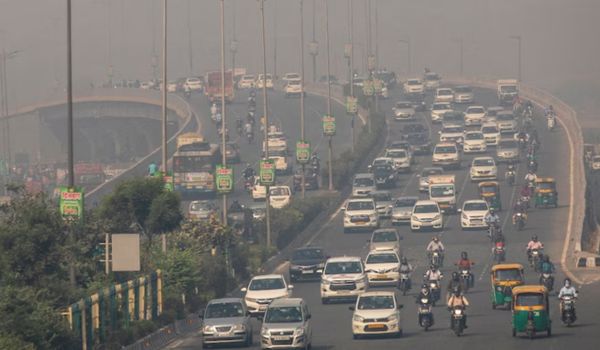
Delhi has committed ₹8,300 crore over seven years to fight air pollution, most of it borrowed through the World Bank. This is the largest clean-air budget the city has ever received. It is not, however, the first clean-air plan Delhi has had. The Air Act was passed in 1981. The National Clean Air Programme was launched in 2019. The Commission for Air Quality Management was created in 2021. Every winter for two decades, Delhi has known which factories, which vehicles, and which construction sites were polluting the air. The problem has never been that we did not know. The problem has been that we did not act, year-round, on what we knew.
Will Delhi's ₹8,300 crore clean-air plan fix its pollution?
Only if enforcement changes. Delhi's seven-year, ₹8,300 crore programme, largely World Bank-financed, funds data analytics, agency coordination, anti-smog guns and a stronger EV policy. But Delhi already has the Air Act (1981), NCAP (2019) and CAQM (2021). The problem has been year-round action against known polluters, not money or plans.
The Story in 60 Seconds
What Happened?
The Delhi government has signed on to a seven-year clean-air programme with a headline cost of about ₹8,300 crore, financed substantially through the World Bank. The declared components include data analytics, coordination between air-quality agencies, deployment of anti-smog guns, a stronger electric-vehicle policy, and better monitoring across transport, construction, waste and industry.
This is the biggest financial commitment made in Delhi for air quality since the National Clean Air Programme (NCAP) was launched in 2019. It sits inside an existing structure. The Union NCAP set particulate-reduction targets for cities. The Commission for Air Quality Management (CAQM) Act, 2021 created a statutory body to coordinate action across Delhi, Haryana, Uttar Pradesh, Punjab and Rajasthan. The Graded Response Action Plan (GRAP) tells agencies which restrictions to activate as the Air Quality Index worsens. The ₹8,300 crore programme adds equipment and money to that structure. It does not change the underlying laws.

Why It Matters
This programme matters for a reason that runs beyond Delhi. If Delhi ends 2032 with better dashboards and the same PM2.5, every other Indian city will copy the same template: bigger budget, more equipment, unchanged air. If Delhi ends 2032 with measurably lower PM2.5, that becomes the national example. The programme is a test of whether India has moved past the belief that pollution is a data problem waiting for a technology fix.
CONCEPT BEHIND THE NEWS
- Three ideas from your school science and geography textbooks explain almost everything about Delhi's winter air.
- Once you see them, the news makes sense on its own.
- Particulate matter | Tiny solid or liquid particles floating in air. PM10 is anything up to 10 micrometres wide (about one-seventh the width of a human hair). PM2.5 is anything up to 2.5 micrometres wide (small enough to slip past the nose, reach the deepest part of the lungs and enter the bloodstream). PM2.5 is the more dangerous one.
- Temperature inversion | Normally, air is warmer near the ground and cools as you go up. In Delhi's winter, a layer of warm air sits on top of the colder ground air like a lid, trapping pollutants near the surface. This is why the same emissions that vanish quickly in April sit over the city in November.
- Airshed | Air does not stop at a city's boundary. The Indo-Gangetic plain, from Punjab through Delhi to Bihar, shares one connected pool of air. Farm-fire smoke from Punjab and Haryana in October mixes with Delhi's local emissions. This is why CAQM was designed as a cross-state body, not a Delhi-only agency.


NCERT reference chapters where these ideas appear: Class XI Geography (Fundamentals of Physical Geography) on atmospheric layers and temperature; Class XII Geography (India: People and Economy) on urban and environmental issues; Class XI Political Science (Indian Constitution at Work) on the Directive Principles, including Article 48A on protecting and improving the environment.
Connect the Dots
- Sources of Delhi's pollution have been documented since the 1990s
- Legal instruments to act on them already exist (Air Act, GRAP, NCAP, CAQM)
- Enforcement is concentrated in the winter emergency, weakest in April""September
- Baseline emissions continue, PM2.5 stays well above health-based standards year-round
- The new ₹8,300 crore adds equipment, monitoring and coordination on top
- Outcome (annual PM2.5) improves only if enforcement culture also changes
- Without that change, outputs grow and the outcome stays flat

Syllabus Connection
- GS-III | Environment | Air pollution sources, impacts, and control technologies (CPCB standards, NAAQS)
- GS-III | Environment | Industrial pollution monitoring and regulatory enforcement mechanisms
- GS-III | Environment | Air Quality Index (AQI), particulate matter measurement, urban air quality management
- GS-II | Governance | Environmental governance frameworks and inter-agency coordination
- GS-I | Geography | Atmospheric temperature inversion, meteorological factors in pollution dispersal
PYQ Connection
- In 2021, UPSC's Prelims tested the R2 Code of Practices, an international voluntary standard for the electronics-recycling industry.
- The question rewarded candidates who could tell a compliance code apart from an ecosystem framework (Ramsar), a soil-management practice, and an environmental clearance instrument (EIA).
Clean Air Plan Components
| Exam | Year | Question | Concept |
|---|---|---|---|
| UPSC Civil Services Prelims, GS Paper 1 | 2021 | 'R2 Code of Practices' constitutes a tool available for promoting the adoption of _____. | Voluntary environmental-compliance codes. Correct option: environmentally responsible practices in the electronics recycling industry. |
The examiner's point holds for today's Delhi story too. A well-drafted code, whether it is R2 for e-waste or the Air Act for ambient air, only produces cleaner outcomes when it is enforced. India's environmental architecture is not weak on paper. It is weak on the day it is meant to be used.
Exam Angle
PRELIMS | Focus: PM2.5 vs PM10 distinction; temperature inversion as a meteorological mechanism; AQI scale and categories; NAAQS limits and non-attainment cities; role of CAQM as a cross-state statutory body. MAINS | Evaluate Delhi pollution control strategies: are barriers technical or institutional? Use the ₹8,300 crore programme as a case study.
Exam Takeaway
- Remember: Air pollution control has two components. The regulatory framework (NAAQS, standards, CAQM) is strong in design. Implementation capacity (inspection frequency, monitoring technology, enforcement) is the bottleneck in most Indian cities.
- Remember: PM2.5 is the key metric. The ₹8,300 crore programme should be judged by whether Delhi's annual average PM2.5 falls over seven years. Outputs (stations built, money spent) and outcomes (actual air quality change) can move independently for years.
- Remember: Temperature inversion is why Delhi's smog season is November-February, not April-June. Same emissions, but winter weather traps them near the ground. This is why year-round enforcement is critical; seasonal measures alone cannot work.
- Remember: The airshed connects Punjab, Haryana, Delhi, Uttar Pradesh, Rajasthan. Farm fire smoke from Punjab and local Delhi emissions mix in the shared air. Single-city action has limits; the CAQM framework exists precisely because borders don't stop air.
- Remember: Enforcement culture matters more than equipment. India has laws (Air Act 1981, CAQM Act 2021) and targets (NCAP, 40% reduction by 2025-26). What changes outcomes is consistent, year-round enforcement, not new dashboards.
Possible Question
Question: With reference to Delhi's air quality management, consider the following: 1. The Air Act (1981) is the foundational law for pollution control in India. 2. The Commission for Air Quality Management (CAQM) is a statutory body covering only Delhi. 3. Temperature inversion in winter prevents upward dispersal of pollutants, concentrating them near the ground. Which statements are correct?
- 1 and 3 only
- 1 and 2 only
- 2 and 3 only
- 1, 2 and 3
Answer: 1 and 3 only
Statements 1 and 3 are correct. (1) The Air (Prevention and Control of Pollution) Act 1981 remains India's foundational law for air quality standards and enforcement. (2) Incorrect: CAQM covers Delhi, Haryana, Uttar Pradesh, Punjab and Rajasthan-it is multi-state, not Delhi-only. (3) Correct: Temperature inversion creates a warm layer above cold ground air like a lid, preventing vertical dispersal and trapping pollutants near the surface, which is why Delhi's pollution peaks in winter despite year-round emissions.
Read More
- The Hindu | Opinion / Op-Ed (Original source article)
- Related: Environment (Explore more articles in this topic)
Sources & Further Reading
- Primary source | Shazia Azmat, 'Delhi does not need another pollution plan', The Hindu (Op-Ed), 19 August 2026 | https://www.thehindu.com/opinion/op-ed/delhi-does-not-need-another-pollution-plan/article71361828.ece
- Regulatory framework | Air (Prevention and Control of Pollution) Act, 1981
- Regulatory framework | Commission for Air Quality Management in the National Capital Region and Adjoining Areas Act, 2021
- Regulatory framework | National Clean Air Programme (NCAP), Ministry of Environment, Forest and Climate Change, 2019 (revised target: 40% reduction in PM10 by 2025-26)
- Regulatory framework | Graded Response Action Plan (GRAP) for Delhi-NCR, first notified 2016, revised by CAQM
- Regulatory framework | Central Pollution Control Board, National Air Quality Index technical documentation
- Image credits | Hero: Smog in Delhi by wili hybrid, CC BY 2.0 | Delhi air pollution 2019 by Prami.ap90, CC BY-SA 4.0 | Severe Air Pollution in New Delhi by NASA MISR team, Public Domain | PM and a human hair by U.S. EPA, Public Domain | Thermal Inversion in Urban Environment by Zhoujialin (Tyler Chow), CC BY-SA 4.0 | Traffic Congestion Mathura Road by Biswarup Ganguly, CC BY 3.0 | Aerial view North India by NASA Earth Observatory, Public Domain.