Airbus Picks Mahindra for A320 Fuselage Manufacturing: A Make in India Victory
Airbus Picks Mahindra for A320 Fuselage Manufacturing: A Make in India Victory. Learn the concept, exam connections, and strategic impact.
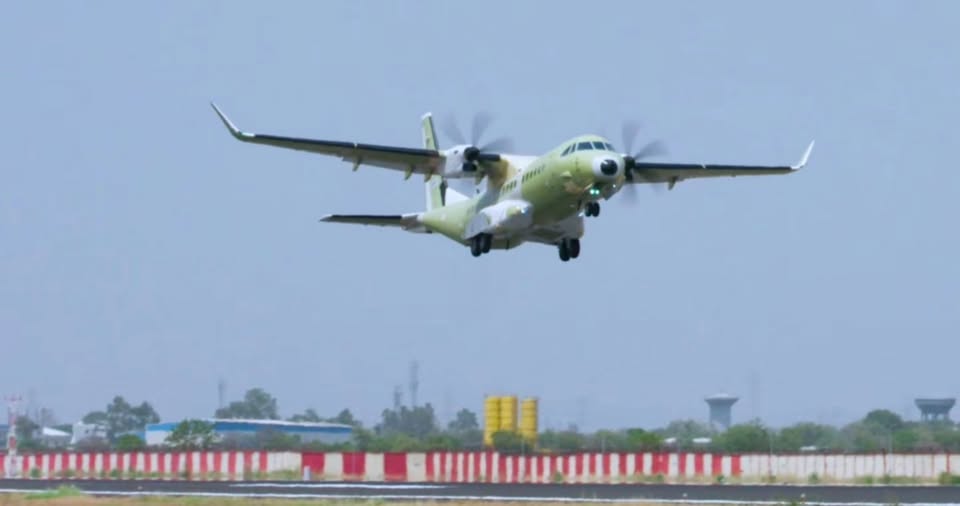
Airbus has awarded Mahindra Aerostructures a major contract to manufacture fuselage skin panels for the A320 aircraft. This marks a significant milestone in India's aerospace ecosystem: a multinational corporation is offshoring high-precision manufacturing to Indian soil. Mahindra becomes part of Airbus's global supply chain for commercial aviation.
Why does the Airbus-Mahindra A320 fuselage contract matter for Make in India?
Airbus has contracted Mahindra Aerostructures to make fuselage skin panels for the A320 family, a multi-year deal that puts an Indian firm inside Airbus's global commercial aviation supply chain. It shows India can compete in certified high-precision aerospace manufacturing, not just assembly, and supports the Atmanirbhar Bharat goal of cutting aerospace import dependence.
The Story in 60 Seconds
What Happened?
Airbus awarded Mahindra Aerostructures a contract to manufacture fuselage skin panels for the A320 narrow-body aircraft family. Mahindra will produce composite and metallic structural components that form the outer skin of aircraft fuselages. The contract represents a multi-year commitment with potential for annual production of hundreds of aircraft components.
Mahindra Aerostructures, based in Hyderabad, possesses ISO 9001 and NADCAP certifications required for aerospace manufacturing. The company operates a 50,000-square-metre facility with advanced CNC machinery and quality control systems. This contract positions Mahindra as a critical node in Airbus's global manufacturing network.
The award validates India's push toward high-value manufacturing. Rather than importing complete parts or assembling imported components, Airbus chose India for design-to-delivery responsibility. This suggests confidence in Indian engineering capability and cost-competitiveness for precision work.
Why It Matters
India's aerospace sector has historically been import-dependent, acquiring aircraft and parts finished abroad. This contract inverts that pattern: foreign OEMs now source from India, creating employment in high-skill manufacturing and anchoring FDI in capital-intensive sectors. The ripple effect extends to steel, aluminium, composites suppliers. For defence, indigenous aerospace capability reduces dependence on foreign suppliers for military aircraft platforms.
CONCEPT BEHIND THE NEWS
- Domestic content requirement (DCR) is a trade policy mandate requiring a minimum percentage of goods to be produced domestically.
- The A320 contract indirectly demonstrates DCR: Airbus, facing pressure to source from emerging markets and reduce supply-chain concentration, turned to India.
- Nations use DCR to build industrial capacity, create jobs, and reduce foreign currency outflows.
- India's defence procurement emphasises DCR; this Airbus deal shows DCR working in the opposite direction: multinational choosing India voluntarily to meet global sourcing diversity and cost goals.
Syllabus Connection
- GS-III | Economy | FDI in manufacturing, Make in India, industrial corridors
- GS-III | Defence | Aerospace capabilities, strategic autonomy, supply-chain resilience
PYQ Connection
- UPSC Prelims 2016 specifically tests Domestic Content Requirement (DCR).
- Airbus's choice of Mahindra exemplifies how multinationals, facing DCR pressure and supply-chain optimisation, now source high-value components from India rather than traditional low-cost Asian suppliers, fulfilling regulatory goals while gaining access to India's skill base.
Question: Which one of the following best describes the term 'Domestic Content Requirement' sometimes seen in the news?
- A clause in a trade agreement which requires the buyer country to purchase at least a portion of the goods and services from the seller country's domestic producers.
- A requirement that a certain percentage of a product must be sourced or manufactured domestically.
- A provision that restricts foreign investment in a specific sector to protect domestic industry.
- A tariff applied only to goods that are wholly produced in a foreign country.
Answer: A requirement that a certain percentage of a product must be sourced or manufactured domestically.
This UPSC PYQ tests the core concept in today's news: direct application of the topic
Connect the Dots
This flow diagram traces how the Airbus-Mahindra contract advances India's aerospace self-reliance. Starting from Airbus's supplier search → India's competitive advantages → contract award → capacity building → defence benefits. Each step shows how one commercial FDI decision cascades into strategic autonomy gains.
- Airbus seeks reliable A320 component suppliers
- India offers cost advantage plus engineering capability
- Mahindra wins contract for fuselage skins
- Indigenous aerospace manufacturing capacity grows
- Defence programme benefits from proven industrial ecosystem
- Outcome: FDI attraction, skill development, strategic autonomy
Exam Takeaway
- Remember: FDI in aerospace strengthens both civilian and defence sectors. Airbus contracts feed India's military aircraft programmes (HAL, DRDO).
- Remember: Domestic content requirement drives this. Multinationals now compete to source from India to meet DCR mandates globally.
- Remember: High-precision manufacturing (aerospace, semiconductors) is India's new frontier, not just assembly or business process outsourcing.
- Remember: Skill spillover: Mahindra's contract will train hundreds of engineers in aerospace standards, benefiting the entire sector.
Exam Angle
- PRELIMS: Make in India sectors, FDI in high-tech manufacturing, Domestic Content Requirement definition | MAINS: How FDI in aerospace advances self-reliance, India's position in global aerospace value chains, strategic sectors and foreign investment policy
Possible Question
Question: The Airbus A320 fuselage contract awarded to Mahindra Aerostructures primarily exemplifies which of the following? 1. Domestic Content Requirement driving FDI. 2. India's capability in precision manufacturing. 3. Reduction of aerospace import dependence.
- 1, 2 and 3
- Only 1 and 2
- Only 2 and 3
- Only 1
Answer: 1, 2 and 3
All three statements are correct. Statement 1: Multinationals choose India partly to meet Domestic Content Requirements globally. Statement 2: Airbus selected India specifically for precision fuselage manufacturing, not low-cost assembly. Statement 3: Mahindra's production contributes to India's indigenous aerospace base, reducing future import needs for aircraft components and supporting defence platforms.
Read More
- The Hindu BusinessLine (Original source article)
- Related: Make in India (Explore more articles in this topic)
Sources & Further Reading
- Primary source | The Hindu BusinessLine, 'Airbus awards A320 fuselage skin manufacturing contract to Mahindra Aerostructures', 31 August 2026
- Airbus Global Supply Chain Strategy reports
- UPSC Prelims 2016 | Economy: Domestic Content Requirement definition and examples