India's Current Account Deficit: When Does Red Become Dangerous?
India's current account deficit widens to $4.2B in Q1 FY27. Is this CAD cycle manageable or the start of external sector crisis? We examine drivers (oil, exports), mechanisms (BoP identity, rupee depreciation), debate (worry vs. calm), and policy options. NCERT-linked. Mains-relevant.
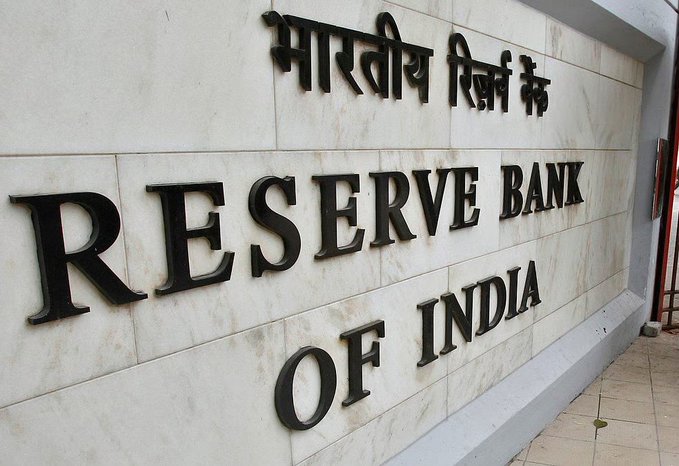
India's current account deficit (CAD) widened to $4.2 billion in Q1 FY27 (April–June 2026), according to Reserve Bank of India data released in early September. This is the first significant deficit after three quarters of surpluses in FY26, reviving concerns about external sector sustainability. But the headline number masks critical distinctions: how the deficit is financed, what drives it, and whether it signals crisis or is simply the cost of growth.
Is India's $4.2 billion current account deficit in Q1 FY27 dangerous?
Not yet. India's current account deficit returned at $4.2 billion in April-June 2026 after three quarters of surplus, driven by an $18.6 billion merchandise trade gap from oil and gold imports, slower services growth and higher profit repatriation. The risk depends on how it is financed: stable FDI and remittances make it manageable, while reliance on volatile flows recalls the 2013 taper tantrum.
What Actually Happened?
India's current account deficit widened to $4.2 billion in Q1 FY27, compared to a surplus of $0.6 billion in Q4 FY26. This marks the return to deficit territory after FY26 ended with a small cumulative surplus. The deterioration is driven by three factors: (1) merchandise trade deficit of $18.6 billion (higher oil and gold imports, slower exports), (2) reduced services surplus (IT, financial services growing slower than historical trend), and (3) higher profit repatriation by foreign firms operating in India.
The merchandise trade deficit is the largest contributor. Oil imports cost $13.2 billion in Q1 FY27, up from $12.1 billion in Q4 FY26, driven by global crude prices averaging $85/barrel. Agricultural exports (rice, cotton) faced headwinds from lower global demand and India's domestic production pressures. Gold imports spiked to $1.8 billion, partly seasonal (monsoon weddings), but also reflecting strong domestic jewelry demand.
The Mechanism: Current Account vs. Capital Account (The Textbook Part)
Balance of Payments (BoP) has two accounts. The current account records goods, services, income flows, and transfers-essentially, what India sells abroad and imports. A deficit means India imports more than it exports (in net terms). The capital account records investment flows: FDI, FII, external borrowing, and remittances. If the current account is in deficit, the capital account must be in surplus to balance. Otherwise, forex reserves deplete.
| Account | Includes | Q1 FY27 Status | What It Means |
|---|---|---|---|
| Current Account | Merchandise trade (goods) + services + income flows + transfers | Deficit of $4.2B | India imports more than exports (running trade deficit) |
| Capital Account | FDI, FII, external borrowing, remittances | Surplus of $8.1B (projected) | Foreign investment and inflows exceed outflows |
| Overall BoP | Current + Capital | Surplus of ~$3.9B | Forex reserves are building (not depleting) |
| Key Mechanism | CAD must be financed by capital inflows | As long as KA surplus > CA deficit, BoP is stable | Rupee strengthens or stabilizes (or weakens less) |
The critical insight: a current account deficit is NOT automatically bad. It reflects India's attractiveness to foreign investors (capital inflows) and its growth (higher demand for imports). The problem arises when capital inflows dry up-then the CAD becomes unsustainable, and the rupee crashes. This is what happened in 2013.
How Did We Get Here? Timeline of CAD Cycles
- 2011–2012 CAD touches 4.2% of GDP (₹72,000 crore). Global slowdown + oil prices high. Rupee falls from ₹50 to ₹60 per USD.
- 2013: Taper Tantrum US Fed signals QE taper. Foreign funds exit emerging markets (especially India). CAD peaks at 4.8% of GDP. Rupee crashes to ₹68. Inflation surges. Political crisis in India (AAP insurgency). RBI hikes rates to 8.5%.
- 2014–2016 Modi govt takes charge. Oil prices collapse. CAD shrinks to 1.5% of GDP by 2015. Forex reserves build. Rupee stabilizes around ₹65–67.
- 2017–2019 Oil prices recover (average $60–80/barrel). CAD widens to 2.1% of GDP (2018). But FDI remains strong (Jio's capex boom, corporate investments). BoP stays manageable.
- 2020–2022: COVID Oil crashes (negative prices April 2020). CAD becomes surplus. Gold imports surge (safe-haven demand). Remittances spike (Indians abroad send money home). Forex reserves hit $600B.
- 2023–2024 Post-COVID normalization. CAD small but positive (0.5–1%). Oil prices moderate ($70–85). Tech exports strong. Forex reserves stable at $580B.
- 2025–2026 FY26 ends with small surplus. FY27 Q1: deficit of $4.2B returns. Oil at $85/barrel. Global growth slowing. FII outflows in July–Aug (concerns over China, global recession).
The Core Drivers of CAD in FY27
Three drivers explain Q1 FY27's $4.2 billion deficit:
- Oil imports: At $85/barrel, India imports ~4 million barrels per day. That's $13.2B in 90 days. Oil is India's single largest import by value (60–70% of merchandise trade deficit).
- Gold imports: Jumped to $1.8B in Q1 (seasonal + investment demand). Domestic gold prices high due to global price surge.
- Slowing exports: IT services growth at 2.1% YoY (slowest in 5 years). Manufacturing exports face headwinds (textiles -3%, pharma +1%). This is cyclical-global slowdown hitting India's exporters.
The Debate: Is This CAD Crisis or CAD Cycle?
| Perspective | Argument | Evidence | Exam Angle |
|---|---|---|---|
| Worry Camp | CAD + falling forex = rupee crash risk (like 2013). If FII flows slow and current account deficit persists, rupee could hit ₹85–90 within quarters. | Global slowdown mounting; China devaluation signals currency wars ahead; US rates high; FII flows negative in Aug 2026 (-$200M). Oil doesn't look cheap. | 2013 Taper Tantrum as historical precedent; twin deficit (fiscal + current account) problem; RBI rate hike constraints |
| Calm Camp | CAD is financed by strong FDI + remittances. Forex reserves at $580B are comfortable (9 months of imports). India is not 2013 China or Turkey. Growth is solid. | FDI strong at $8–9B/quarter. Remittances from Gulf ($8B/quarter) stable. RBI forex buffer large. India's current account deficit is 1.2% of GDP-below 2% 'safety threshold'. | Balance of Payments identity: as long as capital flows > current deficit, BoP is stable; India's structural demand for growth supports FDI inflows |
| Middle Ground (Most Likely) | CAD is manageable if oil prices don't spike and FDI holds. But there are risk factors: global slowdown will hit exports; if oil rises to $95+, CAD could hit 2% of GDP, requiring policy tightening. | Oil at $85 is manageable; if it hits $100+, CAD as % of GDP jumps significantly. FDI is sticky (semiconductors, defence manufacturing); but FII volatile. Exports need to accelerate. | Policy frameworks matter: RBI can manage via rate policy + forex intervention. Fiscal discipline (low govt borrowing) keeps capital inflows stable. |
The Red Flags: When Does CAD Become Dangerous?
Economists broadly agree: a current account deficit of 1.5–2% of GDP is sustainable for a growing developing economy. Beyond 2%, it raises warning flags. Why? Because financing $8–10B deficits every quarter requires constant capital inflows. If those inflows falter (global recession, FII exodus, external shock), rupee crashes and inflation spikes.
- Sustainability threshold: CAD > 2.5% of GDP for multiple quarters is risky.
- Financing risk: If capital account surplus shrinks below current account deficit, forex depletes fast.
- Forex buffer: If forex falls below 6 months of imports (~$150B for India), rupee vulnerability increases.
- Debt composition risk: If CAD is financed by short-term external borrowing (rather than FDI), rollover risk emerges.
- Twin deficit trap: High fiscal deficit (govt borrowing) + current account deficit crowds out private investment, forcing higher interest rates.
What Could Happen Next? Three Scenarios
- [object Object]
- [object Object]
- [object Object]
Why It Matters for India: Impact Table
| Impact Area | If CAD Widens (₹ weakens) | If CAD Shrinks (₹ strengthens) |
|---|---|---|
| Rupee value | Rupee depreciation (₹84 → ₹88). Imported goods become costlier. | Rupee appreciation (₹84 → ₹80). Cheaper imports, boost purchasing power. |
| Inflation | Imported inflation: fuel, fertilizer, chemicals become expensive. CPI pressure (headline inflation rises). RBI forced to keep rates high. | Disinflation: cheaper imports ease price pressure. RBI can cut rates, supporting growth. |
| Interest rates & lending | Higher rates needed to attract forex inflows. Corporate & home loan rates stay high. Growth slows. | Lower rates possible. Lending becomes cheaper. Investment picks up. Growth supports. |
| Stock market & FII | Rupee weakness scares foreign investors. FII outflows (sell India story). BSE/NSE indices fall. | Rupee strength attracts FII inflows. Indices rise. Valuations improve. |
| Debt repayment | External debt becomes costlier to repay (more rupees needed for $1). Debt servicing burden rises. | External debt becomes easier to repay. Debt servicing burden eases. |
| Exports competitiveness | Rupee weakness makes Indian goods cheaper abroad. Export volumes rise. Trade deficit shrinks over time. | Rupee strength makes Indian goods costlier abroad. Exports face headwinds short-term. |
Connect the Dots: CAD Widening Cycle (2026)
- Global slowdown + China devaluation signal weak global demand ahead
- Oil prices stay high due to geopolitical tensions (Middle East supply fears)
- India imports oil at $13B/quarter; exports (IT, textiles) face demand headwinds
- Trade deficit widens → current account deficit emerges ($4.2B in Q1)
- Rupee weakens if capital inflows slow (FII concerned about global recession)
- Weaker rupee → imported inflation → RBI keeps rates high → growth pressure
- Policy tightening needed to defend rupee + control inflation
What Should We Watch? Four Indicators
- Oil prices: If Brent stays above $90, CAD will widen. Below $75, CAD shrinks. Geopolitical triggers (Iran sanctions, Houthi shipping attacks) can spike prices unexpectedly.
- US interest rates: Fed rate expectations drive FII flows. If Fed keeps rates high (US recession averted), FII will exit India for higher US bond yields. Monitor Fed guidance monthly.
- Merchandise exports: India's IT, pharma, textile exports are slowing. Recovery here is crucial. If export growth stays below 3%, CAD will persist.
- Capital inflows (FDI + remittances): FDI in semiconductors, defence, infra is sticky. But FII is fickle. Watch quarterly FII flows closely. If FDI + remittances < CAD, rupee falls fast.
Concept Deep Dive: The Balance of Payments Identity (NCERT Ch. 6)
NCERT Class XII Introductory Macroeconomics Chapter 6 teaches that Balance of Payments must always balance: Current Account + Capital Account = 0 (in accounting terms). In practice: if there's a current account deficit (negative), it must be matched by a capital account surplus (positive) for the overall BoP to balance. This is an identity, not a policy goal.
- Current Account Deficit = India imports more goods/services than it exports (trade deficit + income flows). This is not inherently bad-it reflects growth and investment demand.
- Capital Account Surplus = foreign investors put more money into India than Indians take out (FDI, FII, external borrowing). This finances the CAD.
- The mechanism: When India runs CAD, it needs rupees to pay for imports. Foreigners earn those rupees by selling goods/services to India. To convert rupees back to dollars, they need capital market access (invest in Indian stocks, bonds, real estate).
- Risk: If capital flows dry up (recession abroad, loss of confidence in India), the CAD becomes unfundable. Rupee crashes. This is the crisis mode (2013 Taper Tantrum).
Syllabus Connections & Exam Relevance
- GS-III Economy: External sector, balance of payments, current account deficit, capital flows, forex management
- GS-III Economy: Rupee volatility, inflation-forex nexus, RBI policy tools (rate policy, forex intervention)
- GS-III Economy: India's growth model and import dependence (oil, gold, technology)
- NCERT Class XII Introductory Macroeconomics: Chapter 6 - Open Economy Macroeconomics (BoP structure, current vs. capital account, exchange rate determination, capital controls)
- UPSC Prelims: BoP definitions, CAD calculations, crisis thresholds, RBI tools
- UPSC Mains (GS-III): Essay on India's external sector sustainability, policy options for managing CAD, structural vs. cyclical drivers
PYQ Connection | When Was CAD Tested?
- 2013: Taper Tantrum crisis-UPSC tested rupee crash, forex pressure, monetary policy constraints. Every economics candidate should know this history.
- 2018: UPSC Mains GS-III asked about India's external sector vulnerability and policy options. Answer framework: CAD vs. BoP, policy tools (fiscal consolidation, export promotion, FDI attraction).
- 2019–2020: Prelims tested BoP structure, current account definitions, forex management. Expect these definitions every cycle.
- 2024–2025: Post-COVID era saw renewed CAD focus. Expect mains questions on external sector sustainability post-2026 as India's growth model stress-tests.
Policy Options: How Can India Manage CAD?
| Policy | Mechanism | Trade-off | India's Current Status |
|---|---|---|---|
| Fiscal Consolidation | Reduce govt borrowing → lower interest rates → less capital needed from abroad → smaller CAD | Requires spending cuts or tax hikes; politically costly | Fiscal deficit at 5.2% of GDP (FY26)-room for consolidation but not aggressive |
| Export Promotion | Boost manufacturing (Make in India), tech services. Narrow merchandise trade deficit. | Takes time (3–5 years); requires capex in infra & skill | IT services growth slowing; manufacturing still low. Long-term strategy, not short-term fix |
| Import Rationalization | Reduce non-essential imports (gold, luxury goods). Tariffs on discretionary imports. | Affects growth (consumption falls); politically unpopular | Gold imports rising (investment + weddings). Limited scope for cuts |
| FDI Attraction | Incentivize foreign investment in semiconductors, defence, manufacturing. Sticky capital, not hot money. | Requires competitive tax rates, clear rules. Success takes time. | FDI in semiconductors & defence strong. But depends on global investment climate |
| Monetary Policy | RBI can attract forex inflows via higher interest rates (inverted carry trade). Keep rates above global averages. | Higher rates slow growth; inflation control becomes harder | RBI rates at 6.5%. Room to hike if rupee pressure mounts |
Jasvin Thinks
Bottom Line
India's Q1 FY27 current account deficit of $4.2 billion is a return to normal after surplus years-driven by higher oil costs and slowing exports. It is not crisis territory (yet). But it signals that India's external sector faces headwinds: global slowdown, oil price stickiness, and competitive pressures on exports. The deficit is manageable as long as foreign investment flows hold (FDI + remittances > CAD). If capital inflows falter, rupee weakens, inflation spikes, and RBI's policy space shrinks. The next 12 months will reveal whether this is a cyclical dip or the start of structural external sector stress. Watch oil prices, FII flows, and export recovery metrics closely.
Key Terms & Definitions
- Current Account: Records flows of goods, services, income, and transfers. A deficit means more cash flows out than flows in. Financed by capital account surpluses.
- Capital Account: Records investment flows-FDI (foreign firms investing in India), FII (foreign stock investors), external borrowing, remittances. Surplus means inflows > outflows.
- Balance of Payments: Current Account + Capital Account. Must sum to zero (by accounting identity). If BoP is in surplus, forex reserves build. If deficit, reserves deplete.
- Forex Reserves: Rupees earned by foreigners selling to India, parked in RBI. Used to defend rupee against depreciation. India's buffer: $580B (9 months of imports).
- CAD Threshold: 1.5–2% of GDP is sustainable. Above 2.5%, risky. 2013 India hit 4.8%-crisis territory.
- Twin Deficit Trap: When fiscal deficit (govt borrowing) + current account deficit (trade deficit) both widen, growth slows, interest rates rise, capital flows dry up.
- Rupee Depreciation: If CAD widens + capital dries up, rupee weakens (₹84 → ₹88). Makes imports costlier, exports cheaper.
- External Debt Sustainability: If CAD is financed by short-term borrowing (vs. long-term FDI), rollover risk emerges. India relies more on FDI, so risk is lower.
Practice Question (Mains-Style)
Question: India's current account deficit widened to $4.2 billion in Q1 FY27. Analyse the drivers of this deficit, the mechanisms linking CAD to rupee depreciation and inflation, and the policy options available to RBI and the government to manage external sector sustainability. (350 words, GS-III Economy)
- Discuss oil imports, export slowdown, and gold imports as drivers
- Explain BoP identity: CAD must be financed by capital flows; if capital dries up, rupee falls
- Connect rupee depreciation to imported inflation; show RBI's rate policy dilemma
- Policy options: FDI attraction, export promotion, fiscal consolidation, import rationalization
Answer: Discuss oil imports, export slowdown, and gold imports as drivers
This is an open-ended mains question. A complete answer should: (1) List CAD drivers (oil at $85/barrel, slowing exports in IT/textiles, gold imports); (2) Explain BoP identity and financing mechanism; (3) Show the rupee-inflation nexus (weaker rupee → imported inflation → RBI rate pressure); (4) Discuss policy trade-offs (RBI rate hikes attract forex but slow growth; fiscal consolidation is politically hard; export promotion takes time). Use NCERT Ch. 6 framework. Reference 2013 Taper Tantrum as historical precedent. Answer should be structured, data-backed, and show exam-level understanding of external sector constraints.
Sources & Further Reading
- Primary: RBI Bulletin (September 2026) - BoP data, Q1 FY27 analysis
- Article: Economic Times, 'India's current account deficit widens to $4.2 billion in Q1 FY27' (September 2, 2026)
- NCERT: Class XII Introductory Macroeconomics, Chapter 6 - Open Economy Macroeconomics (BoP structure, exchange rate, capital flows)
- Historical: 2013 Taper Tantrum - rupee crash, forex pressure, RBI policy response
- Policy: Ministry of Finance & RBI Annual Reports (FY26, FY27 E) - external sector assessment
- Academic: Swaminathan Aiyar (Indian Express) on BoP cycles and India's external sector
- Data: RBI Dashboard (rbi.org.in) - live forex, CAD, capital flows tracking