Mumbai's Deluge Is a Verdict on How India Thinks About Water
Mumbai swung from a June water shortage to a July deluge in weeks. Environment and climate columnist Kaushik Das Gupta argues this is not a weather anomaly but a verdict on the utilitarian imagination of water in urban India, where water is treated as a resource to be extracted in summer and an inconvenience during the monsoon. Drawing on historian Sunil Amrith's 'Unruly Waters' and China's sponge city experiment, he argues Indian cities must plan with water rather than against it.
Mumbai swung from a June water shortage to a July deluge in weeks. The obvious reading is that this is a run of bad weather, an anomaly to be endured until the monsoon passes. Kaushik Das Gupta, Senior Associate Editor at The Indian Express and its environment and climate columnist, argues the opposite: the flood is a verdict on the utilitarian imagination of water in urban India, where water is treated as a resource to be extracted during the dry months and an inconvenience during the monsoon. The harder question he raises is whether Indian cities can stop engineering their way around water and start planning with it.
Why did Mumbai go from water shortage to flooding in 2026?
Mumbai faced water scarcity in June 2026 and then heavy rain in early July that flooded roads, halted local trains and caused about 10 deaths. Columnist Kaushik Das Gupta argues this is not a weather anomaly but the result of planning that treats water as something to extract in summer and drain in the monsoon, rather than planning with it.
The Story in 60 Seconds
What Happened?
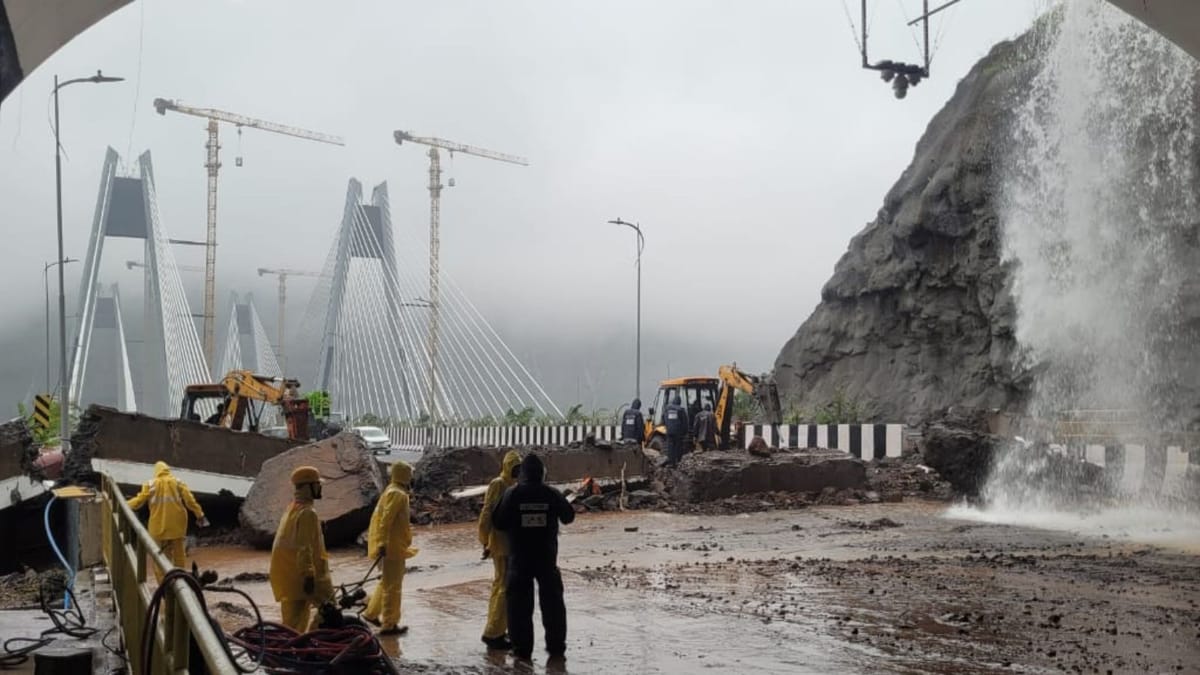
In the first week of July 2026, heavy rain brought Mumbai to a halt. Roads resembled rivers, suburban local trains ran hours late or were suspended, and the Brihanmumbai Municipal Corporation (BMC) declared a holiday for schools and colleges on July 6 after the India Meteorological Department issued a red alert. Around 10 rain-related deaths were reported in the city in the week, and the Mumbai-Pune Expressway was severed by a landslide that killed three people, with the newly opened 'Missing Link' section shut for more than 18 hours.
The deluge followed weeks of drought-like conditions. Mumbai's utilities had spent June managing reservoir levels and water supply after a weak start to the monsoon, and the city had been actively conserving water. The monsoon's abrupt arrival converted a shortage into flooding within days. Mumbai's normal annual rainfall is about 2,373 mm at Santacruz (IMD normal), among the highest of any Indian metropolis.
The columnist reads the whiplash not as isolated bad luck but as a structural verdict. A city that treated water as a resource to be extracted in the dry months and an inconvenience in the monsoon lost the understanding of water as an integral part of ecological systems. The deluge, in this reading, is what happens when a city manages water as a commodity and an obstacle rather than as a living system.
The Science
- What is the phenomenon?: Extreme rainfall on a coastal megacity. Mumbai sits on a peninsula of creeks, mangroves, reclaimed land and a stormwater drain network, so a single intense spell lasting a few hours can exceed the design capacity of its drainage.
- How does it work?: Rain must move from the ground into drains, then through creeks into the sea. When rain falls faster than drains can carry it, or when the tide is high, water has nowhere to go and ponds on roads and in low-lying neighbourhoods.
- What conditions cause it?: A warming Arabian Sea adds moisture to the air, making extreme rain more intense; rising sea levels block gravity drainage at high tide, backing stormwater into drains; and lost wetlands, mangroves and permeable ground have removed the natural sponges that once absorbed the surplus.
Mumbai receives roughly 2,400 mm of rain a year, with the IMD normal at Santacruz about 2,373 mm, an enormous annual total for a megacity. The problem is not the total but the intensity and the timing: the rain arrives in extreme bursts in a city whose drainage is partly designed for less.
The science points to a compound problem rather than a single cause. A warmer Arabian Sea puts more moisture into the atmosphere, so the same monsoon can drop more water in a shorter time. Rising sea levels then push back against the stormwater drains at high tide, precisely when they need to discharge into the sea. Each factor on its own is manageable; together they overwhelm the engineered system.
How Did We Get Here?
India's relationship with water, historian Sunil Amrith argues in 'Unruly Waters', has been an urge to engineer it: damming rivers, reclaiming wetlands, embanking floodplains and straightening channels. The columnist draws on that history to explain why Mumbai's geography has been reshaped against its own hydrology, and why the deluge is best understood as the water pushing back.
- July 2012 Beijing's floods kill about 79 people, prompting China's leadership to take the sponge city idea pioneered by landscape architect Kongjian Yu seriously.
- 2015 China's State Council issues sponge city guidelines: by 2030, more than 80% of urban areas should capture and reuse at least 70% of annual rainfall.
- 2019 Chennai runs out of water in summer and is flooded within weeks, a crisis-then-floods cycle the columnist names alongside Delhi and Bengaluru as a national planning pattern.
- June 2026 Mumbai manages a water shortage after a weak start to the monsoon, conserving supply and tracking reservoir levels.
- July 2026 Heavy rain floods Mumbai; the BMC declares a school holiday on July 6, suburban rail halts, and a landslide on the Mumbai-Pune Expressway kills three.
The Ecological System
The columnist's central move is to reframe Mumbai's creeks, mangroves, floodplains and wetlands not as obstacles to development but as part of the city's water system. When those were filled, built over and drained, the city lost its natural capacity to absorb rain. This is the utilitarian imagination: water seen only through the lens of extraction in summer and inconvenience in the monsoon.
Amrith's 'Unruly Waters' argues that water resists the certainties of conventional engineering. Rivers shift, the sea rises and rain arrives in bursts. A system designed around control fails precisely when the water refuses to be controlled, which is what happened in July 2026. The drains and pumping stations built to dominate the monsoon were overwhelmed because the city had already removed the natural infrastructure that once did the absorbing.
Connect the Dots
- CAUSE | Engineering mindset: damming, reclamation, embanking floodplains and straightening channels treat water as a resource to be controlled, not as part of a living system.
- ENVIRONMENTAL CHANGE | Lost natural infrastructure: wetlands, mangroves, creeks and permeable ground are built over, removing the city's natural water storage.
- CLIMATE AMPLIFICATION | A warming Arabian Sea raises atmospheric moisture and sea level, intensifying extreme rain and blocking gravity drainage at high tide.
- HUMAN IMPACT | Flooded roads, halted rail, closed schools and deaths; the June shortage becomes a July deluge within days.
- POLICY RESPONSE | Instead of bigger drains alone, adopt a sponge approach: parks as detention basins, restored wetlands, green roofs, permeable pavements and urban forests.
- OUTCOME | A city that plans with water absorbs rain and reuses it in the dry months, rather than fighting the monsoon with concrete.
What Is Driving the Problem?
- Natural triggers: intense monsoon bursts and high tides, which slow the discharge of stormwater into the sea and back it into the city.
- Human triggers: urbanisation on reclaimed and low-lying land, the filling of wetlands and mangroves, and impermeable concrete surfaces that turn rain into immediate runoff.
- Policy and governance: a reliance on grey infrastructure (drains, pumping stations) designed for rainfall patterns of the past, with little investment in restoring the natural drainage that made the city liveable in the first place.
Who Is Affected?
Water Management Solutions
| Group | How it is affected |
|---|---|
| Commuters | Suburban rail is the city's lifeline; suspension and delays during the July 2026 rains paralysed daily movement for millions. |
| Low-lying neighbourhoods | Areas on reclaimed and marshy ground flood first and drain last, especially when rain coincides with high tide. |
| Schools and children | A BMC holiday on July 6 shut schools and colleges; repeated disruptions fragment schooling across the monsoon season. |
| Workers and the informal economy | Work-from-home advisories and closed offices hit daily-wage and informal workers hardest, who cannot move their income online. |
| The poorest households | Water shortage and flooding hit the poorest twice: paying more for water in June, then living with waterlogged streets in July. |
The Policy Response
The columnist's prescription is not more concrete but more sponges. Drawing on landscape architect Kongjian Yu's vision, he argues that cities should behave like sponges rather than pipelines. Parks become detention basins during storms, restored wetlands store and filter water, green roofs and permeable pavements slow runoff, and urban forests give the rain somewhere to go instead of straight into a drain.
China's experience shows scale is possible. After Beijing's July 2012 floods killed about 79 people, the sponge city concept pioneered by Yu was made national policy. The State Council's October 2015 guidelines set a target of more than 80% of urban areas capturing and reusing at least 70% of annual rainfall by 2030. Critics note results have been uneven, with some pilot cities still flooding in extreme events, but the direction is a useful benchmark for India.
The Debate
Urban Infrastructure Investment
| Position | Core claim |
|---|---|
| Engineer against water | Bigger drains, more pumping stations and stronger embankments are the reliable answer; nature-based solutions are unproven at city scale. |
| Plan with water | No amount of grey infrastructure can out-build the monsoon; restoring wetlands, detention basins and permeable surfaces absorbs rain and reuses it. |
| The evidence | China's sponge city pilots reduced local waterlogging in moderate events but strained under extremes. The columnist's synthesis: both are needed, but the emphasis must shift toward living with water. |
What Is Clear? What Remains Uncertain?
- It is established that Mumbai received heavy rain in early July 2026 after a dry June; that roads flooded, suburban rail halted and the BMC declared a school holiday on July 6; that around 10 rain-related deaths occurred in the city in the week and a landslide severed the Mumbai-Pune Expressway, killing three; and that Mumbai's normal annual rainfall is about 2,373 mm at Santacruz.
What is not settled is how much of the specific July 2026 event can be attributed to climate change versus natural variability, a question scientists typically answer over longer periods and larger regions. It is also uncertain how far sponge city measures, which China itself found strained by extreme events, can protect a dense coastal megacity like Mumbai.
What Happens Next?
If the trend of more intense rainfall bursts continues, urban flooding will become more frequent even in cities with functioning drains, because the rain will keep exceeding the design capacity of the pipes. If policy instead invests in restoring wetlands, mangroves and permeable surfaces, the same rain will do less damage and the captured water can ease dry-season shortages. The columnist's closing frame is the test: places are not built apart from water; their fates are intertwined with living hydrological systems. The sooner India's cities learn to plan with water rather than against it, the more resilient their future will be.
Why Does It Matter for India?
Mumbai's cycle is a national symptom, not a local story. Delhi's groundwater crisis and shrunken Yamuna, Bengaluru's destroyed lakes, and Chennai's 2019 water crisis followed by floods are all the same planning philosophy applied to different geographies. For an informed reader and an exam aspirant, the point is structural: urbanisation across India has been built against water, and climate change is converting that planning flaw into recurring disaster. Getting the diagnosis right, the columnist argues, determines whether cities keep building bigger walls or finally learn to plan with water.
CONCEPT BEHIND THE NEWS
Bottom Line
Mumbai's July 2026 deluge, coming weeks after a June water shortage, is best understood as a verdict on how Indian cities treat water: as a resource to be extracted in summer and an inconvenience in the monsoon, rather than as a living system the city is part of. Climate change magnifies the failure, warming the Arabian Sea and raising sea levels. The way out, the columnist argues, is not bigger engineering but a sponge approach: parks, restored wetlands, permeable pavements and urban forests that absorb and reuse rain. Until cities plan with water rather than against it, the same whiplash will return, city after city.
Key Environmental Terms
- Unruly Waters: historian Sunil Amrith's phrase for water systems that resist human control, and the title of his book on monsoon, rivers and power across Asia.
- Sponge city: urban planning that uses nature to absorb, store and filter rain, popularised by landscape architect Kongjian Yu.
- Grey infrastructure: conventional engineered works such as drains, pumping stations and embankments.
- Gravity drainage: the movement of stormwater by slope into creeks and the sea, which is blocked when the tide is high.
- Permeable pavement: surfaces that let water soak into the ground instead of running off.
- Detention basin: a park or low-lying area that temporarily holds stormwater during heavy rain.
Data / Indicators
Environment Analysis - Table 3
| Indicator | Reading |
|---|---|
| Mumbai annual rainfall | IMD normal about 2,373 mm at Santacruz (range roughly 2,213-2,502 mm) |
| July 2026 deluge | Submerged roads, halted suburban rail, BMC school holiday on July 6 |
| Rain-related deaths, Mumbai week of July 2026 | About 10 |
| Mumbai-Pune Expressway | Severed by landslide, killing 3; 'Missing Link' shut for over 18 hours |
| China sponge city target (State Council, 2015) | Over 80% of urban areas capturing and reusing at least 70% of annual rainfall by 2030 |
| Beijing July 2012 flood | About 79 deaths; prompted the national sponge city policy |
Read More
- The Indian Express (Original article source)
- Explore More (Related articles in Environment)
Sources & Further Reading
- Primary | Kaushik Das Gupta, "In Mumbai's deluge, a lesson: You can't engineer your way around water systems", The Indian Express, July 7, 2026
- Corroboration | "Monsoon fury brings Mumbai-Pune to a standstill; 'Missing Link' reopens", Rediff.com/PTI, July 6, 2026
- Corroboration | "13 dead in Maharashtra rain fury, Mumbai submerged, landslide buries Pune house", India Today, July 6, 2026
- Corroboration | "Heavy rains trigger landslides, disrupt Mumbai-Pune rail services and Expressway traffic", The New Indian Express, July 6, 2026
- Corroboration | "'Sponge cities' absorb urban flooding woes", China Daily, October 2020 (on the State Council's 2015 guidelines)
- Corroboration | "The architect making friends with flooding", MIT Technology Review, December 2021 (on Kongjian Yu and the sponge city)
- Context | Sunil Amrith, 'Unruly Waters: How Rains, Rivers, Coasts and Seas Have Shaped Asia's History'
- Further Reading | Accounts of the July 21, 2012 Beijing flood and its toll of about 79 deaths (BBC News, July 2012)