Kishau Dam: Six States Break Water-Sharing Deadlock
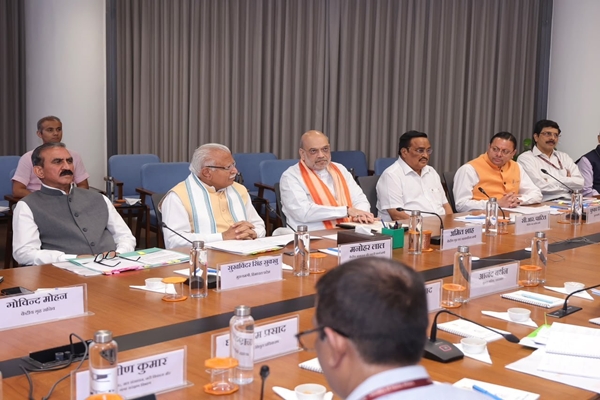
On September 15, 2026, chief ministers of six states signed a landmark MoU on the Kishau Multipurpose Dam project on the Tons River in Himachal Pradesh. The agreement, signed in presence of Union Home Minister Amit Shah, resolves a dispute dating back decades over water sharing and cost allocation. The 232.6-meter dam will store 1562 million cubic meters of water, irrigate 97000 hectares, generate 1476 megawatts of hydroelectric power, and supply 517 MCM of drinking water annually. The Rs 15624 crore project will be 90 percent funded by the Centre with the remaining 10 percent shared among participating states.
What is the Kishau Dam agreement signed by six states in September 2026?
On September 15, 2026, six states signed an MoU on the Kishau Multipurpose Dam on the Tons River in Himachal Pradesh, ending a decades-old dispute over water sharing and costs. The ₹15,624 crore project is 90% Centre-funded and will generate 1,476 MW, irrigate 97,000 hectares and supply 517 MCM of drinking water a year.
Water disputes are among the most intractable federalism challenges. When six states with competing interests find common ground, it represents a triumph of consensus-based governance over litigation.
Water Resources Experts, September 2026
What Happened
The Kishau project, first proposed in the 1990s, was caught in water-sharing disputes between six riparian states. Core disputes centered on water allocation and cost distribution. The Central government intervened. After years of negotiation, the September 15 MoU codifies the solution. Himachal Pradesh's water share goes to Delhi and Rajasthan. Delhi and Rajasthan compensate Himachal Pradesh through shared electricity costs. Uttarakhand receives irrigation benefits. UP gets irrigation in border areas. Haryana benefits from storage-based water availability. The project becomes a national project, with Centre bearing 90 percent of costs.
Why It Matters
This breakthrough contrasts with India's other water disputes. The Cauvery dispute (Karnataka, Tamil Nadu, Kerala, Puducherry) has been in courts for 30 plus years without resolution. The Krishna dispute involves four states with no settlement. The Indus Waters Treaty between India and Pakistan is the only successful large-scale agreement. Kishau's success reflects Central government mediation, financial incentives, and willingness to trade water shares against electricity compensation. The agreement moves from zero-sum litigation to negotiated settlement.
Concept Behind the News
- Riparian rights: States with territory in river basin claim water allocation and usage rights
- Multipurpose dams: Infrastructure designed for multiple objectives—irrigation, hydropower, drinking water, flood control
- Federalism and water: Constitution places water as concurrent subject; Parliament adjudicates disputes under Article 262
- Negotiation vs litigation: Litigation (Cauvery 30+ years unresolved) versus negotiation-based settlement (Kishau model)
- Water governance: Central funding and coordination enable consensus-based solutions across competing state interests
Syllabus Connection
- GS-II (Polity): Article 262, inter-state disputes, federalism, Centre-state relations
- GS-III (Environment): Water resources, river basins, water security, environmental assessment
PYQ Connection
UPSC Prelims 2025 — Physical Geography, Rivers & Water Bodies
Question: The irrigation device called 'Araghatta' was:
- A Persian wheel for lifting water from wells
- A bucket system operated by animals for irrigation
- A water channel for terraced agriculture
- A dam for water storage and flood control
Answer: A Persian wheel for lifting water from wells
Araghatta is an ancient irrigation technology; understanding traditional water management provides context for modern projects like Kishau Dam that aim to manage water resources for irrigation, hydropower, and flood control.
Question: Consider the following pairs: Territorial region : River flowing in the region. I. Asmaka : Godavari. II. Kamboja : Vipas. III. Avanti : Mahanadi. Which is correct?
- Only I
- I and II only
- II and III only
- All three
Answer: I and II only
Understanding ancient river geography helps contextualize modern water projects. The Tons River (Kishau's location) is part of the Yamuna basin—similar historical-geographical analysis applies.
Question: Consider the following water bodies: I. Lake Tanganyika. II. Lake Tonlé Sap. III. Patos Lagoon. Through how many of them does the equator pass?
- Only one
- Only two
- All three
- None
Answer: Only two
Water body characteristics (equatorial distribution, seasonal variation) are relevant to understanding river basin geography. Tons River basin characteristics affect dam planning for irrigation and hydropower.
CAPF 2020 — Constitutional Law & Water Resources
Question: In relation to the fundamental duties enshrined in the Constitution of India, which one of the following is NOT correct?
- Every citizen shall abide by the Constitution
- It is the duty of the State to protect and preserve waters
- Citizens must develop scientific temper
- Citizens must not participate in environmental degradation
Answer: Every citizen shall abide by the Constitution
Fundamental duties include protecting natural resources and waters. The Kishau Dam project reflects constitutional duty to develop water resources while protecting ecosystems.
Question: Which one of the following methods can be used to remove permanent hardness of water?
- Boiling the water
- Adding alum to the water
- Adding washing soda (sodium carbonate)
- Filtering through sand
Answer: Adding washing soda (sodium carbonate)
Water treatment chemistry is relevant to dam projects which must manage water quality for irrigation and domestic use. Kishau Dam's water management requires understanding treatment methods.
UPSC Mains 2013-2016 — Water Resources, Federalism & Geophysics
2013 | Geophysical Phenomena & Geography Features: (a) Bring out the causes for more frequent occurrence of landslides in the Himalayas than in the Western Ghats. (100 words) (b) There is no formation of coral reefs in the Bay of Bengal as the rivers supply huge quantities of freshwater. Explain. Exam relevance: Himalayan geology and hydrogeology directly relevant to Kishau Dam project site selection; understanding regional geophysical factors affecting water resources.
2014 | Natural Resources & Industrial Location: Why did the Green Revolution in India virtually by-pass the eastern region despite fertile soil and good availability of water? Exam relevance: Understanding barriers to utilising available water resources; Kishau Dam represents effort to resolve similar regional water scarcity issues despite national abundance.
2015 | Natural Resources & Industrial Location: India is well endowed with fresh water resources. Critically examine why it still suffers from water scarcity. Exam relevance: DIRECTLY PARALLEL to Kishau Dam narrative—addressing paradox of water abundance yet scarcity through inter-state agreements and infrastructure projects.
2016 | Natural Resources & Industrial Location: The effective management of land and water resources will drastically reduce the human miseries. Explain. Exam relevance: Kishau Dam exemplifies effective water resource management for irrigation, hydropower, flood control—reducing agricultural distress and regional water inequality.
Visual Explanation: Water Dispute Resolution Models
| Dispute | Cauvery | Krishna | Indus Waters Treaty | Kishau Model |
|---|---|---|---|---|
| States Involved | Karnataka, Tamil Nadu, Kerala, Puducherry | Four states (Telangana, Karnataka, Andhra Pradesh, Maharashtra) | India-Pakistan (bilateral) | Six states (HP, Haryana, Delhi, Rajasthan, UP, Uttarakhand) |
| Duration | 30+ years in courts (unresolved) | Multiple years, ongoing | 50+ years (successful) | Decades of deadlock → MoU Sept 2026 |
| Resolution Method | Supreme Court litigation; zero-sum approach | Interstate tension; divergent interests; no settlement | Neutral arbitration; clear international framework | Central mediation; negotiation-based; financial incentives |
| Funding Model | State-by-state (no central support) | State-by-state (limited coordination) | Bilateral (India-Pakistan each responsible) | Centre 90%, States 10% (enables agreement) |
| Key Feature | Litigation stalls progress for decades | No binding framework; competing interests | Successful precedent: bilateral water diplomacy works | Financial incentives unlock consensus; transform conflict to cooperation |
| Status | Still unresolved | Still disputed | Model for international water agreements | Resolved; implementation beginning 2026 |
Connect the Dots
- 1990s Proposal: Kishau Multipurpose Dam first conceptualized for Tons River basin development; multiple objectives identified (irrigation, hydropower, drinking water, flood control)
- Decades of Deadlock: Water-sharing disputes between six riparian states prevent project advancement; Cauvery-style litigation-focused approach stalls progress for 20+ years
- Central Mediation Begins: Union government intervenes with negotiation strategy; reframes project as national priority; Centre commits to 90% funding (breaks cost-sharing deadlock)
- Allocation Framework Finalized: Water shares defined—Himachal Pradesh water to Delhi & Rajasthan; Uttarakhand & UP get irrigation benefits; Haryana gets storage-based water availability
- September 15, 2026 MoU Signed: Six chief ministers sign landmark agreement in presence of Union Home Minister; transforms 30-year stall into breakthrough; demonstrates consensus is possible
- Construction & Benefit Realization: Project commences with clear allocation; 232.6m dam stores 1562 MCM water; by 2030s delivers 1476 MW hydropower, irrigates 97,000 hectares, supplies 517 MCM drinking water annually
Read More
Read More
- Ministry of Jal Shakti – Water Resources Division (Official government source on inter-state water project agreements and national water policy)
- Inter-State Water Disputes Act, 1956 (Constitutional framework governing adjudication of inter-state water disputes; defines tribunals and resolution mechanisms)
- Indus Waters Treaty (1960) – World Bank Documentation (Successful international water-sharing model; provides comparative framework for water diplomacy)
Exam Takeaway
- Article 262 grants Parliament (not Supreme Court) exclusive power to adjudicate inter-state water disputes
- Consensus-based negotiation beats protracted litigation: Kishau's 2026 MoU vs Cauvery's 30-year court battle
- Financial incentives unlock agreement: Centre's 90% funding resolved cost-sharing deadlock that blocked progress for decades
- Central coordination crucial: Union government mediation transforms zero-sum disputes into multi-benefit win-win solutions
- Water governance evolution: Kishau represents shift from litigation-driven conflict to infrastructure-driven collaborative federalism
Exam Angle
For mains: compare litigation-based versus negotiation-based approaches to inter-state water disputes. For prelims: know Article 262 (Parliament adjudicates, not courts), the 1956 Inter-State Water Disputes Act, and examples of major disputes (Cauvery, Krishna, Indus).
Possible Question
Question: Under the Indian Constitution, inter-state water disputes are adjudicated by:
- Supreme Court of India (judicial review)
- Parliament of India (legislative power under Article 262)
- Ministry of Jal Shakti (executive authority)
- Inter-state Water Tribunal (subject to Supreme Court appeal)
Answer: Parliament of India (legislative power under Article 262)
Article 262 grants Parliament exclusive power to adjudicate inter-state water disputes. States cannot take disputes to the Supreme Court directly.
Sources
- Down to Earth: Kishau Dam Agreement, Six States Sign Yamuna Project Deal (Sept 15, 2026)
- Utkarsh: Six States sign Kishau Multipurpose Dam Project agreement (Sept 15, 2026)
- NewsDrum: Kishau Dam deal explained (Sept 15, 2026)