From MGNREGA to VB-G RAM G: India's Rural Jobs Guarantee Gets a New Test
India's flagship rural jobs scheme has been replaced: VB-G RAM G took over from MGNREGA on July 1, 2026, raising the annual guarantee from 100 to 125 days of paid work per rural household. The Financial Express argues the launch is mistimed, arriving as a weak, El Nino-driven monsoon threatens drought across 315 districts in 12 states. Unlike MGNREGA's demand-driven, universal guarantee, the new scheme is allocation-based with a 60:40 Centre-state funding split, which critics say leaves workers exposed if states do not release their share. The true test, the paper writes, is whether the new scheme alleviates rural distress at a time of rainfall deficiency.
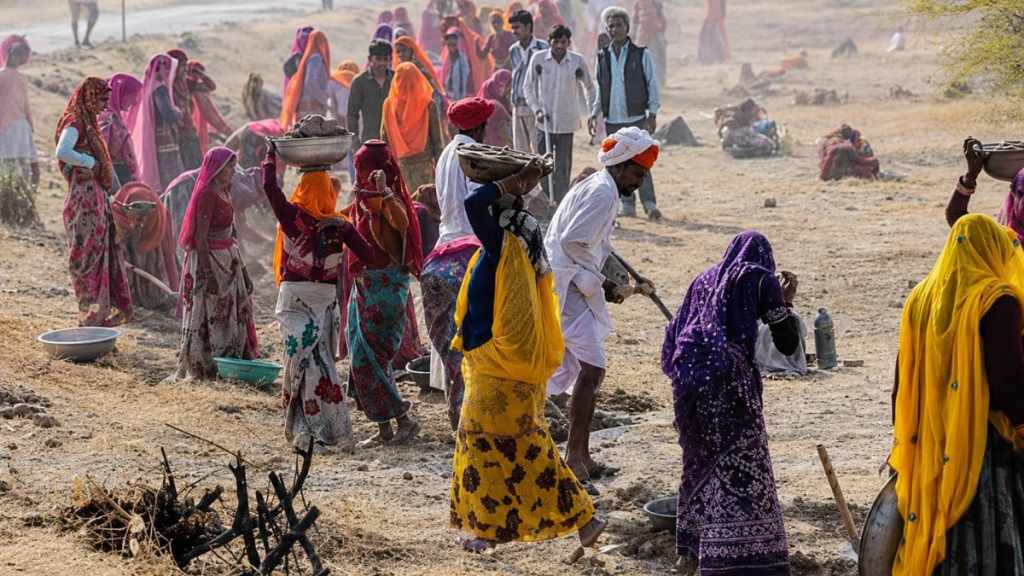
Why is India replacing its flagship rural jobs scheme just as the monsoon looks weak? On July 1, 2026, VB-G RAM G replaced MGNREGA, the wage-employment programme in operation since 2005, and raised the annual guarantee from 100 to 125 days of paid work per rural household. The obvious reading is that this is a rebrand with an extra 25 days attached. The Financial Express argues the harder truth: the scheme is being launched at the worst possible moment, because an El Nino-driven rainfall deficiency usually brings drought, and its true test is whether it can alleviate rural distress in the very districts that will need it most.
How is VB-G RAM G different from MGNREGA?
VB-G RAM G replaced MGNREGA on July 1, 2026, raising the annual work guarantee from 100 to 125 days per rural household. Unlike MGNREGA's demand-driven universal guarantee, it is allocation-based with a 60:40 Centre-state funding split. The Financial Express warns the launch is mistimed, coming as a weak monsoon threatens drought in 315 districts.
The Story in 60 Seconds
Scheme at a Glance
Rural Employment Data
| Field | Detail |
|---|---|
| Ministry | Ministry of Rural Development, Government of India |
| Launch | July 1, 2026, replacing MGNREGA (in operation since 2005) |
| Target group | Rural households seeking unskilled manual wage work |
| Objective | Guarantee up to 125 days of paid wage employment per rural household per year |
| Type | Allocation-based rural wage employment scheme (predecessor was demand-driven) |
| Funding | 60:40 Centre-state fund-sharing ratio |
| Implementing agency | State governments through district and taluka administrations, with central officials deputed for the transition |
| Coverage | National, all rural districts; 2026 monsoon outlook flags 315 districts across 12 states for below-normal rainfall |
| Current status | Operational from July 2026; interim allocation of Rs 95,692 crore released to states |
Why Was This Scheme Needed?
MGNREGA had real problems. The Financial Express lists them plainly: misuse of funds, delayed wage payments, a falling share of expenditure against funds released, and a falling percentage of completed works. On those grounds, the government argues the programme needed a structural reset rather than patchwork repair.
Yet the Economic Survey 2025-26 itself conceded that MGNREGA "provided wage employment, stabilised rural incomes, and created basic infrastructure, offering at least 100 days of guaranteed unskilled work to rural households." The survey's own words are the strongest defence of what the scheme achieved, even as the government chose to replace it.
How Does It Work?
- GOVERNMENT | The Union sets the entitlement: up to 125 days of paid wage work per rural household per year, replacing the old 100-day guarantee.
- SCHEME | VB-G RAM G, an allocation-based wage employment scheme, replaces demand-driven MGNREGA from July 1, 2026.
- IMPLEMENTATION | Centre and states share funding at 60:40; states notify projects, and may pause work for up to 60 days during peak sowing and harvest seasons.
- BENEFICIARY | Eligible rural households register and take up unskilled manual work on notified projects.
- OUTCOME | Timely wages, stabilised rural incomes and durable community assets, provided funds actually flow on time.
The design shift is the heart of the change. MGNREGA was demand-driven, universal and self-targeting: anyone eligible who asked for work had to be given it, and the poor self-selected because the wage was low enough to deter the better-off. VB-G RAM G is allocation-based, meaning money flows to states on a pre-decided basis rather than in response to demand. That is cheaper to budget for but changes who carries the risk when funds run short.
States may also notify up to 60 days of "pause" during peak sowing and harvest seasons. This addresses a long-standing farmer complaint that guaranteed work pulled farm labour away from the fields at exactly the moment labour was needed most, and it gives the new scheme a feature MGNREGA never had.
What Changes From the Old System?
Scheme Evolution Comparison
| MGNREGA (2005-2026) | VB-G RAM G (from July 1, 2026) |
|---|---|
| 100 days of guaranteed work per household | 125 days of guaranteed work per household |
| Demand-driven: any eligible worker who asks for work must get it | Allocation-based: funds flow to states on a pre-decided basis, not on demand |
| Worker demand triggers employment | Allocation/fund availability becomes critical |
| No seasonal pause | Up to 60 days of notified pause during peak sowing and harvest seasons |
| Wage guarantee was the core entitlement | Wage guarantee plus timely release of state funds is the new test |
Who Can Benefit?
The target group is the same as MGNREGA's: rural households that depend on unskilled manual work, especially landless labourers, small and marginal farmers, women, Scheduled Castes and Scheduled Tribes, and households that face seasonal unemployment between crops.
What Does the Beneficiary Actually Get?
A beneficiary household gets up to 125 days of paid wage employment in a financial year, 25 days more than the previous guarantee. As with MGNREGA, the work is meant to build durable rural assets, so the wage is paired with a productive outcome rather than being a bare transfer. What is not yet established is the exact wage rate and payment cycle under the new scheme, which states will settle as they issue job cards and open work under the new framework.
Funding & Implementation
Funding is split 60:40 between the Centre and the states, with the centre bearing a larger share of the bill than under some other shared schemes. An interim allocation of Rs 95,692 crore has been made to states; the FY2026-27 budget provision of Rs 95,692.31 crore is the highest-ever allocation at the Budget Estimate stage. More than 100 officials have been deputed to districts and talukas to manage the transition.
The dependency this creates is the central risk the Financial Express flags. As Nikhil Dey, a member of the MGNREGA Sangharsh Morcha, put it: "This means that if the state government does not release its share of funds, workers will be hit by a lack of work." Under MGNREGA, a worker's demand for work was a legal trigger; under an allocation-based scheme, the trigger is a fund flow that states control.
Connect the Dots
- PROBLEM | A weak, El Nino-driven monsoon threatens drought and rural distress across 315 districts in 12 states.
- INTERVENTION | The government replaces MGNREGA with VB-G RAM G, raising the guarantee to 125 days.
- MECHANISM | Allocation-based funding at 60:40, with states notifying works and able to pause up to 60 days in peak seasons.
- OUTPUT | Wage employment and rural assets delivered wherever states release their funds on time.
- EXPECTED OUTCOME | Stabilised rural incomes in deficit-rainfall districts, contingent on state fund release and speedy payment.
How Has the Predecessor Performed?
Govt Schemes Analysis - Table 3
| Measure | Reading |
|---|---|
| Wage employment provided | At least 100 days of guaranteed unskilled work per rural household, per the Economic Survey 2025-26 |
| Income stabilisation | The survey credits MGNREGA with stabilising rural incomes and creating basic infrastructure |
| Misuse of funds | A known problem the new scheme is meant to address |
| Delayed wage payments | A recurring complaint that eroded trust in the guarantee |
| Expenditure against funds | Falling share of expenditure against funds released in recent years |
| Completed works | Falling percentage of completed works, a key administrative criticism |
What Are the Challenges?
- State funding risk: with a 60:40 split, workers are exposed if a state delays or withholds its 40%, since the guarantee is no longer demand-triggered.
- Mistimed launch: El Nino-driven rainfall deficiency usually brings drought, so the scheme begins just as demand for relief work is about to spike.
- Transition disruption: 100-plus officials have been deputed to districts and talukas, but the switchover itself can delay job cards, works and payments.
- Pause provision: up to 60 days of notified pause during sowing and harvest may ease farm labour shortages, but it also shrinks the window for guaranteed work.
- Credibility gap: MGNREGA's own failures, delayed payments and incomplete works, must be fixed, not merely renamed.
The Debate
Govt Schemes Analysis - Table 4
| Position | Core claim |
|---|---|
| Government | Allocation-based funding brings fiscal discipline and predictability; the 125-day guarantee strengthens the entitlement; the pause provision answers genuine farm-labour complaints. |
| Critics (e.g. Nikhil Dey, MGNREGA Sangharsh Morcha) | The demand-driven, universal, self-targeting guarantee is the scheme's essence; if a state does not release its 40%, workers will simply be hit by a lack of work. |
| The evidence | The Economic Survey 2025-26 itself acknowledged MGNREGA stabilised rural incomes and created infrastructure, even as it carried real administrative problems. |
How Did We Get Here?
- 2005 MGNREGA enacted, guaranteeing 100 days of paid work per rural household, demand-driven and universal.
- December 2025 The government announces the repeal of MGNREGA and its replacement by VB-G RAM G with a 125-day guarantee from July 1, 2026 (PIB press release; BBC).
- January 2026 Economic Survey 2025-26 acknowledges MGNREGA's achievements even as the replacement is prepared; ThePrint reports the verbatim passage.
- February 2026 Nikhil Dey warns that under 60:40 funding, workers will be hit if states do not release their share (ThePrint).
- June 2026 Interim allocation of Rs 95,692 crore made to states; FY2026-27 budget pegs the provision at Rs 95,692.31 crore, highest-ever at BE stage (Business Standard; PIB).
- July 2026 VB-G RAM G takes over from July 1, with 100-plus officials deputed to districts and talukas for the transition.
What Is Clear? What Remains Uncertain?
- It is established that MGNREGA was repealed and VB-G RAM G took effect from July 1, 2026 with a 125-day annual guarantee; that the scheme is allocation-based with a 60:40 Centre-state funding split; that an interim allocation of Rs 95,692 crore has been made to states; that the IMD's 2026 monsoon outlook projects roughly 90% of the long-period average with an 84% probability of below-normal rainfall; and that the Agriculture Ministry's district analysis flags 315 districts across 12 states, of which 111 are most vulnerable.
What is not yet established is how reliably states will release their 40% share, what the new wage rate and payment cycle will be, and whether the allocation-based model can match the responsiveness of a demand-driven guarantee during a drought year. Whether the pause provision hurts more than it helps in deficit-rainfall districts also remains to be seen.
Why Does It Matter for India?
This is not a story about one scheme's paperwork. Rural wage employment is India's de facto safety net for the poorest households, and it is being redesigned in the same season an El Nino-driven deficiency is expected to push districts into drought. For an informed reader and an exam aspirant, the test is concrete: when rainfall fails, can a 60:40, allocation-based scheme put wages in workers' hands faster than the demand-driven guarantee it replaced? Rural distress, delayed payments and state-treasury constraints are all national phenomena, and how VB-G RAM G handles them will shape welfare policy for a generation.
CONCEPT BEHIND THE NEWS
Bottom Line
On July 1, 2026, VB-G RAM G replaced MGNREGA, raising the rural jobs guarantee from 100 to 125 days and shifting from a demand-driven to an allocation-based, 60:40 Centre-state funded design. The change answers real criticisms, delayed payments, incomplete works and farm-labour complaints, but it also concentrates risk on workers if states do not release their share. The scheme launches just as a weak monsoon threatens drought across 315 districts, so its true test is whether it relieves rural distress at a time of rainfall deficiency. That test will be decided by fund flows and payment speed, not by the new name.
Key Terms
- MGNREGA: Mahatma Gandhi National Rural Employment Guarantee Act, the demand-driven scheme guaranteeing 100 days of paid work per rural household, in operation 2005 to June 2026.
- VB-G RAM G: the successor scheme effective July 1, 2026, guaranteeing 125 days of paid work under an allocation-based model.
- Self-targeting guarantee: a design where eligible workers opt in and the poor self-select, because the wage is low enough to deter those with better options.
- 60:40 fund-sharing: the Centre pays 60% and states 40% of scheme costs.
- Long-period average (LPA): the benchmark average rainfall for India, against which each monsoon is measured.
- Allocation-based funding: money flows to states on a pre-decided basis rather than in response to worker demand.
Read More
- The Financial Express (Original article source)
- Explore More (Related articles in Govt Schemes)
Sources & Further Reading
- Primary | The Financial Express, "MGNREGA to VB-G RAM G", July 2, 2026
- Corroboration | PIB, Ministry of Rural Development press release, on the repeal of MGNREGA and the 125-day guarantee from July 1, 2026
- Corroboration | BBC News, December 22, 2025, on the replacement and the 60:40 Centre-state funding split
- Corroboration | ThePrint, January 29, 2026, on the Economic Survey 2025-26 passage acknowledging MGNREGA's achievements (verbatim match)
- Corroboration | ThePrint, February 1, 2026, on Nikhil Dey's warning that workers will be hit if states do not release their share
- Corroboration | Business Standard, June 9, 2026, on the interim allocation of Rs 95,692 crore to states
- Corroboration | PIB, FY2026-27 budget allocation of Rs 95,692.31 crore for the scheme, highest-ever at BE stage
- Corroboration | India Meteorological Department, 2026 southwest monsoon outlook, projecting roughly 90% of LPA with an 84% probability of below-normal rainfall
- Further Reading | Agriculture Ministry district analysis identifying 315 districts across 12 states likely to receive below-normal rainfall, 111 rated most vulnerable