Frontiersmen: The Forgotten Experiment That Built Arunachal's Peace
In 1951, Major Bob Khathing hoisted the Tricolour at Tawang without firing a shot; eight years later, Har Mander Singh read Nehru's message to a fleeing Dalai Lama at the same monastery. Both were officers of the Indian Frontier Administrative Service, the special cadre Nehru and anthropologist Verrier Elwin built to administer NEFA, today's Arunachal Pradesh. This Smart Read follows the experiment from its creation to its disbanding in 1968, and asks why the one North East state with a Chinese border never produced an insurgency. The answer is a lesson in how a frontier becomes part of a nation: with trust before typewriters.
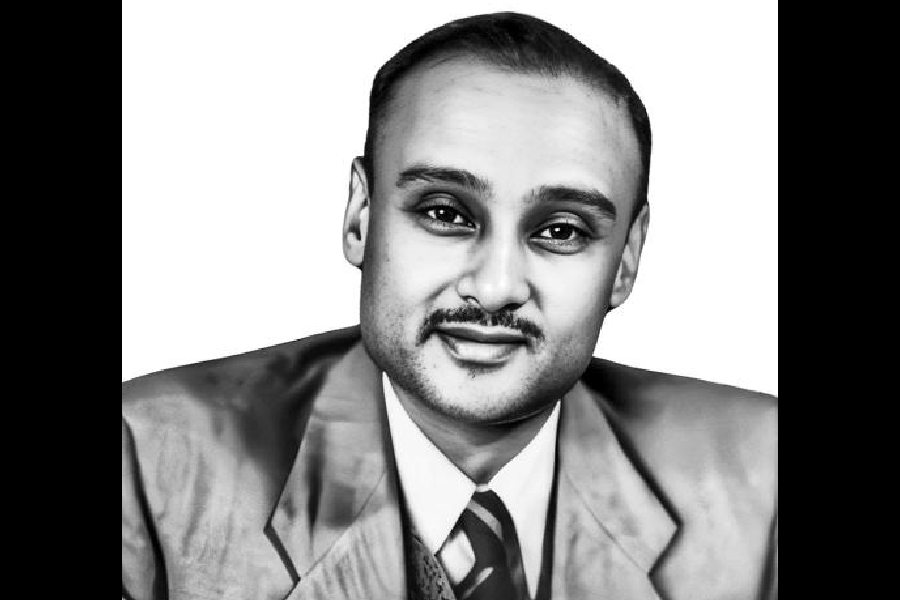
On June 27, 2026, the birth centenary of a largely forgotten civil servant, historian Ramachandra Guha has resurrected one of independent India's boldest experiments in state-building: the Indian Frontier Administrative Service, or IFAS, the special cadre that Jawaharlal Nehru and the anthropologist Verrier Elwin created to administer the North East Frontier Agency, the territory that became Arunachal Pradesh. The obvious reading is that this is a story about a defunct bureaucracy. The harder question is why the one North East state with a Chinese border, a Tibetan Buddhist heartland and a narrow Himalayan geography produced no insurgency, while almost every other state in the region did. The answer, Guha argues, lies in a cadre of young men who were sent to win a frontier with goodwill before machinery.
What was the Indian Frontier Administrative Service and why does it matter?
The Indian Frontier Administrative Service was a special cadre created in the early 1950s by Nehru with anthropologist Verrier Elwin to govern NEFA, today's Arunachal Pradesh, until it was disbanded in 1968. Its officers built trust with tribal communities before building bureaucracy, and Ramachandra Guha credits them for Arunachal avoiding insurgency.
The Story in 60 Seconds
Historical Context: The Frontier the Map Forgot
NEFA was the largest unadministered tract in South Asia. Between the green Assam plains and the McMahon Line, the frontier drawn at the 1914 Simla Convention, rose a wall of Himalayan ridges drained by the Subansiri, Siang and Lohit rivers. The territory was home to a dozen or more major communities, the Monpa, Sherdukpen, Aka, Miri, Adi, Mishmi, Wancho, Nocte and Tangsa among them, speaking mutually unintelligible languages and living in scattered villages linked by footpaths and rope bridges. There were almost no roads, no markets in the modern sense, and no institutions of a state.
British rule had deliberately kept it that way. From the 1870s an inner line restricted movement into the hill tracts, and the Raj governed the hills by punitive expedition and non-interference rather than administration. The famous Tawang monastery, seat of a powerful Gelugpa order, looked to Tibet for spiritual and temporal guidance, and Tibetan dzongpens collected tribute from the valleys below. The 1914 Simla Convention put the McMahon Line on the map, but in practice it was a phantom border: India's claim existed on paper, and no Indian official administered the ground beyond it.
The geography explains everything that followed. The map reads like a stairway: from the Brahmaputra valley in Assam, the land climbs through subtropical forests to pine-covered ridges, then to the snowline of the eastern Himalaya, and finally to the high plateau of Tibet beyond the McMahon Line. The pass that links all of it, the Se La, rises above 4,000 metres, and the towns that recur in the story, Tawang, Bomdila, Dirang, Along, Pasighat and Ziro, are points along that single stairway. When the IFAS officers took their postings, almost none of these places had a road connecting it to the plains.
At independence, then, the nation inherited a frontier that existed mainly as a line on a map, populated by communities that had never been asked to become Indian. Everything the IFAS later did was an answer to that single awkward fact.
The World Before: India's Phantom Border in 1947
In 1947 NEFA was placed under the direct administration of the Centre, with the Governor of Assam acting as agent of the President and a senior adviser in Shillong. But on the ground there was barely an administration to run: a handful of political officers, a few Assam Rifles posts, and stretches of territory no official had ever visited. The border with Tibet, meanwhile, was defended only by its inaccessibility.
The communities were not blank territory waiting to be claimed. In the west, the Monpas of Tawang were devout Buddhists whose monasteries looked to Lhasa for spiritual and administrative authority; in the east, Mishmi and other groups traded with Burma and the Tibetan border towns. Their politics, religion and kinship ran sideways across the mountains as much as downwards toward the plains. To many of them, the word 'India' meant little more than a distant tax collector or a punitive column.
That changed with breathtaking speed in 1950. Mao Zedong's People's Liberation Army marched into Tibet in October of that year and by 1951 had brought it under Chinese control, ending the Himalayan buffer that British India had relied on. Chinese maps began to show borders that reached deep into territory India considered its own. The frontier Nehru had inherited, an abstraction on paper, suddenly became the country's most exposed strategic flank.
Nehru was now caught between two dangers. Doing nothing meant China would fill the vacuum. Administering the hills in the standard colonial way, with coercion and contempt, meant alienating the very people whose allegiance would decide who really owned the frontier. He needed a third path, and in an unlikely pair of advisers he found one.
Causes: Why a Special Service Was Needed
- Long-term cause: a century of colonial neglect left the hills beyond the inner line unadministered, so independent India inherited a border region with no roads, no officials and no bond to the nation it was joining.
- Medium-term cause: China's conquest of Tibet in 1950-51 replaced a buffer with a hostile power pressing against the McMahon Line, turning a map-drawing problem into a strategic emergency.
- Immediate cause: ordinary administrators would not do. Nehru believed the standard civil servant lacked the training, temperament and languages to win the trust of tribal communities, so a dedicated, specially selected cadre had to be built from scratch.
Key Actors: The Prime Minister, the Anthropologist, the Officers
Historical Border Development
| Actor | Who they were | What they did |
|---|---|---|
| Jawaharlal Nehru | Prime Minister of India, 1947-1964 | Commissioned Elwin, created the IFAS, wrote its guiding instructions and personally welcomed the Dalai Lama in 1959 |
| Verrier Elwin | British-born anthropologist who took Indian citizenship | Appointed Adviser for Tribal Affairs to NEFA in 1954; shaped the people-first philosophy later codified in A Philosophy for NEFA |
| Har Mander Singh | Ex-Indian Army officer and IFAS Political Officer, Kameng Frontier Division, HQ Bomdila | Rode about 140 miles on horseback to Tawang and read Nehru's message to the Dalai Lama on April 6, 1959; Padma Shri, 1960 |
| Major Ralengnao 'Bob' Khathing | Tangkhul Naga officer of the Assam Rifles, later IFAS | Hoisted the Indian Tricolour at Tawang on February 14, 1951, integrating it without firing a single shot |
Nehru chose Elwin deliberately. The British-born anthropologist had spent more than two decades living among the tribes of central India, had taken Indian citizenship and, Nehru believed, brought to government a 'sympathy and understanding which is most unusual and most helpful'. He was appointed Adviser for Tribal Affairs to NEFA in 1954, and the service he helped build, whose first recruits were largely drawn from the army and air force, took its distinctive character from his insistence that tribal cultures be preserved, studied and respected, not dissolved.
Elwin's mentorship was itself a response to a warning he had received from an educated Mishmi tribesman, a warning that came to frame the entire experiment: 'Remember that we are not by culture or even by race Indian... if you continue to send among us officers who look down on our culture and religion... within a few years we will be against you.'
That sentence, quoted by Guha, is the key to understanding the IFAS. It turned the frontier question from a matter of administration into a matter of trust, and it is the reason the officers were instructed to arrive as guests before they acted as rulers.
The Method: Governing With Trust, Not Typewriters
Nehru's instructions to the new cadre were famously brief and famously clear: the staff must go along with the flag, and the typewriters can follow later on. He meant that the most important equipment of a frontier officer was not paper but presence, that human contact had to precede state machinery, and that administration should be built around the people it served rather than imposed on them. His broader policy, later called 'hastening slowly', insisted on avoiding the two extremes of treating tribal people as anthropological specimens or overwhelming them with Indian humanity.
The officers practiced this on the ground. They were unarmed, often accompanied by their wives, and their daily work mixed the schoolmaster, the doctor, the judge and the census taker. They camped in villages, learned local dialects, arbitrated disputes between families and between clans, opened schools and dispensaries, and reported the anthropology of the valleys they served. The frontier was divided into divisions, each under a political officer: Kameng with its headquarters at Bomdila, then Subansiri, Siang, Lohit and Tirap, territories the size of small kingdoms.
The style was the strategy. An armed officer with a typewriter could have collected taxes and records, but he would never have collected allegiance. By making themselves guests before rulers, the IFAS officers performed the single most important act of nation-building the region had ever seen: they made the state feel safe.
Chronology: How the Frontier Was Won
The experiment began before the service had a name. In January 1951, acting on the instructions of Governor Jairamdas Daulatram of Assam to occupy Tawang and extend Indian administration to the border, Major Bob Khathing set out from Charduar in Assam with a small party of the Assam Rifles, crossed the snow-bound Se La pass on foot and horseback, and reached Tawang in early February. On February 14, 1951, he hoisted the Indian Tricolour there, ended the administrative claims of the Tibetan government south of the McMahon Line, and did it all without firing a single shot. Tawang, the largest and most Tibetan-influenced town in the region, chose India over the map drawn in Lhasa and Beijing.
The Indian Frontier Administrative Service took formal shape in 1953-54 as a separate cadre to administer NEFA and adjoining frontier territories. Its first batch of about fourteen officers came overwhelmingly from the armed forces, men used to physical hardship, unfamiliar companions and long campaigns. They served as political officers and assistant political officers across the frontier divisions, and they worked in the manner Nehru had set out: the staff must go along with the flag, and the typewriters can follow later on.
The method was as deliberate as the philosophy. Officers travelled on foot and horseback, camped in villages, learned local languages, settled disputes, opened schools and dispensaries, conducted censuses and surveys, and built the first durable human links between Delhi and the valleys. Many were accompanied by their wives, which softened the image of officialdom in villages that had never seen a government at all. Guha's own study of the cadre concluded that it was 'a cadre of capable and massively committed young men, almost unique in Indian political history for their readiness to live with and think like the people they had been sent to govern'.
The climax of this approach came in 1959, when the Dalai Lama fled Tibet after the crushed Lhasa uprising and crossed into India through the Kameng Frontier Division. The assistant political officer T.S. Murthy met him at the border, while his superior, Har Mander Singh, rode about 140 miles from Bomdila to Tawang, where arrangements had been made for a doctor, Tibetan-speaking officials and an armed escort. On April 6, 1959, at Tawang, Singh read out the message Nehru had sent for the exiled Tibetan leader.
- January 1951: acting on the Governor's instructions, a field officer begins the quiet groundwork in the hills.
- 1953-54: the Indian Frontier Administrative Service takes formal shape as a separate cadre for NEFA.
- 1959: the Dalai Lama's flight from Tibet tests the service's trust-based model at the moment of maximum pressure.
- 1962: the Chinese attack overruns the frontier, and the experiment faces its ruin.
Five years later, the experiment faced its ruin. In October-November 1962 the People's Liberation Army attacked across the McMahon Line, overran the frontier divisions, took Bomdila and pushed into the Assam plains before unilaterally withdrawing. The goodwill that had won the frontier could not hold it against an army, and the administration collapsed in a matter of weeks. In 1968 the IFAS was formally disbanded, its officers absorbed into the IAS, the IPS and the Indian Foreign Service as the border was rebuilt on roads, airports and military posts.
Connect the Dots
- CAUSE | A century of neglect leaves the Himalayan frontier unadministered, and China's conquest of Tibet makes it a strategic emergency.
- EVENT | Nehru and Elwin build the IFAS; its officers walk in unarmed, win trust, and by 1959 have made the border feel Indian to the people who live on it.
- CHANGE | The tribes of NEFA are integrated without coercion, and the frontier becomes a loyal part of the Republic even as the rest of the North East descends into insurgency.
- CONSEQUENCE | The experiment is disbanded in 1968, but the peace it built endures: Arunachal Pradesh remains the one North East state with no insurgency.
The Turning Point: A God-King and a Civil Servant
The flight of the Dalai Lama was the single greatest test of the IFAS method, and its most celebrated moment. The young Tibetan leader, in his early twenties, entered India in the last week of March 1959, ill and exhausted, having crossed the border on a yak. He was met by officers who had prepared the route for weeks: a doctor, Tibetan-speaking interpreters and an escort were ready at Tawang, and Singh had ridden from Bomdila to receive him.
At Tawang on April 6, 1959, Singh read the message Nehru had sent, welcoming the Dalai Lama's safe arrival and promising the necessary facilities for him, his family and his entourage to reside in India. The party then moved on to Bomdila, and along the road the Tibetan god-king and the Sikh civil servant talked through an interpreter, the beginning of a friendship that would last the rest of their lives.
Guha reads this as the symbolic peak of the frontier experiment: a border received with dignity rather than suspicion, a refugee turned into a lifelong friend of the Indian state, and a Buddhist spiritual leader given shelter by a secular republic. The trust that the IFAS had built on the frontier is what made that possible, and the friendship quietly anchored India's position on Tibet for six decades.
What Happened to Different Groups?
Regional Peace Building
| Group | What happened to them |
|---|---|
| The tribes of NEFA | Integrated without coercion: enrolled in schools and the village volunteer force, granted citizenship and development, but saw their isolation end as roads, trade and the market arrived |
| IFAS officers | Disbanded into the IAS, IPS and IFS; several rose far, to chief commissioner, ambassador, lieutenant-governor and chief secretary, carrying the cadre's ethos into mainstream service |
| The Dalai Lama | Given refuge in India and settled at Dharamsala; retained a lifelong friendship with the officers who received him, and with India |
| The Indian state | Gained a settled, loyal border region and the strategic base of Tawang, whose ownership China still contests |
Consequences: The Peace That Followed
Institutional memory of the experiment faded quickly. NEFA became a Union Territory in 1972 and the state of Arunachal Pradesh on February 20, 1987. The territory's governance passed to conventional district administration, and the special ethos of the 1950s, the patience, the language learning, the village camps, was replaced by standard development administration.
Yet the result that matters most is negative: unlike the rest of the North East, where insurgencies rose in Nagaland, Mizoram, Manipur, Assam and Tripura from the 1950s onward, Arunachal Pradesh has never seen an insurgency. Guha states the claim plainly: 'the visionary policies of Nehru and Elwin and the selfless work of the IFAS officers surely deserve credit'.
The argument is necessarily counterfactual. We cannot rerun history with a coercive administration and watch the result. But the comparison with neighbouring states is striking, and it is exactly what makes the IFAS a case study rather than a curiosity: it is the nearest thing India has to a controlled experiment in how to integrate a border population.
Historical Significance: A Controlled Experiment in Integration
The IFAS matters as history because it is India's clearest answer to a question every multi-ethnic nation eventually faces: how do you turn a border population into citizens? Its fifteen years produced a working method, a set of people who embodied it, and a test case, Arunachal Pradesh, that has now gone three-quarters of a century without serious unrest. Whatever its strategic failures, that is an outcome few states can match, and the experiment that produced it deserves to be studied as closely as the frontier was walked.
Why Does It Matter Today?
The IFAS matters today because the frontier problem has come back. Since the 2020 standoff at the Line of Actual Control, India has poured money into border roads, helipads and military bases, and the older question, how to make the people on the far side of those posts feel part of India, has quietly returned. Analysts such as Claude Arpi have argued that the IFAS officers, who sacrificed their careers for a frontier posting, should be role models for young IAS and IPS officers posted to border regions.
The column also holds the present up against the past. Guha notes that Arunachal Pradesh today suffers from state corruption, a politician-contractor nexus and environmental degradation, while still enjoying the peace the experiment helped create. The lesson is double-edged: the goodwill built in the 1950s was durable enough to survive bad governance, but it is not a substitute for it.
For tribal policy across India, the IFAS remains the clearest expression of one answer to a standing question: whether the state should assimilate tribal communities or protect their distinctiveness. Nehru's instruction to hasten slowly, and Elwin's insistence on studying and respecting tribal culture, were the opposite of later assimilationist drives, and the peace of Arunachal is their most visible legacy.
Historical Interpretations: How Should We Judge the IFAS?
History Analysis - Table 3
| Interpretation | Core claim | Basis |
|---|---|---|
| The romantic view (Guha, Elwin's biographer) | The IFAS was 'a cadre of capable and massively committed young men, almost unique in Indian political history for their readiness to live with and think like the people they had been sent to govern' | Officer memoirs, Elwin's papers, and the durable peace of Arunachal |
| The strategic critique (Arpi and later analysts) | A philosophy of trust neglected military and strategic preparation, and 1962 exposed the cost of a border defended by goodwill alone | The Chinese advance of 1962; the cadre had no doctrine for defence |
| The institutional view | The cadre had no career structure of its own, so its absorption into the all-India services was administrative fate, not ideological failure | Rajya Sabha debates of the 1960s; the IFAS rules and records |
What Is Established? What Remains Debated?
- Established: Khathing hoisted the Indian Tricolour at Tawang on February 14, 1951, integrating the region without firing a shot (India Today, February 6, 2026).
- Established: Elwin was appointed Adviser for Tribal Affairs / Anthropological Adviser to NEFA in 1954 (Nehru Archive; The Arunachal Times, August 30, 2018).
- Established: Har Mander Singh read Nehru's message to the Dalai Lama at Tawang on April 6, 1959 (Claude Arpi's primary document of April 2, 1959; The Sentinel, April 1, 2026; New York Times archive, April 11, 1959).
- Established: The IFAS was disbanded in 1968 and its officers merged into the all-India services (The Print, January 7, 2021; ORF, September 28, 2020).
- Debated: Whether the absence of insurgency in Arunachal is owed primarily to IFAS policies, to geography and a small population, or to post-1962 security spending; the claim of credit is plausible but counterfactual.
Legacy: The Forgotten Cadre's Living Footprint
The officers carried the ethos into the rest of the Indian state. Har Mander Singh became Chief Commissioner of the Andaman and Nicobar Islands, where a bay is named after him; Bob Khathing served as India's ambassador to Myanmar; R.N. Haldipur became Lieutenant-Governor of Puducherry; K.C. Johorey became Chief Secretary of Goa; Murkot Rammuny served in Nepal and Bangladesh and wrote a study of the Nagas.
The experiment itself has remained astonishingly under-studied. Guha notes that as of writing the IFAS has no dedicated book and no doctoral dissertation, its story scattered across memoirs, Elwin's papers and the recollections of the officers themselves. The most complete account of its defining moment, the flight of the Dalai Lama, appears in Rani Singh's An Officer and His Holiness, built around the diaries of Har Mander Singh.
The centenary of Har Mander Singh, born on June 27, 1926, is the occasion Guha chose to recall the service. It is a fitting one: of all the officers, Singh most embodied the bet the IFAS was making, a soldier turned administrator whose greatest achievement was to receive a fleeing spiritual leader as a guest.
CONCEPT BEHIND THE NEWS
Bottom Line
The Indian Frontier Administrative Service was a daring experiment in nation-building: a special cadre of soldiers turned civil servants who administered a vast Himalayan frontier with trust before typewriters. From Khathing's flag at Tawang in 1951 to Har Mander Singh reading Nehru's message to the Dalai Lama on April 6, 1959, its officers won a border without firing a shot, and their methods are the likeliest reason Arunachal Pradesh alone among the North East states avoided insurgency. The service was wound up in 1968 and largely forgotten, which is why the centenary of Har Mander Singh, on June 27, 2026, is the right moment to recall it. The lesson is simple: a frontier belongs to a nation when the people on it are won first, and that is a lesson still waiting for the book it deserves.
Timeline: The Experiment at a Glance
- 1947 The frontier tract that becomes NEFA is placed under the Centre's direct administration through the Governor of Assam; independent India inherits a border that exists mainly on maps.
- 1951 Major Ralengnao 'Bob' Khathing crosses the Se La pass with Assam Rifles troops and hoists the Indian Tricolour at Tawang on February 14, integrating the region without firing a single shot.
- 1954 Jawaharlal Nehru appoints Verrier Elwin Adviser for Tribal Affairs / Anthropological Adviser to NEFA; the Indian Frontier Administrative Service takes concrete shape around the same years.
- 1959 The Dalai Lama crosses into India through the Kameng Frontier Division after the Lhasa uprising is crushed; Political Officer Har Mander Singh rides to Tawang and, on April 6, reads Nehru's message welcoming him.
- 1962 The Sino-Indian war shatters the frontier's confidence; Chinese forces overrun NEFA before unilaterally withdrawing, exposing the limits of a goodwill-based administration.
- 1968 The IFAS is formally disbanded; its officers are merged into the IAS, IPS and IFS as the border administration is rebuilt on roads, airports and military posts.
- 1987 The former NEFA becomes the state of Arunachal Pradesh, by then the only North East state never to have seen an insurgency.
- 2026 Har Mander Singh's birth centenary (June 27) prompts historian Ramachandra Guha to recall the IFAS as a daring experiment in nation-building that deserves far better recognition.
Key Terms & Personalities
- NEFA | The North East Frontier Agency, the directly administered Himalayan territory that became Arunachal Pradesh.
- IFAS | The Indian Frontier Administrative Service, the special cadre created in the early 1950s to administer NEFA and adjoining frontier territories; disbanded in 1968.
- McMahon Line | The border between India and Tibet drawn at the 1914 Simla Convention, named after British negotiator Henry McMahon.
- Political Officer (PO) | The IFAS role that combined administrator, diplomat and judge in a frontier division; the Kameng Frontier Division was headquartered at Bomdila.
- Verrier Elwin | British-born anthropologist (1902-1964), Indian citizen from 1954, Adviser for Tribal Affairs, NEFA; author of A Philosophy for NEFA.
- Har Mander Singh | IFAS officer (1926-2020), Political Officer of Kameng, who received the Dalai Lama in 1959; Padma Shri, 1960.
- Major Ralengnao 'Bob' Khathing | Tangkhul Naga officer (1912-1990) who integrated Tawang in 1951; later India's ambassador to Myanmar.
- Sino-Indian War, 1962 | The brief but shattering border war with China that ended the era of goodwill-based frontier administration.
Read More
- The Telegraph (Original article source)
- Explore More (Related articles in History)
Sources & Further Reading
- Primary | Ramachandra Guha, 'Frontiersmen', The Telegraph, June 27, 2026
- Corroboration | Nehru Archive, Selected Works of Jawaharlal Nehru (Elwin's appointment as Adviser for Tribal Affairs, NEFA)
- Corroboration | 'Verrier Elwin's tribal vision', The Arunachal Times, August 30, 2018
- Corroboration | 'As Mao marched, India won Tawang without firing a single shot', India Today, February 6, 2026
- Corroboration | 'What India can learn from IFAS and my grandfather KC Johorey', The Print, January 7, 2021
- Corroboration | 'Indian Frontier Administrative Service: An unexplored ace in India's deck', ORF, September 28, 2020
- Corroboration | Claude Arpi, primary document on the Dalai Lama's entry, dated April 2, 1959; The Sentinel, April 1, 2026; New York Times archive, April 11, 1959
- Corroboration | Wikipedia, 'Har Mander Singh' (Padma Shri, 1960; officer record)
- Further Reading | Verrier Elwin, A Philosophy for NEFA.
- Further Reading | Rani Singh, An Officer and His Holiness: A Personal Portrait of the Dalai Lama
- Further Reading | Ramachandra Guha, India After Gandhi: The History of the World's Largest Democracy.
- Further Reading | Sonia Shukla, 'Forging New Frontiers: Integrating Tawang with India, 1951', Nehru Memorial Museum and Library paper.