India 106th in Democracy Rank: What Decline Means
V-Dem's 2026 report ranks India 106th globally on democratic health—lowest since 1975. We trace how India went from constitutional democracy's global exemplar to a state described as 'electoral autocracy.' A historical reckoning.
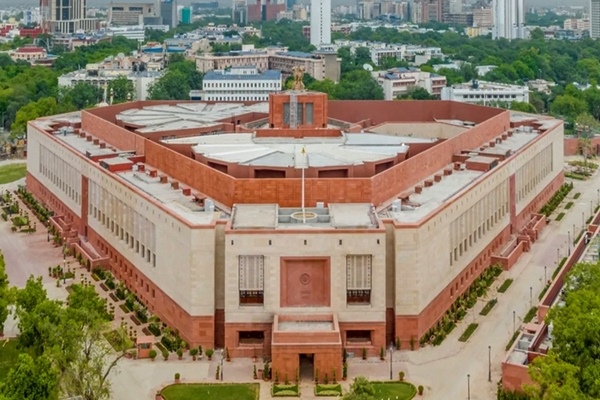
The V-Dem Institute ranked India 106th on its democracy index in 2026, the lowest since 1975 and a fall from the 1950s Nehruvian peak. The report cited constraints on civil liberties, judicial independence and media freedom. The trajectory spans Congress dominance, the Emergency, and the post-2014 shift. It reopens the question of how resilient India's constitutional democracy remains.
Why does V-Dem rank India 106th in its 2026 democracy report?
The V-Dem Institute ranked India 106th in 2026, down from 60th in 2012 and its lowest score since the 1975 Emergency. The report cites declining judicial independence, shrinking press freedom and tighter limits on civil society and civil liberties, and classifies India as an electoral autocracy.
The Story in 60 Seconds
Historical Context
India's Constitution (1950) was revolutionary: universal adult suffrage in a largely illiterate nation, rigid constitutional protections, and explicit minoritarian safeguards. Ambedkar's intent: prevent majoritarian tyranny. The framers had witnessed partition's communal violence; they designed the Constitution to make that impossible at the nation-state level. For 40+ years (1950-1990), despite challenges, the system held: elections were conducted, power transferred peacefully, courts intervened when rights were violated (though imperfectly).
We must not be content to do things as they have always been done. The form of government must be adapted to the changing needs of the people.
Jawaharlal Nehru, Constituent Assembly of India, 1946
The World Before: 1950s-1980s
Early independence: India was a one-party state (Congress dominance 1950-1977, except briefly 1977-1980). Yet the Constitution's mechanisms—opposition parties could contest, courts could challenge executive action, press could criticize (though censorship existed)—functioned. The Emergency (1975-1977) was an aberration; even then, courts (initially) validated it, but subsequent public backlash (1977 elections defeated Indira Gandhi) proved the system's resilience.
Causes of Democratic Decline
Long-term (structural):
- Weak institutions: Courts are slow (justice delayed = justice denied); police politicized; bureaucracy lacks autonomy. These structural weaknesses enable executive overreach.
- Communal polarization: Partition trauma never fully healed. Hindu-Muslim identities weaponized in electoral politics post-1980s. Creates incentive for majoritarian mobilization.
- Media capture: Transition from state monopoly (Doordarshan) to private media didn't guarantee independence; corporate ownership tied to political influence.
Medium-term (2012-2014):
- 2G Scam + Coal Scam trials: High corruption perception (though many trials ended in acquittals) created 'anti-incumbency' against Congress.
- Civil society activism (Anna Hazare, Arvind Kejriwal): Anti-corruption movement channeled into electoral politics, disrupting traditional Congress dominance.
Immediate (2014-2026):
- Electoral dominance: One political party (BJP) won 2014 and 2019 elections decisively, gaining supermajority in some phases. Majoritarian governance enabled.
- Institutional erosion: Judiciary independence questioned (selective prosecution of opposition, defence of executive actions). Press freedom indices show decline (RSF: India from 140th to 160th globally, 2014-2026). NGO space shrinking (FCRA restrictions on international funding).
- Polarization intensified: Communal rhetoric in electoral campaigns; religious identity mobilization accelerated.
Key Periods
- 1950-1977 Congress dominance. Emergency (1975-77) tested democracy; 1977 elections restored it. System proved resilient.
- 1989-2004 Coalition politics era. No single party dominance. Courts strengthen; civil society rises. Democracy deepens.
- 2004-2014 Congress-led UPA. Institutional constraints (coalitions, civil society) remain. Media expands.
- 2014-2026 One party electoral dominance. Judicial independence questioned, press freedom shrinks, polarization rises. V-Dem score falls to lowest since 1977.
Connect the Dots
- Structural weaknesses (weak courts, politicized police, weak bureaucracy)
- Communal divisions (Hindu-Muslim identities in politics)
- Electoral dominance by one party (2014 onward)
- Majoritarian governance (reduced coalition constraints)
- Institutional erosion (judiciary independence questioned, press freedom shrinks, opposition spaces tighten)
- Result: V-Dem decline, democratic backsliding
Read More
- Election Commission of India (Electoral democracy and institutional data)
- V-Dem Institute: Democracy Report (Global democracy rankings and methodology)
What Happened to Different Groups?
Democratic Indicator Trends
| Group | Pre-2014 | Post-2014 |
|---|---|---|
| Opposition | Contested elections; coalitions forced dialogue. | Weaker; dissent vocal but less institutional power. |
| Judiciary | Independent (though slow); challenged executive overreach. | Selective prosecution; independence questioned. |
| Press/Media | Diverse; criticism common; market competition checked state power. | Concentrated ownership; self-censorship rises; government advertising weaponized. |
| Minorities | Constitutional protections functional; state theoretically impartial. | Hate speech and communal violence rise; state response perceived as partial. |
Consequences
Immediate: Electoral outcomes less competitive. Opposition voices present but weaker institutionally. Court independence questioned. Press self-censorship increases. Minority communities experience higher communal violence.
Long-term: If trend continues—institutional erosion, majoritarian dominance, checks-and-balances weakening—India risks consolidating into 'electoral autocracy' (elections held, but opposition marginalized, institutions subordinated to executive). Ambedkar's safeguards fail. Constitutional democracy becomes formal shell, not lived practice.
Why Did It Matter Historically?
India's 1950 Constitution was globally significant: it proved that universal democracy could work in a poor, diverse, illiterate nation. Western skeptics (who predicted India would collapse into authoritarianism) were proven wrong. That success shaped global democracy theory. Now, that exemplar is faltering. Historical significance: if India—the world's largest democracy—cannot sustain liberal democratic institutions against majoritarian pressures, what does this mean for global democracy? Does democracy itself have structural vulnerabilities to majoritarian capture?
Historical Interpretations
Institutional Health Assessment
| Interpretation | Argument |
|---|---|
| Democratic decline narrative (Academics, Opposition, Civil society) | India is backsliding. Democratic institutions weakening. V-Dem score reflects real erosion (judicial independence, press freedom, institutional checks). Without course correction, India risks authoritarianism. |
| Development-over-democracy narrative (Government supporters) | Electoral dominance enables decisive governance. Faster decision-making benefits development. Democratic 'checks' slow growth. Strong executive leadership is justified by outcomes (GDP growth, infrastructure). |
| Structural inevitability narrative (Political theorists) | All democracies face majoritarian capture risk. India's weak institutions (slow courts, politicized police) make it especially vulnerable. Not unique to India; it's a global pattern. |
What Is Established?
- V-Dem score for India dropped (2012-2026). This is data-based.
- Press freedom indices (RSF, CPJ) show India's press freedom declining (2014-2026).
- Court independence perception declined (international indices).
- Communal violence incidents increased (2014-2026 vs prior decades).
- Opposition-ruled states have faced disproportionate scrutiny (CBI/ED action on Maharashtra, opposition chief ministers arrested).
What Remains Debated?
- Whether V-Dem metrics accurately capture Indian democracy (some argue civil society participation is robust; others say metrics miss ground reality).
- Whether decline is structural (inevitable given weak institutions) or contingent (reversible with political will).
- Whether electoral dominance is itself undemocratic (elections were free and fair; voters chose; is dominance itself antidemocratic?).
- Whether development outcomes justify institutional erosion (trade-off between speed and accountability).
Historical Significance
India's democratic journey from 1950 to 2026 reveals a key tension: can liberal democratic institutions survive majoritarian electoral dominance? Ambedkar feared majoritarianism; he built constitutional protections. Yet those protections depended on institutional strength (independent courts, free press, autonomous bureaucracy) and political culture (respect for pluralism). When institutions weaken and majoritarian sentiment rises, constitutional protections erode. India's case shows that democracy is not self-sustaining; it requires constant renewal, institutional vigilance, and political commitment to pluralism.
Jasvin Thinks
CONCEPT BEHIND THE NEWS
Bottom Line
V-Dem ranks India 106th globally on democratic health (2026)—lowest since 1975 Emergency. The decline reflects real erosion: judicial independence questioned, press freedom shrinking, minority protections strained, opposition space tightening. Causes are both structural (weak institutions) and contingent (electoral dominance enabling majoritarian governance). India's historical trajectory from constitutional democracy's exemplar (1950) to 'electoral autocracy' (2026) shows that democracy requires constant institutional vigilance. Ambedkar's safeguards were brilliant but fragile—they depend on institutional strength and political culture respecting pluralism. Reversing the decline requires strengthening institutions, reviving coalition politics, and political commitment to constitutional limits. That's historically possible (post-1977 recovery proved it), but it requires political will that isn't currently evident.
Timeline: India's Democracy Score (V-Dem)
- 1975 Emergency: V-Dem score drops to ~0.35/1.0 (lowest point)
- 1977 Post-Emergency: Elections restore democracy; V-Dem score rises to ~0.65
- 1989-2004 Coalition era: V-Dem score peaks at ~0.73 (highest in post-independence history)
- 2004-2014 UPA coalition: Score stable at ~0.70
- 2014-2026 Electoral dominance: V-Dem score falls to ~0.42 (comparable to Emergency-era levels)
Sources & Further Reading
- Primary | V-Dem Institute: 'Democracy Report 2026 - India' | https://www.v-dem.net/
- Primary | Constitution of India.
- Full text and commentary | https://indianconstitution.org/.
- Analysis | Ramachandra Guha: 'Indian After Gandhi' (historical overview) and articles on democratic decline | https://www.ramachandaguha.in/
- Analysis | The Hindu: Coverage of democratic institutions, court independence, press freedom | https://thehindu.com/
- Context | Reporters Without Borders (RSF): World Press Freedom Index (India rankings 2012-2026) | https://rsf.org/
- Further Reading | Drishti IAS: 'Constitutional Democracy in India' and 'Judicial Independence' | https://drishtiias.com/