BRICS Summit 2026: India's Diplomatic Test for the Global South
India chaired the BRICS Summit in New Delhi (Sept 12–13, 2026), achieving a unanimous New Delhi Declaration despite deep geopolitical fractures. Harsh V. Pant of ORF argues this tests whether India's strategic autonomy model can deliver tangible development outcomes for the Global South.
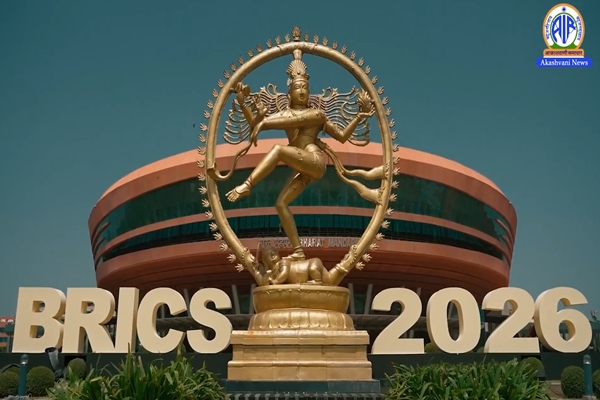
The BRICS Summit convened in New Delhi on September 12-13, 2026, with India at the helm of the bloc for its rotating presidency. Eleven members participated: the original five (Brazil, Russia, India, China, South Africa) plus six new entrants (Egypt, Ethiopia, Iran, Saudi Arabia, UAE, Indonesia). A unanimous New Delhi Declaration was adopted after two days of negotiations. According to Harsh V. Pant of the Observer Research Foundation, writing in the Hindustan Times on September 10, the summit will 'test India's diplomatic mettle' in forging consensus among nations deeply divided by geopolitical tensions: the Ukraine war, India-China border disputes, Iran-Israel conflicts, and China-Russia alignment concerns.
What did India achieve as chair of the 2026 BRICS Summit?
India hosted the BRICS Summit in New Delhi on September 12-13, 2026, and secured a unanimous New Delhi Declaration among all 11 members despite fractures over Ukraine, India-China tensions and Iran-Israel conflict. Harsh V. Pant of ORF argues the real test is whether India's strategic-autonomy model delivers concrete development gains for the Global South.
What Actually Happened?
The BRICS Summit held on September 12-13, 2026, in New Delhi marks India's rotating presidency of the bloc. Eleven members attended: the original five (Brazil, Russia, India, China, South Africa) plus six members admitted during the 2024 expansion (Egypt, Ethiopia, Iran, Saudi Arabia, United Arab Emirates, Indonesia). The summit produced a unanimous New Delhi Declaration, a significant diplomatic achievement given the geopolitical tensions dividing the membership. India's delegation, led by Prime Minister Narendra Modi, orchestrated the negotiations. The declaration reaffirmed BRICS commitment to multilateralism, development cooperation, and alternative institutional arrangements outside the Western-led order.
The New Delhi Declaration formally adopted at the summit focused on several key areas: reform of multilateral institutions, expansion of the New Development Bank's lending capacity, promotion of local-currency trade and de-dollarization initiatives, and climate resilience programmes for the Global South. The declaration did not contain explicit geopolitical language that would isolate any member or appear to take sides in ongoing regional conflicts. This careful framing was central to India's diplomatic approach: maintain unity while respecting each member's strategic autonomy and foreign policy priorities.
BRICS Bloc: Composition and Geopolitical Weight
The BRICS bloc, now with 11 members, represents a formidable share of global economic and demographic weight. Together, BRICS members account for approximately 48.5% of the world's population and roughly 40% of global GDP measured at purchasing power parity (PPP). This makes BRICS, as a collective entity, more economically significant than the G7 when measured by PPP, though the G7 retains an edge in nominal dollar terms. The bloc spans three continents: India and Russia in Asia, Brazil in South America, South Africa in Africa, and the 2024 entrants distributed across the Middle East, North Africa and East Africa. This geographic diversity is both a strength (representing truly Global South interests) and a challenge (making consensus harder to forge).
BRICS vs G7: Economic and Demographic Comparison
| BRICS Population Share | 48.5 |
|---|---|
| G7 Population Share | 10 |
| BRICS GDP (PPP %) | 40 |
| G7 GDP (PPP %) | 30 |
| BRICS Nominal GDP % | 23 |
| G7 Nominal GDP % | 48 |
How Did We Get Here?
- 2009 BRICS concept originates. Jim O'Neill of Goldman Sachs coins 'BRICs' to describe the four rising economies (Brazil, Russia, India, China). South Africa joins in 2010 to make it 'BRICS'.
- 2010 First formal BRICS summit held in Yekaterinburg, Russia. Leaders agree to explore alternative institutional structures outside the Western-dominated order.
- 2015 BRICS launches the New Development Bank (NDB) in Shanghai with a mandate to finance infrastructure and development projects in member and developing nations. Also signs the Contingency Reserve Arrangement (CRA), a currency swap mechanism to support members facing balance-of-payments crises.
- 2019 Brazil's President Jair Bolsonaro signals reluctance toward BRICS, withdraws from closer engagement for two years before re-engaging. Meanwhile, BRICS institutions demonstrate traction: NDB approves first major infrastructure loans.
- 2024 BRICS undergoes historic expansion, admitting six new members: Egypt, Ethiopia, Iran, Saudi Arabia, United Arab Emirates, and Indonesia. The expansion is intended to broaden the bloc's geographic and economic reach, though it increases internal diversity and complicates consensus-building.
- September 2026 India assumes rotating presidency of BRICS and hosts the summit in New Delhi. The summit adopts the New Delhi Declaration and sets agenda for NDB expansion, de-dollarization initiatives, and climate resilience programmes.
Connect the Dots
- Geopolitical fragmentation: BRICS 11 includes members with conflicting interests (India-China border tensions, Russia-Ukraine war, Iran-Israel conflicts, China-Russia alignment concerns, Brazil's democratic hedging against US)
- India's opportunity: As rotating chair, Delhi frames BRICS around shared Global South interests (development, resilience, climate, de-dollarization) rather than ideological alignment or great-power bloc logic
- Pant's thesis: Strategic autonomy succeeds when Global South leaders prioritize mutual development over exclusive great-power commitments; consensus is possible if focused on universal interests
- Diplomatic success: New Delhi Declaration unanimous adoption signals that (a) BRICS can function despite geopolitical divides, (b) pragmatic framing overcomes geopolitical tension, (c) institutional alternatives (NDB, CRA, BRICS Pay) make consensus concrete
- Strategic outcome: India positions itself as bridge between ideological poles, demonstrates Global South leadership, maintains hedging strategy with US/West while leveraging BRICS cooperation
BRICS and the idea of a multipolar world order represents the aspirations of the Global South. But in an era of deepening geopolitical fragmentation, whether consensus among BRICS members can translate into institutional outcomes and not just diplomatic rhetoric remains the central challenge.
Harsh V. Pant, Observer Research Foundation, Hindustan Times (paraphrased from September 10, 2026 commentary)
India's Diplomatic Challenge: Building Consensus Amid Fragmentation
Harsh V. Pant's core argument is that India's presidency tests a fundamental question: can strategic autonomy work for Global South nations, or does the bloc remain hostage to great-power tensions? The immediate challenge facing India was navigating consensus among 11 members with sharply divergent geopolitical interests. China views BRICS as leverage against US hegemony and as validation of Beijing's own development model. Russia, isolated by the Ukraine war, seeks BRICS as a counterweight to Western sanctions. Iran, facing Israeli military pressure, seeks BRICS backing for regional positioning. Saudi Arabia and UAE, meanwhile, have maintained pragmatic relationships with Western powers even as they join BRICS. Egypt and Ethiopia represent African interests that differ from both Middle Eastern and Asian members. Brazil, under its current government, seeks to hedge between BRICS and Western alignments. India itself faces border tensions with China while avoiding exclusive commitments to any bloc.
Pant argues that India's diplomatic strategy was to frame BRICS not as a counter-hegemonic bloc lined up against the West, but as a pragmatic platform focused on shared Global South challenges: infrastructure development, climate resilience, de-dollarization of trade, and reform of multilateral institutions. By keeping the language universal rather than ideological, India created space for each member to maintain its own strategic autonomy while contributing to collective outcomes. This is the essence of strategic autonomy applied to institutional leadership: Delhi did not ask members to choose between the West and BRICS, but instead to recognize that BRICS cooperation on development, currency, and climate did not require absolute political alignment.
The Debate: Three Readings of BRICS
BRICS Purpose and Potential: Competing Interpretations
| Interpretation | Core claim | Why BRICS matters under this view | Limitation |
|---|---|---|---|
| Counter-hegemonic bloc | BRICS fundamentally challenges Western dominance and US dollar-centred order; members are aligned against US global power | Provides ideological unity and clear geopolitical purpose; justifies institutional alternatives and unified foreign policy positions | Ignores member diversity and strategic autonomy; assumes bloc unity that recent events (India-China tensions, Iran-Israel conflicts, Brazil hedging) contradict |
| Pragmatic development platform | BRICS succeeds when focused on shared Global South development interests; geopolitical alignment is secondary to institutional outcomes (NDB lending, trade facilitation, climate action) | Allows members to maintain individual foreign policies while cooperating on mutual development; creates durable institutional value regardless of political splits | Lacks ideological coherence and geopolitical significance; cannot mobilise members around transformative goals if they lack shared adversary |
| Consensus failure | BRICS geopolitical divides prevent meaningful joint action; the bloc is purely symbolic and cannot deliver unified outcomes in crisis situations (e.g. if China invades Taiwan or Iran launches major attack on Israel) | Explains why BRICS declarations are carefully worded consensus documents without teeth; shows the limits of multipolar institutions in an era of great-power competition | Underestimates institutional persistence and value of development cooperation; treats geopolitical disagreement as a feature rather than a solvable design problem |
India's Strategic Interests in BRICS
Why BRICS Matters for India's Foreign Policy
| Strategic interest | Mechanism | What India gains |
|---|---|---|
| Strategic autonomy | BRICS provides institutional platform for cooperation without requiring exclusive alignment with any bloc (US, China, or Russia) | India can maintain partnerships with the West (US, Europe, Japan, Australia) while leveraging BRICS for development, de-dollarization, and Global South leadership |
| Hedging against China | BRICS dilutes China's ability to dominate the bloc; India's presence and leadership ensure BRICS remains development-focused rather than ideologically anti-Western | India positions itself as bridge between ideological poles, making Beijing cautious about using BRICS to isolate India or advance anti-India agendas |
| Global South leadership | India's presidency demonstrates that Delhi can chair multilateral institutions and build consensus; positions India as voice of the Global South and alternative to Western-led governance | Increases India's diplomatic clout in UN, IMF, World Bank, WTO reforms; attracts Global South buy-in for India-led initiatives (like climate finance, development cooperation) |
| De-dollarization and financial resilience | NDB expansion, BRICS Pay, local-currency trade, and CRA reserves reduce India's exposure to dollar shocks and US financial system constraints | India gains alternative financing for infrastructure, reduced vulnerability to US sanctions or financial pressure, and greater policy autonomy in managing external account |
| Development cooperation | NDB lending for infrastructure in India and other Global South nations accelerates capital formation without Western conditionality | Supplements World Bank and ADB lending; reduces India's fiscal burden for infrastructure; demonstrates that development finance can bypass Western institutional gatekeeping |
What Could Happen Next?
- Scenario A: Consensus sustained — The New Delhi Declaration is followed by concrete institutional outcomes: NDB's lending capacity expands, BRICS Pay adoption grows, local-currency trade mechanisms proliferate, climate resilience funds mobilise, and BRICS emerges as effective counterweight to Western-led development institutions. India's pragmatic framing holds, and BRICS becomes increasingly consequential.
- Scenario B: Fragmentation accelerates — Geopolitical tensions sharpen (e.g. escalation of India-China border dispute, Iran-Israel military conflict, Russia-Ukraine peace talks collapse). BRICS declarations become empty ritual; joint projects stall; institutional cooperation freezes. The bloc survives as a talking shop but loses significance.
- Scenario C: China-Russia directorate — Beijing and Moscow deepen alignment and attempt to push BRICS toward explicit anti-Western stance and ideological uniformity. India forced to choose between bloc loyalty and strategic autonomy. BRICS splinters or India exits the meaningful partnership.
- Scenario D: NDB becomes transformative — The New Development Bank emerges as genuine alternative financing mechanism, rivalling World Bank regionally and reducing dependency on IMF/World Bank conditionality. De-dollarization gains traction. BRICS institutional architecture becomes self-sustaining regardless of political temperature.
Why This Matters for India
For India, the BRICS presidency is not a ceremonial rotation but a test of diplomatic capacity and strategic vision. India's approach signals how Delhi intends to lead the Global South: by building institutions that work despite geopolitical tensions, by refusing to subordinate Global South interests to great-power competition, and by demonstrating that strategic autonomy is compatible with multilateral cooperation. If India succeeds in making BRICS functionally consequential while maintaining its own hedging strategy with the US, Japan, and Europe, then Delhi will have established a template for multipolar leadership. If BRICS remains symbolically grand but institutionally hollow, India loses diplomatic credibility and the Global South becomes a passive arena for great-power competition.
The stakes extend to India's own economic resilience. De-dollarization initiatives through BRICS Pay and local-currency trade mechanisms can reduce India's exposure to dollar volatility and US financial policy. NDB lending can supplement domestic resources for infrastructure investment. The CRA provides backup liquidity if India faces a balance-of-payments crisis. These are not ideological wins but practical gains in policy autonomy and economic security. For India's development model, which relies on sustained infrastructure investment and resilience against external shocks, BRICS institutional cooperation offers genuine value.
Why This Matters for the Global South
BRICS Impact on Global South Development and Governance
| For the Global South | The change BRICS enables |
|---|---|
| Alternative financing | NDB and development banks within BRICS provide capital for infrastructure, industry, and climate resilience without Western conditionality on governance, labour, or environmental standards. Developing nations gain financing choice. |
| De-dollarization | Local-currency trade, bilateral swap lines, and reserves in non-dollar assets reduce Global South dependency on US dollar and exposure to US monetary policy shocks. Countries regain autonomy in exchange rate management. |
| Institutional reform | BRICS advocacy for IMF, World Bank, and UN reform gives Global South voice in reshaping institutions; reduces Western veto power; moves toward multipolar governance structures. |
| Climate and development agenda | BRICS framing of climate action as development issue (not just environmental regulation) legitimises growth-oriented policies in developing nations and transfers climate finance to Global South without framing it as reparation or charity. |
| Reduced great-power dependence | BRICS cooperation on technology transfer, industrial cooperation, and knowledge exchange reduces Global South nations' technological dependency on single great power or the West. |
| Diplomatic voice | BRICS amplifies Global South negotiating power in international forums; provides platform for nations aligned with neither US nor China; strengthens South-South cooperation. |
What Should We Watch?
- 1. NDB lending expansion: Will the New Development Bank expand its annual lending from ~$6 billion (2025) to >$10 billion? This signals whether BRICS can match World Bank scale over time.
- 2. BRICS Pay adoption: Do member nations formally adopt BRICS Pay for intra-bloc trade and cross-border payments? Real adoption requires replacing dollar invoicing with BRICS digital currency or local-currency mechanisms.
- 3. India-China border dialogue: Does the BRICS presidency lead to any breakthrough in India-China border negotiations or at least diplomatic space for de-escalation? Test of whether consensus holds amid great-power tension.
- 4. Brazil's BRICS engagement: Does Brazil (current political swing actor) deepen BRICS institutional participation or maintain hedging stance? Brazil's trajectory signals whether BRICS can sustain diverse political systems.
- 5. Iran in BRICS: As Iran faces Israeli military pressure, does BRICS provide diplomatic backing or remain silent? Test of whether bloc can act in crisis or merely consensus-build in normal times.
- 6. Development outcomes: Do BRICS development initiatives (climate finance, infrastructure lending, technology transfer) deliver measurable results within 12 months? Signals if BRICS moves from rhetoric to implementation.
Jasvin Thinks
Bottom Line
India's BRICS presidency, tested at the September 2026 summit, achieved a unanimous New Delhi Declaration despite deep geopolitical divisions within the bloc. The 11-member BRICS group represents nearly half the world's population and 40% of global GDP, yet faces conflicting interests from Ukraine war to India-China tensions to Iran-Israel conflicts. Harsh V. Pant argues that India's diplomatic success reveals the possibility of strategic autonomy for Global South nations: by framing BRICS around shared development interests rather than ideological alignment, Delhi showed that consensus is possible despite fragmentation. The real test is whether BRICS institutions—the New Development Bank, BRICS Pay, local-currency trade mechanisms—deliver concrete outcomes or remain ceremonial. If they deliver, India will have pioneered a multipolar model of development and financial cooperation. If they stall, BRICS joins the long list of aspirational Southern initiatives that failed to match their rhetoric.
Key Terms
Read More
- New Development Bank official website (Official BRICS development bank; access NDB lending data, annual reports, and institutional information)
- India's role in the Global South (Related article exploring India's diplomatic positioning in multilateral institutions)
- De-dollarization and India's financial strategy (How alternative payment systems and local-currency trade affect India's external account and policy autonomy)
Sources & Further Reading
- Primary: Harsh V. Pant, 'BRICS summit will test India's diplomatic mettle', Hindustan Times / Observer Research Foundation, September 10, 2026.
- Primary: 'New Delhi Declaration', BRICS Summit, September 13, 2026 (official summit communique).
- Corroboration: 'India chairs BRICS summit, adopts New Delhi Declaration', Ministry of External Affairs, Government of India, September 13, 2026.
- Corroboration: 'BRICS expands to 11 members, reshaping Global South institutional landscape', The Hindu, August 2024.
- Further Reading: 'New Development Bank annual report 2025', NDB Shanghai, 2026 edition.
- Further Reading: 'De-dollarization: BRICS and the future of global finance', Observer Research Foundation Policy Brief, 2026.
- Further Reading: 'India-China border tensions and BRICS consensus-building', Institute for Peace and Conflict Studies, September 2026.
- Further Reading: 'Global monetary policy and BRICS currency alternatives', RBI Bulletin, Reserve Bank of India, July 2026.