India-US Trade Deal: 18% Tariffs Under Trump 2.0
India and the US finalize a trade agreement at 18% average tariffs under Trump 2.0. We examine the negotiating dynamics, India's strategic choices, and what this means for India's autonomy in a polarized world.
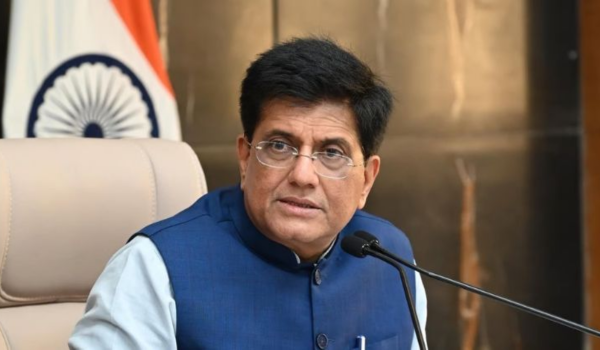
On 1 September 2026 India and the US announced a trade deal with an 18% average tariff, the first major pact under Trump 2.0. The deal covers manufacturing, energy and digital services but leaves agriculture protected. Washington pressed for market access while New Delhi defended strategic autonomy. The rate signals how transactional the new global order has become.
What are the key terms of the 2026 India-US trade deal?
Announced on 1 September 2026, the India-US trade agreement phases tariffs down over three years to an average of 18% on most goods, gives IT services differential treatment, tightens intellectual property rules and sets up a dispute mechanism outside the WTO. Agriculture stays largely protected through quotas, a compromise between US market access and Indian strategic autonomy.
The Story in 60 Seconds
What Actually Happened?
On September 1, 2026, India's Commerce Minister and US Trade Representative signed a bilateral trade agreement in New York. Key terms: phased tariff reductions over three years to reach 18% average rate on most goods. Services (IT, consulting) get differential treatment with lower tariffs. Intellectual property (patents, trademarks) to be tightened per international standards.
The deal covers: manufactured goods (autos, chemicals, pharmaceuticals, textiles), agricultural products (rice, spices, sugar with quotas), services (IT, business process outsourcing, financial services), digital trade, and investment protections. Bilateral dispute resolution mechanism established outside WTO framework.
The 18% rate represents mutual compromise but reflects power asymmetry. India wanted 12-15% (closer to India's current average tariff). The US pushed 22-25% (protecting domestic manufacturers). Landing at 18% means India conceded more in goods but gained clarity on services—the sector where India has genuine comparative advantage. This is a trade-off: goods sectors (textiles, autos, chemicals) face higher barriers; IT and consulting get preferential access.
The deal's implementation remains opaque. Tariff schedules are complex; actual rates for specific products (steel, pharmaceuticals, dairy) are not yet public. Estimates of welfare impact (job gains/losses) vary widely depending on sector and product assumptions.
India does not see the Indo-Pacific as a strategy, or as a club of limited members. It is not directed against any country. It is an inclusive concept and includes all nations in this geography as well as others beyond who have a stake in it.
Narendra Modi, Prime Minister of India, Shangri-La Dialogue, Singapore (1 June 2018)
The Power Dynamics
The US wanted higher tariffs (protecting domestic manufacturing); India wanted lower (protecting exports). Both needed something: the US seeks bilateral deals (not multilateral WTO framework, which it views as constraining US power). India seeks US alignment against China and semiconductor tech investment. Result: 18% is a compromise that reflects power asymmetry. India's choice to negotiate bilaterally (rather than hold firm in WTO with other developing nations) signals strategic realignment toward the West. This is a geopolitical bet, not just economics: India prioritizes US alliance over developing-world solidarity.
How Did We Get Here?
- 2017-2024 Trump 1.0 (2017-2020): Trade friction; US forced India's exit from GSP. Biden era (2021-2024): Tensions ease; US-India Quad alignment deepens on China strategy.
- January 2025 Trump 2.0 signals bilateral deals, threatens tariffs. India must negotiate to secure US alignment on China and semiconductor investment.
- September 1, 2026 Deal finalized: 18% average tariff rate, services access (India's win), IP tightening (US's win).
What Does an 18% Tariff Rate Actually Mean?
Tariff Rate Comparison
| Dimension | What It Means |
|---|---|
| Tariff level baseline | Current US average tariff: ~3-4%. Current India-US tariff (under GSP + WTO): ~8-12%. So 18% is higher than current, meaning goods become more expensive in each market. |
| Goods most affected | Textiles (India's export strength): likely 18-22%. Autos & components: 15-18%. Pharmaceuticals: 8-12% (lower, given US dependence on Indian generics). |
| Services exemption | IT services, consulting, business process outsourcing remain at near-zero tariffs. This is India's win—India's biggest export category gets preferential treatment. |
| Consumer impact | US consumers will pay more for Indian textiles, jewelry, automotive parts. Prices rise 15-20% on affected goods. This hurts US lower-income consumers (price-sensitive). |
| Business impact | Indian textile exporters face margin compression. Some may relocate production to Vietnam, Bangladesh. Indian automakers (Tata, Mahindra, Hero) face higher US market entry costs. |
Connect the Dots
- US strategic priority: China containment | India's geopolitical value
- But: Trade leverage still matters to Trump | US domestic industries want protection
- India's position: Need US alignment against China | But also need export access
- Solution: Bilateral negotiation outside WTO | Trump gets tariff revenue + domestic satisfaction | India gets clarity + services access
- Result: 18% compromise | Stable bilateral framework replaces unpredictable tariff threats
Read More
- Ministry of Commerce: Trade Statistics (India-US bilateral trade data)
- Ministry of External Affairs (Official foreign policy and trade agreements)
But Is the 18% Rate Really a 'Win' for India?
Bilateral Trade Impact
| Interpretation | Core Claim |
|---|---|
| India's narrative | 18% is lower than US threatened (25%). India secured services access. Stability is better than tariff volatility. Strategic alignment with US has value beyond trade. |
| Protectionist critique | 18% is higher than current rates. India's textile, auto, and pharma sectors face margin squeeze. Some jobs will be lost. India conceded too much to please Trump. |
| Bilateral/autonomy angle | India's participation in bilateral negotiation (vs holding firm in multilateral forums) signals willingness to accommodate US. Strategic alignment has a cost: reduced autonomy. |
What Happens Next?
- Smooth implementation — 18% tariffs phased in over 3 years | Bilateral trade grows | US confidence in India deepens | More tech cooperation (semiconductors, defense). Timeline: 2026-2029.
- Sectoral disruption — Indian textile/auto sectors face cost shocks | Some producers relocate to Vietnam | Jobs lost in affected regions | Political pressure on Modi govt to renegotiate. Likelihood: 2027-2028.
- US domestic politics shift — Next US administration (post-2028) may reverse Trump's bilateralism | Return to multilateral WTO framework | 18% rate becomes a floor, not a standard.
- China escalation — US-China trade war intensifies | India used as production base (supply-chain diversification away from China) | Trade deal becomes subordinate to geopolitical strategy.
Why India Should Care
International Relations Analysis - Table 3
| Why It Matters | The Detail |
|---|---|
| Strategic alignment | US-India partnership is central to Indo-Pacific strategy. A stable trade framework reduces frictions, strengthens partnership. But: alignment shouldn't come at economic cost. |
| Exports and jobs | India's exports to US: $60 billion annually (textiles, pharma, autos, IT). 18% tariffs will reduce exports in price-sensitive categories. Some manufacturing jobs will shift to other countries. |
| Investment and tech | US tech companies investing in India (semiconductors, AI, biotech). Trade deal removes uncertainty; companies more likely to invest. But IP tightening may affect India's generic pharma advantage. |
| Autonomy question | Bilateral deal signals India prioritizes US alignment over autonomy. This is fine if US remains stable ally. If US pivots (as it has before), India has fewer options. |
Who Could Gain? Who Could Feel Pressure?
Possible Gains:
International Relations Analysis - Table 4
| Who | Why |
|---|---|
| India's IT services sector | Services get near-zero tariffs. Demand for Indian IT expertise remains high. Jobs and revenue likely to grow. |
| US-India semiconductor joint ventures | Deal includes tech cooperation. Companies investing in India's semiconductor manufacturing benefit from stability. |
| India's pharmaceuticals exporters (high-end) | Lower tariffs on specialty drugs and APIs. But generics face pressure from IP tightening. |
Possible Pressure:
International Relations Analysis - Table 5
| Who | Why |
|---|---|
| India's textiles and apparel sector | 18% tariff is high. Bangladesh, Vietnam will gain US market share. Textile jobs at risk. |
| India's auto manufacturers | Higher tariffs make it expensive to export to US. Tata, Mahindra, Hero Motors growth limited. But: localization in US (production) may increase. |
| India's generic pharma exporters | IP tightening (patent protections) favors US pharma. India's generic advantage reduced. Prices for consumers may rise. |
Don't Misread This
How Should We Judge This Deal?
- Criterion 1: Stability and Predictability | Does 18% fixed rate reduce uncertainty better than ad-hoc tariff threats? Yes. This is positive.
- Criterion 2: Economic Welfare | Does the deal raise or lower India's long-term export potential and job creation? Mixed: IT gains, textiles hurt.
- Criterion 3: Strategic Autonomy | Does bilateral negotiation strengthen or weaken India's independence in foreign policy? Subtle cost: signals willingness to accommodate US.
- Criterion 4: Equity and Inclusivity | Who benefits (IT workers, urban tech jobs) vs. who loses (rural textile workers, auto sector)? Regressive—favors high-skill sectors.
Jasvin Thinks
CONCEPT BEHIND THE NEWS
Bottom Line
India and the US finalized a trade deal at 18% average tariffs. The 18% represents mutual compromise but reveals power asymmetry and strategic choices. The US wanted higher tariffs (protecting domestic manufacturing); India wanted lower (protecting exports). Landing at 18% means India gained predictability and services access but conceded on goods tariffs. More importantly, India's decision to negotiate bilaterally (rather than hold firm in WTO multilateral forums) signals strategic realignment toward the US and away from developing-world solidarity. This is rational geopolitics given China's rise. But it's also a cost to autonomy. For exam aspirants: this illustrates how trade deals encode power dynamics, strategic choices, and ideological shifts—not just economic exchange.
Sources & Further Reading
- Primary | White House Press Office: US-India Trade Agreement Fact Sheet (Sept 2026) | https://whitehouse.gov/
- Primary | Ministry of Commerce & Industry (India): 'India-US Trade Agreement Terms and Implementation' | https://commerce.gov.in/
- Analysis | The Hindu: 'India-US Trade Deal Finalised; What It Means for Indian Exporters' | https://thehindu.com/
- Analysis | CNBC: 'Trump Administration's Bilateral Trade Deals: India, Vietnam, others' | https://cnbc.com/
- Context | Stimson Center: 'Indo-Pacific Strategy and US Bilateral Trade Framework' | https://stimson.org/
- Further Reading | Drishti IAS: 'India-US Strategic Partnership' and 'WTO and Multilateral Trade' | https://drishtiias.com/