India and the Next Global Financial Order: What De-dollarization Means in Practice
The 1944 Bretton Woods system gave the US dollar its global dominance. Russia's 2022 experience showed what dollar dependence costs when a country is sanctioned. India, as G20 leader and voice of the Global South, is now positioned to shape what comes next. This briefing explains Bretton Woods, IMF voting power, de-dollarization, and India's strategic opportunity.
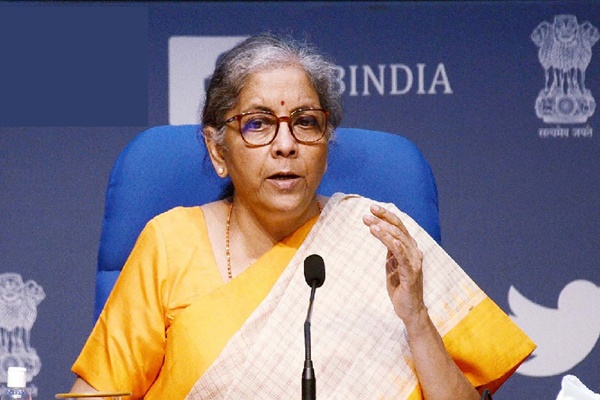
The global financial system was designed in 1944, by countries that then controlled most of the world's economy. They no longer do. India, for the first time, has both the standing and the incentive to shape what comes next.
What does de-dollarisation mean for India in practice?
De-dollarisation means settling trade and holding reserves in currencies other than the US dollar. Interest grew after Western nations froze about $300 billion of Russia's reserves in 2022, showing that dollar holdings carry geopolitical risk. India, which pushed IMF voting reform during its 2023 G20 presidency, is positioned to shape a less dollar-centric system.
The Story in 60 Seconds
What Happened?
During India's G20 presidency in 2023, India championed the inclusion of the African Union as a full G20 member and pushed for reform of multilateral development banks. India argued that Bretton Woods-era voting weights in the IMF no longer reflect economic reality. Nations with a growing share of global GDP hold a shrinking share of decision-making power.
In February 2022, Western nations froze approximately $300 billion of Russia's sovereign dollar reserves held abroad as part of sanctions. This demonstrated a structural reality: the dollar system gives its managers the power to exclude. Nations observing this (China, India, Gulf states, Brazil and South Africa) accelerated discussions about alternative settlement mechanisms.
Why It Matters
India has more to gain from a reformed system than from the current one. India's IMF voting share (approximately 2.75%) is far below its share of global GDP (approximately 8% at purchasing power parity). Rupee internationalisation would reduce India's dependence on dollar forex reserves, lower transaction costs for Indian traders, and insulate India from US monetary policy spillovers.
CONCEPT BEHIND THE NEWS
Currency Trends
| Term | What It Is | Why It Matters for UPSC |
|---|---|---|
| Bretton Woods System (1944) | Conference that created the IMF and World Bank; established the US dollar as the anchor of the international monetary system, pegged to gold | Prelims: direct concept; Mains: origin of Western dominance in global finance |
| IMF (International Monetary Fund) | 190-member institution that maintains international monetary stability; provides emergency balance-of-payments lending; voting determined by economic quotas | Prelims: what IMF does; Mains: governance reform, India's share, conditionality debate |
| World Bank | Provides long-term development finance and grants; split into IBRD (loans to middle-income nations) and IDA (concessional lending to poorest nations) | Prelims: IBRD vs IDA distinction; Mains: reform demand from developing nations |
| SDR (Special Drawing Rights) | IMF-created reserve asset; a basket of five currencies (USD, EUR, CNY, JPY, GBP); not a currency itself but a claim on IMF members' currencies | Prelims: what SDR is and its basket composition |
| De-dollarization | The process by which nations reduce dependence on the US dollar for trade settlement, foreign reserves and financial transactions | Mains: drivers, India's interest, implications for global financial order |
| Rupee Internationalisation | Making the Indian rupee acceptable for international trade settlement; India imports and exports in rupees, reducing dollar conversion costs and geopolitical exposure | Mains: RBI policy, India-Russia trade in rupees, strategic autonomy |
- 1944 Bretton Woods Conference: 44 nations create the IMF and World Bank. Dollar pegged to gold at $35 per ounce. US economic dominance is institutionalised.
- 1971 Nixon Shock: US ends dollar-gold convertibility. Dollar dominance continues through the petrodollar system - oil priced in dollars globally.
- 1999 Euro launched as the first significant alternative reserve currency to the dollar.
- 2016 Chinese yuan (CNY) added to IMF Special Drawing Rights basket - the first new addition since the euro.
- 2022 Russia's $300 billion in dollar reserves frozen. De-dollarization accelerates across the Global South. India-Russia rupee trade begins.
- 2023 India's G20 presidency: African Union joins as full G20 member. IMF quota reform and Global South debt restructuring pushed to agenda.
Syllabus Connection
- GS-II | International Relations | Global institutions: IMF, World Bank, WTO and their reform
- GS-II | International Relations | India's role in multilateral organisations; BRICS, G20, SCO
- GS-III | Economy | Internationalisation of the rupee; foreign exchange management
- GS-III | Economy | India's external sector, trade and payments architecture
PYQ Connection
- No direct UPSC PYQ found in the verified database on de-dollarization or Bretton Woods reform specifically.
- A 2020 Prelims question on FDI is topic-linked: its options test the distinction between resident and non-resident capital, external commercial borrowings, and capital market investment.
- These distinctions sit at the heart of how India engages with the global financial system.
Related PYQ - UPSC Prelims 2020
Question: With reference to Foreign Direct Investment in India, which of the following is considered its major characteristic?
- It is the investment through capital instruments by a person resident outside India in an unlisted Indian company.
- It is the investment made by a non-resident in Indian capital markets.
- It is a short-term investment in Indian treasury bills.
- It is the investment made through external commercial borrowings.
Answer: It is the investment through capital instruments by a person resident outside India in an unlisted Indian company.
FDI is long-term investment by a non-resident in an unlisted Indian company through capital instruments. Options B (capital market investment) describes FPI, not FDI. Option C (treasury bills) describes portfolio debt. Option D (external commercial borrowings) is a loan instrument, not equity. Understanding these distinctions matters for the rupee internationalisation debate: settling trade in rupees reduces the dollar conversion requirement that currently applies across all of these capital flow types.
Reserve Status Comparison
| Country or bloc | Approx. IMF voting share | Share of global GDP (PPP, 2024) | Gap |
|---|---|---|---|
| United States | ~17.4% | ~15.5% | Overrepresented by ~2% |
| European Union (combined) | ~27% | ~14% | Overrepresented by ~13% |
| China | ~6.4% | ~19% | Underrepresented by ~13% |
| India | ~2.75% | ~8% | Underrepresented by ~5% |
| Africa (54 nations) | ~6% | ~4.5% | Broadly fair but no single voice |
| Note | US holds effective veto: major decisions require 85% majority; US has ~17.4% |
Connect the Dots
- 1944: US economic dominance leads to Bretton Woods. Dollar becomes global reserve currency.
- US leverage: can freeze dollar assets, price oil in dollars, impose SWIFT-based sanctions
- 2022: Russia sanctions demonstrate dollar weaponisation. Nations see holding dollars as a geopolitical risk.
- Response: China-Russia yuan trade; India-Russia rupee settlement; BRICS alternative payment systems
- India's position: fifth-largest economy, G20 host, non-aligned credibility. A genuine voice in reform.
- Short-term goal: more equitable IMF voting, rupee settlement in bilateral trade
- Long-term goal: reduce mandatory dollar conversion for Indian imports and exports
- Strategic outcome: greater autonomy from US monetary policy spillovers
Exam Takeaway
- Remember: Bretton Woods.
- created the IMF and World Bank and made the US dollar the anchor currency. Nixon ended dollar-gold convertibility in 1971, but dollar dominance continued through oil pricing (the petrodollar system).
- Remember: IMF voting is quota-based, not population-based or one-country-one-vote. The US holds approximately 17.4% of votes and major IMF decisions require 85% approval. This gives the US an effective veto.
- Remember: De-dollarization is a structural trend driven by geopolitics (sanctions risk), not ideology. India's interest is rupee internationalisation and reduced forex vulnerability, not replacing the dollar overnight.
- Remember: India's G20 presidency added the African Union as a full member. This outcome appeared in 2024 and 2025 Prelims papers and is a reliable recall fact.
- Remember: BRICS New Development Bank (NDB) is headquartered in Shanghai. Created as an alternative development finance institution, not a direct replacement for the IMF or World Bank.
Exam Angle
- PRELIMS: Bretton Woods institutions (IMF, World Bank).
- IMF Special Drawing Rights and the SDR currency basket.
- G20 membership after India's presidency.
- BRICS NDB headquarters.
- MAINS: How can India use its economic standing to shape global financial architecture? Discuss de-dollarization's implications for India's strategic autonomy and external sector stability.
Possible Question
Practice Question
Question: With reference to the International Monetary Fund (IMF), consider the following statements: 1. The IMF was established by the Bretton Woods Agreement of 1944 to maintain international monetary stability. 2. Voting power in the IMF is determined by economic quotas, not by equal representation of member states. 3. The United States holds an effective veto on certain major IMF decisions. Which of the statements given above are correct?
- 1 and 2 only
- 2 and 3 only
- 1 and 3 only
- 1, 2 and 3
Answer: 1, 2 and 3
All three statements are correct. (1) The IMF was created at the Bretton Woods Conference in July 1944 to manage exchange rates and provide balance-of-payments support. (2) IMF voting is quota-based: each member's share depends on economic size, trade openness and reserves, not one-country-one-vote like the UN General Assembly. (3) Certain major IMF decisions, such as quota changes and amendment of the Articles, require an 85% supermajority. The US holds approximately 17.4% of votes, so any bloc of nations with less than 15% combined cannot block a decision without US support. The US alone can block any such decision.
Practice questions on IMF, Bretton Woods and India's role in global institutions
Read More
- The Hindu, Opinion (Original source article)
- Related: International Relations (Explore more articles in this topic)
Sources & Further Reading
- Primary source | The Hindu, Opinion, Why India could shape the next global financial order, 26 August 2026
- IMF data | IMF Member Quotas and Voting Shares, imf.org/en/About/Factsheets/Sheets/2023/IMF-Quotas
- Government position | India's G20 Presidency outcomes, g20.in; Finance Ministry statements on rupee internationalisation
- BRICS NDB | New Development Bank, ndb.int; BRICS 2024 Kazan Summit declarations
- Image | Bretton Woods Conference, 1944: Wikimedia Commons, Public Domain