Japan Will Invest ₹10 Trillion in India: What This Means
Japan has committed ₹10 trillion to invest in India over the next ten years. Commerce Minister Piyush Goyal says 14% has already come in. This explains what the money is for, why Japan chose India, and what it means for your exam.
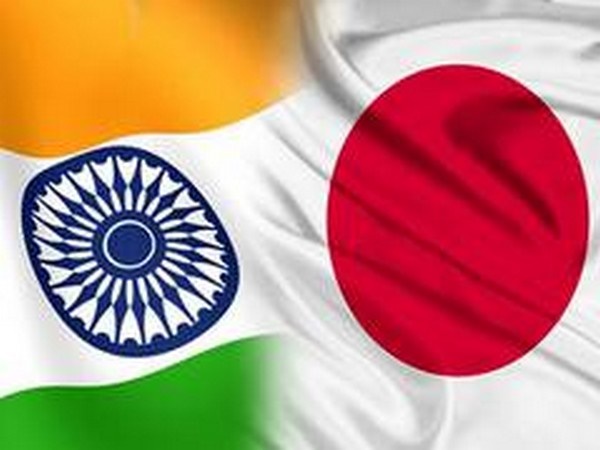
In September 2026, Japan announced a major investment commitment to India. This development signals strengthening economic ties and India's strategic importance in global geopolitics. The investment underscores Japan's confidence in India's economic trajectory and growth potential.
How much will Japan invest in India and where will the money go?
Japan has committed ₹10 trillion, about $120 billion, to invest in India over ten years, Commerce Minister Piyush Goyal said in September 2026, and about 14% has already arrived. The money will go into infrastructure, semiconductor manufacturing, renewable energy and industrial townships, as Japan diversifies production away from China under the India-Japan Special Strategic and Global Partnership.
The Story in 60 Seconds
What Happened?
Commerce and Industry Minister Piyush Goyal announced that Japan has committed ₹10 trillion (approximately $120 billion) to invest in India over 10 years. Japan has already sent in 14% of that amount, roughly ₹1.4 trillion. The money will go into four areas: infrastructure, semiconductor manufacturing, renewable energy, and industrial townships.
This is part of the India-Japan Special Strategic and Global Partnership, which both countries signed in 2014. Japan has been building its presence in India since then. This new commitment is a larger and faster push.
Why It Matters
Japan is the fourth-largest economy in the world. It is also a leader in technology. When Japan puts ₹10 trillion into one country, there is a clear reason: Japan needs India more than India needs the money alone. Japan's factories depend heavily on China. China-West tensions are rising. Japan is moving its supply chains to safer places. India is the best option it has found.
For India, this is valuable for two reasons. First, Japan brings real technology, not just money. Japanese companies build factories, train workers, and stay for decades. Second, money that comes with technology makes India's exports better and more competitive in global markets.
CONCEPT BEHIND THE NEWS
- FDI (Foreign Direct Investment) means: a company from Country A goes to Country B, builds a factory or business there, and runs it.
- It is not a loan.
- The company physically operates in the other country.
Simple example: A Japanese company builds a chip factory in Gujarat. It hires Indian engineers. It makes chips there and sells them globally. That is FDI. India gets jobs and technology. Japan gets a factory outside China.
Not all FDI is the same. Some investors take profits and leave quickly. Japanese companies usually stay for many years, build local supply chains, and transfer their technology to Indian workers. That is why this kind of FDI is more valuable.

- QUAD stands for Quadrilateral Security Dialogue.
- It is a group of four countries: India, Japan, the United States, and Australia.
- These four agreed to work together to keep the Indo-Pacific region free, safe, and open to all countries.
- The Indo-Pacific is the ocean space that runs from the eastern coast of Africa, across the Indian Ocean, through Southeast Asia, and into the Pacific Ocean.
- More than two-thirds of global trade passes through this region.
Japanese Investment Sectors
| Country | What They Bring to QUAD | What They Gain |
|---|---|---|
| India | Strategic position in Indian Ocean | Large military | Regional influence in South Asia | Fast-growing economy | Technology and defence equipment | Diplomatic support | Investment from Japan and USA | Counter to China's pressure at borders |
| Japan | Advanced technology | Strong economy | Naval presence in Pacific | Largest provider of development aid to India | Safer factories outside China | Military alliance backing from USA | India as a large consumer market |
| United States | World's largest military | Global intelligence network | Diplomatic and financial power | Advanced weapons technology | Counter China's influence in Asia-Pacific | Keep sea routes open for US trade | Strengthen alliances with democracies |
| Australia | Critical minerals (lithium, cobalt, uranium) | Naval presence in Pacific | Five Eyes intelligence network | Security support in Indo-Pacific | Prevent China from controlling Pacific island nations | Stronger trade access into Asia |
QUAD is not a military alliance like NATO. In NATO, if one country is attacked, all must respond militarily. QUAD has no such treaty. It is a partnership of shared values: democracy, rule of law, freedom of navigation. The four countries hold joint military exercises (including the Malabar Naval Exercise), share intelligence, and cooperate on vaccines, semiconductor supply chains, and clean energy. Japan's ₹10 trillion investment in India deepens QUAD beyond defence into economics, making the partnership more durable.
Syllabus Connection
- GS-II | International Relations | India-Japan bilateral relations, QUAD
- GS-III | Economy | Foreign Direct Investment (FDI), Make in India
- GS-II | Geopolitics | Supply chain shifts, India's strategic position
PYQ Connection
- 2020 | UPSC Civil Services Prelims | Foreign Direct Investment: major characteristic
- 2011 | UPSC Civil Services Prelims | FDI vs FII: key difference between the two
- 2012 | UPSC Civil Services Prelims | What constitutes Foreign Direct Investment in India
Practice these and 500+ more PYQs with full explanations.
Connect the Dots
- China-West tensions rise: Japan's China-based supply chains become risky
- Japan looks for a large, stable country to shift factories to
- India fits: big market, fast growth, democratic government, QUAD partner
- Japan commits ₹10 trillion: infrastructure, chips, renewable energy
- India gets: technology, jobs, better exports, stronger global position
- QUAD alliance grows stronger through economic ties, not just defence talks
Exam Takeaway
- Remember: FDI is not just money. It brings technology, jobs, and long-term economic connections.
- Remember: Japan chose India because it needs to reduce dependence on China. Both sides gain from this. Japan gets safer factories. India gets technology and investment.
- Remember: QUAD is not only a defence group. Economic ties between member countries are growing alongside security cooperation.
- Remember: In Mains answers on India-Japan relations, cover three things: strategic (QUAD, defence), economic (FDI, Make in India), and civilisational (shared values, long historical ties).
Exam Angle
- Prelims: What is QUAD? Which four countries are members? What does FDI mean? Which ministry approves FDI in India? Mains GS-II: Examine India-Japan strategic and economic partnership.
- How does Japan's investment reflect global supply chain changes? What is India gaining beyond money?.
Possible Question
Question: Which of the following groups of countries form the Quadrilateral Security Dialogue (QUAD)?
- India, Japan, Singapore, South Korea
- India, Japan, USA, Australia
- India, USA, Australia, Vietnam
- India, Japan, China, Australia
Answer: India, Japan, USA, Australia
QUAD (Quadrilateral Security Dialogue) is made up of India, Japan, the United States, and Australia. It is an informal group focused on keeping the Indo-Pacific region free and open. QUAD composition is a common question in UPSC Prelims.
Why It Matters
Make in India is a programme started by the Government of India in September 2014. The goal is straightforward: instead of buying finished goods from other countries, India should manufacture them here. The government invites foreign companies to set up factories in India, hire Indian workers, and export from India to the world.
Japan's ₹10 trillion investment is Make in India in action. Japanese companies building chip factories in Gujarat, solar equipment plants in Rajasthan, or industrial townships in Maharashtra, is exactly what the programme is designed to attract. Make in India appears in UPSC as a GS-III topic (Economy: industrial policy, FDI, manufacturing) and as a GS-II topic (Government policies and interventions).
- Government announces Make in India (Sept 2014): invites global companies to manufacture in India
- Simplified rules for FDI: most sectors opened to 100% foreign ownership
- Production Linked Incentive (PLI) schemes launched: government pays companies per unit they produce in India
- Japan commits ₹10 trillion: semiconductors, infrastructure, renewable energy, industrial parks
- India gains: factories, jobs, technology transfer, better exports
- India moves from being an importer of chips and solar panels to a producer
Read More
- Economic Times, Policy (Original source)
- Explore: FDI & Investment (More articles on investment and FDI)
Sources & Further Reading
- Economic Times, Policy | 'Japan already invested 14 percent of 10 trillion yen India investment target: Piyush Goyal,' 26 Aug 2026 | economictimes.indiatimes.com/news/economy/policy
- Ministry of External Affairs | India-Japan Special Strategic and Global Partnership
- M. Laxmikanth, Indian Polity | for FDI and bilateral relations framework
- Image: India-Japan Flags, Wikimedia Commons, Public Domain | Hero image: Unsplash, free to use