Pakistan Navy Collision: What Naval Protocols Reveal About Indo-Pakistan Tensions
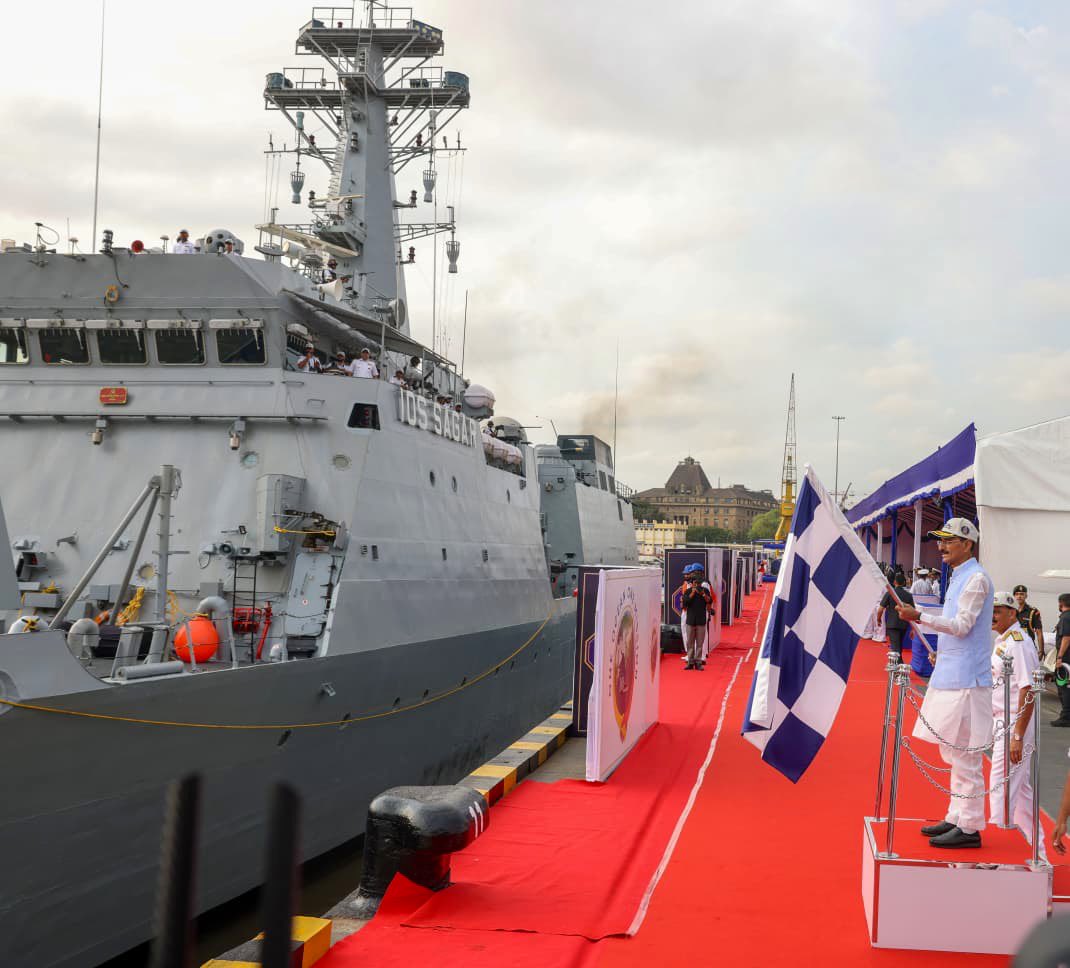
On September 15, 2026, the Pakistan Navy corvette PNS Hunain collided with the Indian Navy's frontline warship INS Kolkata approximately 220 kilometres east of Oman in the north Arabian Sea. The incident, the first open military confrontation between India and Pakistan since May 2025, triggered immediate diplomatic protests from both capitals. India accused Pakistan of unsafe maneuvering; Pakistan blamed India for aggressive conduct. Neither country reported casualties or major damage, but the collision exposed a gap in confidence-building measures between two nuclear-armed nations operating in shared maritime space.
What happened in the September 2026 India-Pakistan naval collision in the Arabian Sea?
On September 15, 2026, the Pakistan Navy corvette PNS Hunain collided with INS Kolkata about 220 km east of Oman in international waters. Each side blamed the other for unsafe manoeuvring, and no casualties were reported. It was the first open military incident between the two since May 2025 and exposed the absence of a dedicated maritime confidence-building mechanism.
The incident occurred during a routine surveillance mission. Maritime protocols exist precisely to prevent such encounters from escalating into serious incidents. The fact that both sides offered conflicting narratives suggests the protocols were either ignored or interpreted differently.
Maritime Security Analysts, September 2026
What Happened?
The collision occurred in the north Arabian Sea, approximately 220 kilometres (120 nautical miles) east of Oman, an area classified as international waters. India's Ministry of External Affairs reported that PNS Hunain, a Pakistan Navy corvette, approached INS Kolkata at high speed and executed unsafe maneuvers, resulting in minor contact between the two vessels. Pakistan's Foreign Office provided a different account: it stated that while PNS Hunain was conducting SEASPARK-26, a biennial Pakistan Navy exercise focused on maritime security, the Indian Navy vessel INS Kolkata carried out aggressive maneuvers in dangerously close proximity, resulting in the collision. Both nations acknowledged that the incident caused no major damage and no loss of life.
The collision exposed a critical absence: India and Pakistan lack a dedicated maritime Confidence Building Measure (CBM) comparable to the 1971 Simla Agreement or the 2003 Ceasefire Agreement that cover land borders. The 1989 Indo-Pakistan Naval MoU attempted to regulate naval incidents, but it requires modernisation to cover complex scenarios like near-collisions in contested maritime zones. The Arabian Sea, though international waters, is increasingly contested because both nations claim strategic interest in anti-piracy operations, freedom of navigation patrols, and counter-terrorism surveillance. Without explicit protocols for collision avoidance at sea, routine operations can trigger escalation spirals.
Why It Matters
This incident is significant for three reasons. First, it marks the first direct military contact since the May 2025 clashes, suggesting the temperature of Indo-Pakistan tensions has risen again after a period of tactical de-escalation. Second, it occurs in a zone where both nations have expanding strategic interests: India's maritime strategy emphasises Indo-Pacific security; Pakistan's SEASPARK exercise reflects its focus on sea-lane protection for trade and Chinese Belt and Road infrastructure. Third, the incident reveals that escalation can occur not through deliberate action but through protocol misinterpretation—a dangerous scenario when nuclear weapons are involved. For UPSC, this exemplifies how maritime law, confidence-building measures, and de-escalation mechanisms protect national security in contested spaces where technological accidents can trigger political crises.
Concept Behind the News: Maritime Confidence-Building Measures
- Freedom of navigation: All nations have the right to pass through international waters. A naval collision in international waters raises questions about whose protocols apply.
- Rules of Engagement (RoE): Military forces operate under RoE that define how to respond to contact from hostile, neutral, or friendly forces. If RoE differ, misunderstanding escalates.
- Confidence-Building Measures (CBM): Agreements between nations to reduce accident risk—examples include advance notification of exercises, communication hotlines, defined engagement zones, and collision avoidance procedures.
- India-Pakistan precedent: The 1989 MoU prevents air incursions and requires advance notice of exercises; no equivalent exists for sea collisions.
- Global precedent: The US-Russia 1972 Incidents at Sea (INCSEA) agreement defines protocols to prevent escalation from naval contact; it has worked for 50+ years.
- The gap: India and Pakistan lack a modern INCSEA-equivalent; the 1989 MoU is outdated for 21st-century maritime operations (autonomous systems, AI surveillance, faster response times).
Syllabus Connection
- GS-II (International Relations): India-Pakistan relations, confidence-building measures, bilateral diplomacy, nuclear deterrence
- GS-II (IR): UNCLOS, maritime law, freedom of navigation, territorial waters, EEZ
- GS-III (Defence): Naval strategy, maritime security, anti-piracy operations, defence technology
PYQ Connection
UPSC Prelims 2025 — Defence Technology & Maritime Security
Question: What is the common characteristic of the chemical substances generally known as CL-20, HMX and LLM-105?
- These are high-energy materials used as explosives and propellants
- These are rare earth elements
- These are semiconductor compounds
- These are polymers used in aircraft manufacturing
Answer: These are high-energy materials used as explosives and propellants
These substances are high-energy materials with applications in defence systems, including naval weapons and explosives. Relevant to understanding defence technology capabilities discussed in the Pakistan Navy collision incident.
Question: Consider the following pairs: Aircraft type : Description. I. Dornier-228 : Maritime patrol aircraft. II. IL-76 : Supersonic combat aircraft. III. C-130J : Heavy-lift cargo aircraft. Which is/are correct?
- Only I
- I and III only
- II and III only
- All three
Answer: I and III only
Dornier-228 is indeed a maritime patrol aircraft used by India and Pakistan for coastal surveillance—directly relevant to the naval collision scenario. IL-76 is a heavy transport, not supersonic combat.
CAPF 2021-2022 — Defence & Security, India-Pakistan Relations
Question: With reference to India's defence, consider the following helicopters: (1) Cheetah (2) Chetak (3) Rudra. Which of the above has/have turret gun, rocket system and thermal imaging?
- Only Rudra
- Rudra and Chetak
- Only Cheetah
- All three
Answer: Only Rudra
The Rudra (armed variant of Dhruv) is equipped with advanced weapons systems. Relevant to understanding India's maritime and coastal defence capabilities.
Question: Which one of the following is the oldest Central Paramilitary Force in India?
- Central Industrial Security Force
- Border Security Force
- Central Reserve Police Force
- Assam Rifles
Answer: Assam Rifles
Assam Rifles (founded 1835) is the oldest; relevant to understanding India's armed forces structure and maritime security operations.
UPSC Mains 2013-2016 — Geopolitics, Maritime Law, Bilateral Relations
2014 | The Freedom Struggle: In what ways did the naval mutiny prove to be the last nail in the coffin of British colonial aspirations in India? Exam relevance: Understanding historical precedent for naval operations' political impact; demonstrates how maritime incidents can trigger major geopolitical shifts.
2016 | Natural Resources & Industrial Location: Present an account of the Indus Water Treaty and examine its ecological, economic and political implications in the context of changing bilateral relations. Exam relevance: Water treaties as confidence-building measures; direct parallel to the need for maritime CBMs between India-Pakistan.
2014 | South China Sea: With respect to the South China Sea, maritime territorial disputes and rising tension affirm the need for safeguarding maritime security to ensure freedom of navigation. Discuss. Exam relevance: Regional maritime disputes mirroring India-Pakistan tensions; freedom of navigation challenges in contested waters.
2013 | Bilateral Relations: Economic ties between India and Japan while growing in the recent years are still far below their potential. Elucidate the policy constraints which are impeding the stronger bilateral ties. Exam relevance: Understanding bilateral diplomatic frameworks and constraint-removal; applicable to India-Pakistan CBM negotiations.
Visual Explanation: Naval Protocols Comparison
| Protocol Element | India's Interpretation | Pakistan's Interpretation | Gap/Risk |
|---|---|---|---|
| Safe Approach Distance | Minimum 500m at high speed operations | Minimum 200m; routine patrols closer | Collision at <500m suggests protocol mismatch |
| Rules of Engagement (RoE) | Visual identification required before maneuvering | Maneuver first, identify after | Misinterpretation escalates to contact |
| 1989 Naval MoU Coverage | Applies to maritime operations in all zones | Applies only to territorial waters, not high seas | MoU outdated for Arabian Sea operations |
| Modern CBM Gap | No dedicated maritime collision protocol (unlike US-Russia INCSEA 1972) | No equivalent treaty for naval contact avoidance | Without protocols, accidents → escalation |
| Confidence Channel | Ministry of External Affairs + Navy direct line | Foreign Office + Navy direct line | Coordination delays during crisis |
Connect the Dots
- May 2025: Last major India-Pakistan military clashes; both nations signaled tactical de-escalation
- August 2026: Pakistan launches SEASPARK-26 biennial exercise as part of routine maritime operations
- September 15, 2026: PNS Hunain and INS Kolkata collide 220 km east of Oman
- September 16, 2026: Diplomatic protests exchanged; both nations summon chargés d'affaires
- Ongoing: No major escalation; both capitals manage the incident within diplomatic channels
- Future risk: Without updated CBMs, next collision could trigger uncontrolled escalation spiral
Read More
Read More
- India-Pakistan Naval MoU (1989) (Official bilateral agreement; outdated for modern maritime operations)
- Freedom of Navigation Program, US Navy (Context on how major powers exercise freedom of navigation rights)
Exam Takeaway
- Confidence-building measures are critical safety nets between nuclear powers; their absence increases accident risk
- India-Pakistan CBMs predate modern maritime technology; they need updating to cover autonomous systems, AI surveillance, and faster response times
- Maritime law (UNCLOS) grants freedom of navigation, but protocol misinterpretation can escalate routine operations into diplomatic incidents
- The Arabian Sea is increasingly contested because multiple powers operate there; India, Pakistan, China, and Western navies all patrol for different reasons
- Crisis management between nuclear powers depends on pre-existing communication channels and shared understanding of protocols
Exam Angle
The collision tests whether you understand that maritime safety depends not on military strength but on agreed protocols. A mightier navy cannot prevent a collision if both parties misunderstand what 'safe approach' means. For mains: explain why CBMs matter in nuclear deterrence strategy. For prelims: know the difference between territorial waters (12 nm), contiguous zone (24 nm), and EEZ (200 nm)—this collision occurred in international waters beyond all three zones, yet both nations claimed the right to operate there.
Possible Question
Question: The collision between PNS Hunain and INS Kolkata in September 2026 occurred in which maritime zone?
- Pakistan's territorial waters (12 nm)
- Pakistan's Exclusive Economic Zone (200 nm)
- International waters (beyond EEZ)
- India's Exclusive Economic Zone
Answer: International waters (beyond EEZ)
The collision occurred 220 km (approximately 120 nautical miles) east of Oman in the north Arabian Sea. This exceeds the 200 nm EEZ limit for both nations and qualifies as international waters under UNCLOS. This is significant because freedom of navigation rights apply equally to all nations in international waters.
Sources & Further Reading
- The Diplomat: Indian, Pakistani Naval Vessels Collide in Arabian Sea (Sept 15, 2026)
- Defence Security Asia: India–Pakistan Warships Collide in Arabian Sea (Sept 15, 2026)
- IR-IA News: Indian and Pakistani naval vessels collide during naval operations (Sept 15, 2026)
- Ministry of External Affairs: Press releases on Pakistan Navy incident (Sept 15-16, 2026)
- UNCLOS: UN Convention on the Law of the Sea (1982)—international maritime law reference