J&K Statehood, Seven Years On: The Promise That Keeps Getting Postponed
Seven years after Article 370 was abrogated and Jammu and Kashmir was downgraded to a Union Territory, the promise of restoring full statehood remains unfulfilled. On July 20, 2026, Chief Minister Omar Abdullah led the ruling National Conference to Jantar Mantar to demand statehood, and was stopped from protesting. A Kashmir Times timeline documents at least six assurances from the home minister since October 2019, none kept. Between 1950 and 2019, nine Himalayan territories were upgraded to statehood; J&K, with more people than all of them, still waits. Understand the constitutional history, the broken promises, the 2024 election verdict, and why the question will not go away.
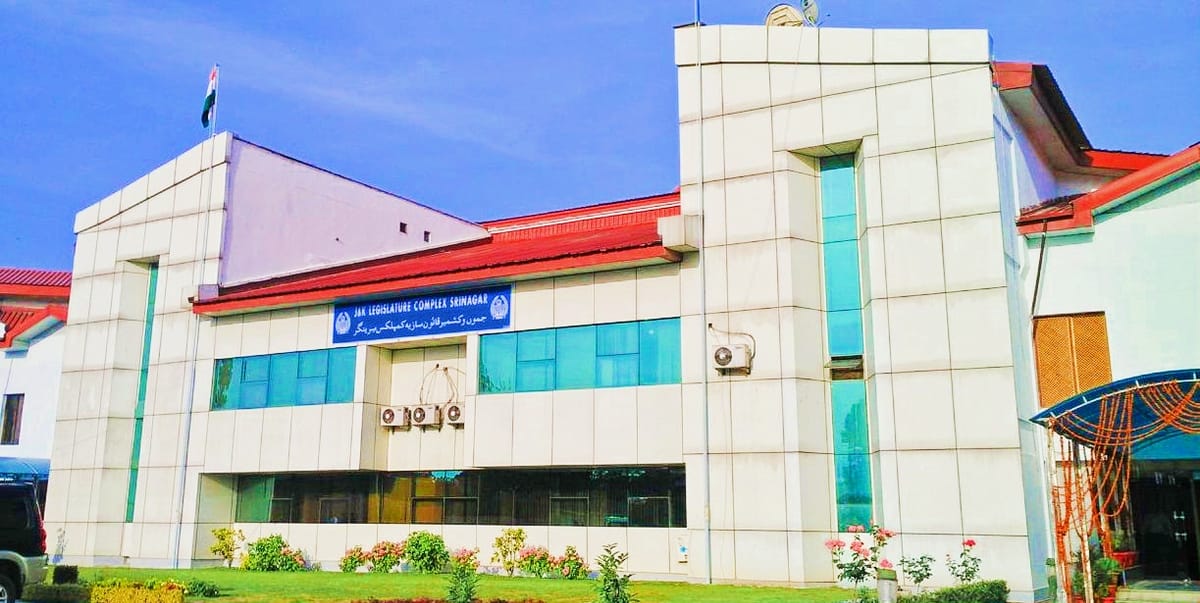
Why does the long-delayed promise of full statehood for Jammu and Kashmir matter for India's federal structure and the health of its democracy? Seven years after Article 370 was abrogated and J&K was downgraded to a Union Territory, the elected government of the region is still waiting for the status it was promised, and its chief minister was recently stopped from protesting peacefully in the national capital.
Why hasn't Jammu and Kashmir got its statehood back seven years after Article 370?
Since Article 370 was abrogated in August 2019 and J&K became a Union Territory, the Centre has given at least six assurances on restoring statehood without setting a date. On July 20, 2026, Chief Minister Omar Abdullah's National Conference was stopped from protesting at Jantar Mantar, highlighting how an elected government still lacks full state powers.
The Story in 60 Seconds
What Actually Happened?
August 5, 2026 marks the seventh anniversary of the abrogation of Article 370 and the downgrading of Jammu and Kashmir to Union Territory status. In anticipation of the anniversary, the ruling party in J&K, the National Conference, organised a protest in New Delhi on July 20 to press for the restoration of statehood. The initiative was not supported by the Peoples Democratic Party, influential in the Valley, and got only lukewarm support from other members of the INDIA bloc.
The protest was ill-timed: July 20 was also the day of the student march on Parliament organised by the Cockroach Janta Party, and the news cycle was dominated by the massive numbers at that march and its suppression by the Delhi Police. The National Conference protest did not bring the statehood issue back into the public conversation as its organisers had hoped.
Guha's reading is that the episode was a telling contrast: thousands of students could make Parliament their destination and draw the nation's attention, while the elected government of a whole region could not hold a peaceful demonstration for a constitutional demand without being stopped. Omar Abdullah's own words captured the bitterness: We were stopped from getting to Jantar Mantar and stopped from protesting peacefully for what is rightfully ours, but we were not silenced.
Around the same time, the region was convulsed by a security crackdown. After a police head constable, Ashiq Hussain Qureshi, was killed by a lone terrorist in Anantnag on July 22, 2026, police detained over 2,500 people across the Valley, including more than 700 from Srinagar, and demolished the homes of two alleged terrorists. Chief Minister Omar Abdullah criticised the demolitions, citing a Supreme Court order against summary action of this kind, and warned that detaining hundreds would strain the situation further. The Indian Express reported that the killing was the first terrorist attack in the Valley since the Pahalgam attack of April 2025.
Constitutional / Legal / Institutional Background
Article 370 of the Constitution gave the former state of Jammu and Kashmir special status, allowing it its own constitution and restricting Parliament's power to legislate for it on most subjects. On August 5, 2019, the provision was effectively abrogated, and the state was split into two Union Territories: Jammu and Kashmir, and Ladakh.
In December 2023, a Constitution bench of the Supreme Court upheld the abrogation as valid, while stating that statehood should be restored to Jammu and Kashmir at an early date. The Court did not rule that restoration had to happen immediately, and the Centre told the Court that it would restore statehood at an appropriate time. This is the constitutional hinge on which the entire political argument turns: the abrogation itself is settled law, but the promise of restoration made in court and in Parliament remains unfulfilled.
Under the federal scheme, a Union Territory is directly administered by the Centre through a lieutenant governor, whereas a full state has an elected chief minister and a legislative assembly with substantially greater executive and legislative authority. Jammu and Kashmir since 2019 has an elected assembly and chief minister, but the lieutenant governor retains significant powers, and the Centre retains the power to legislate for the territory on subjects that in a full state would belong to the state legislature.
How Did We Get Here?
- 1950-2019 Jammu and Kashmir exists as a full-fledged state of the Union of India with its own constitution and special status under Article 370.
- Aug 2019 Article 370 abrogated; J&K downgraded to a Union Territory and split into J&K and Ladakh. In October 2019, Home Minister Amit Shah tells police officers that statehood will be restored once normalcy returns.
- Dec 2019 Ram Madhav, then BJP national general secretary, says statehood will be restored soon.
- Feb 2021 Amit Shah claims the Centre will grant full statehood at an appropriate juncture.
- Oct 2021 Visiting J&K, the home minister says statehood will be restored after the assembly elections.
- 2022 Delimitation of constituencies is carried out, adding six assembly seats to the Jammu region and only one to the Kashmir Valley; the home minister repeats that statehood will be reinstated once normalcy returns.
- 2023 In December, the Supreme Court upholds the abrogation but says statehood should be restored at an early date.
- Sep-Oct 2024 Assembly elections are held for the first time since 2019. The INDIA bloc wins 49 of 90 seats; the National Conference alone wins 42. Turnout is a record roughly 64%.
- Oct 2024 Omar Abdullah is sworn in as Chief Minister of the Union Territory on October 16.
- Mar 2025 Amit Shah says statehood will be restored as promised, without giving a timeline.
- Oct 2025 Amit Shah promises statehood at an appropriate time, the same vague formulation used since 2019.
- Jul 2026 The National Conference holds a Jantar Mantar protest on July 20 to demand statehood and is stopped; the home minister's assurances remain unfulfilled; a police officer is killed in Anantnag on July 22 and over 2,500 people are detained across the Valley.
Who Are the Institutions & Actors Involved?
Constitutional Status Changes
| Actor | Who they are | What they did | Why it matters |
|---|---|---|---|
| Union Home Ministry (Amit Shah) | The ministry that administers Union Territories and frames the statehood timeline | Promised statehood in October 2019, February 2021, October 2021, January 2022, March 2025 and October 2025; no restoration announced | The repeated assurance is the political and legal basis of the opposition's demand |
| Prime Minister (Narendra Modi) | Campaigns as the public face of the 2019 decision | Said in Udhampur-Doda in April 2024 that statehood would be restored after the polls | The pledge was made on the campaign trail and is quoted by opponents as a broken commitment |
| Supreme Court | Constitutional arbiter of the abrogation | Upheld the abrogation in December 2023 but said statehood should be restored at an early date | Settles the legality of 2019 while leaving the timing of restoration to the Centre |
| National Conference (NC) and Omar Abdullah | The ruling party of J&K and its Chief Minister | Organised the July 20, 2026 Jantar Mantar protest for statehood; Omar Abdullah said the party was stopped but not silenced | The elected government of the region pressing its own constitutional demand before the Centre |
| Deputy CM Surinder Choudhary | Elected representative of the UT government | Told ThePrint that in the absence of statehood the government has few powers and cannot even appoint a daily wager | Concretises what the absence of statehood means for ordinary governance |
| Security forces and J&K Police | Enforcers of law in the UT | Detained over 2,500 people and demolished two homes after the Anantnag killing; Omar Abdullah criticised the demolitions | The crackdown is the sharpest recent illustration of the UT's reduced democratic space |
Connect the Dots
- ABROGATION | Article 370 abrogated and J&K made a Union Territory in August 2019.
- PROMISE | From October 2019, the Centre repeatedly says statehood will be restored once normalcy returns or at an appropriate time.
- DELIMITATION | 2022 redraws seats, adding six to Jammu and one to the Valley, altering the electoral arithmetic.
- ELECTION | September 2024 polls return the INDIA bloc with 49 of 90 seats; the NC alone wins 42.
- GOVERNMENT | Omar Abdullah is sworn in as Chief Minister in October 2024 with limited powers under the lieutenant governor.
- PROTEST | July 2026: the elected government marches to Jantar Mantar for statehood and is stopped.
- CONSEQUENCE | The region remains a UT while nine other Himalayan territories were upgraded to full states; the promise stays deferred.
Core Constitutional / Governance Issues
The first issue is the meaning of the promise itself. Statehood was promised in Parliament, before the Supreme Court, and on the campaign trail. Yet the language used to defer it, normalcy, soon, appropriate juncture, appropriate time, is deliberately vague. None of these conditions can be objectively verified, which is precisely the point: they let the promise be renewed without ever being dated.
The second is the federal asymmetry. Between 1950 and 2019, nine Himalayan territories were upgraded from centrally administered status to full statehood: Arunachal Pradesh, Nagaland, Mizoram, Meghalaya, Sikkim, Tripura, Manipur, Himachal Pradesh and Uttarakhand. All have fewer inhabitants than Jammu and Kashmir, in most cases far fewer. Guha's pointed question is simple: if these territories can be full states with elected governments that exercise real powers, why not J&K?
The third is the working of the UT government itself. Deputy Chief Minister Surinder Choudhary told ThePrint: We want to deliver for the people. There is unemployment in every household, yet we cannot even appoint a single daily wager. The complaint is not rhetorical: in a full state, a chief minister can appoint officials and direct departments; in the UT, key administrative and security powers rest with the lieutenant governor appointed by the Centre.
The Debate
Administrative Reorganization
| Perspective | Core argument | Evidence / basis |
|---|---|---|
| Union government | Statehood will be restored at an appropriate time; the current arrangement preserves security and administrative control in a sensitive border region | Repeated statements by the home minister from 2019 to 2025, and the December 2023 Supreme Court judgment upholding the abrogation |
| National Conference and Omar Abdullah | The promise has been made and broken; a democratically elected government cannot deliver without statehood | The Kashmir Times timeline of unfulfilled assurances; the deputy CM's statement on limited powers; the stopped July 2026 protest |
| Ramachandra Guha | The denial is consistent with a majoritarian ideology that treats the region's Muslim-majority population as subjects rather than citizens | The contrast with nine smaller, non-Muslim-majority territories that were all upgraded to statehood |
| The evidence | The abrogation is settled law; the promise of restoration is documented and unfulfilled; the timing is entirely in the Centre's discretion | Supreme Court ruling of December 2023; parliamentary and public assurances by the home minister |
What Changes in Practice?
For the people of Jammu and Kashmir, the difference between a Union Territory and a state is practical: who appoints the daily wager, who orders a transfer, who decides on a recruitment, who holds the purse strings for development work. The elected government's complaint is that it cannot do the basics, and that every project, appointment and scheme is filtered through a lieutenant governor who answers to the Centre.
For the political system, the July 2026 episode is a live demonstration of the limits of protest in the UT: even a chief minister was stopped from peacefully demonstrating in the national capital for a constitutional demand. And the Anantnag crackdown, with over 2,500 detained and homes demolished, shows that in the absence of statehood the region's democratic space is policed differently from any full state in the Union.
What Is Clear?
It is established that Article 370 was abrogated on August 5, 2019 and J&K became a Union Territory; that the Supreme Court upheld the abrogation in December 2023 while saying statehood should be restored at an early date; that the home minister publicly promised statehood on at least six occasions between October 2019 and October 2025; that the 2024 assembly elections returned the INDIA bloc with 49 of 90 seats and the National Conference with 42; that Omar Abdullah was sworn in as Chief Minister in October 2024; that the NC's July 20, 2026 protest at Jantar Mantar was blocked; that over 2,500 people were detained and two homes demolished after the Anantnag killing of July 22, 2026; and that nine Himalayan territories were upgraded to statehood between 1950 and 2019.
What Remains Contested?
When statehood will actually be restored has not been established: the Centre has never given a date, and the phrase appropriate time is a moving target. Whether the July 2026 protest will change the calculus is unknown; the news cycle that day was dominated by the student march, not by the statehood demand. And the deeper question, whether religion is the real reason for the denial, remains a matter of interpretation: the contrast with the nine upgraded territories is suggestive but the government has never stated such a criterion.
What Could Happen Next?
- Scenario A, phased restoration — If the Centre reads the 2026 protests and the election verdict as pressure, it could restore statehood in stages, beginning with a full-state designation while retaining some security powers; a phased restoration would answer the demand while keeping central control over border and security matters.
- Scenario B, continued deferral — If the Centre continues to postpone, the NC and Omar Abdullah are likely to escalate, using every anniversary and parliamentary session to keep the issue alive, with opposition support growing; a prolonged wait would deepen the sense of betrayal and test the UT government credibility.
- Scenario C, security-triggered delay — If a fresh terrorist attack or security crisis occurs, restoration could be postponed indefinitely on security grounds, with the appropriate time formula extended once more; security-focused reasoning would be used to justify continued deferral.
Why Does It Matter?
This is a test case for Indian federalism. The Constitution is federal in structure, and one of its quiet rules is that territory can be reorganised and status changed, but the political system has always assumed that democratically elected governments, once installed, exercise real power. Jammu and Kashmir is the exception that breaks the rule: it has an elected assembly and chief minister, yet key powers rest with a centrally appointed lieutenant governor.
For an informed citizen and an exam aspirant, the episode teaches a concrete lesson in how promises, constitutional judgments and political power interact: a Supreme Court judgment can settle legality, but it cannot enforce a timeline; a campaign pledge can be repeated for years without a date; and the status of a whole region can remain suspended between state and territory while its elected representatives plead for the obvious. The question of J&K's statehood is also the question of whether India treats its citizens equally across regions, religions and languages, which is the very premise of the Republic.
CONCEPT BEHIND THE NEWS
Bottom Line
Seven years after Article 370 was abrogated, Jammu and Kashmir remains a Union Territory despite repeated promises, dating to October 2019, that statehood would be restored. The 2024 assembly elections delivered a democratic verdict in favour of the INDIA bloc, and the National Conference now runs the UT government with powers it says are too few to deliver basic services. The July 2026 protest for statehood was stopped, and the region's democratic space has been further narrowed by the detention of over 2,500 people after the Anantnag attack. The question will not go away, because nine smaller Himalayan territories were all upgraded to full states while J&K, with more people than any of them, alone waits.
Key Constitutional / Governance Terms
- Article 370 | The constitutional provision that granted special status to Jammu and Kashmir, abrogated on August 5, 2019.
- Union Territory | A directly administered territory; J&K's status since August 2019, with a lieutenant governor appointed by the Centre.
- Lieutenant Governor | The Centre-appointed administrator of a Union Territory who retains significant executive powers.
- Federalism | The division of power between the Union and the states; J&K's suspended status is a departure from the norm of full states.
- Delimitation | The redrawing of constituency boundaries; the 2022 exercise added six seats to Jammu and one to the Valley.
Read More
- The Telegraph (Original article source)
- Explore More (Related articles in Polity)
Sources & Further Reading
- Primary | Ramachandra Guha, Promises betrayed: The long wait for statehood for Jammu and Kashmir, The Telegraph, July 25, 2026; republished on Scroll.in on July 26, 2026 as The reason why Jammu and Kashmir is being denied statehood is clear, Hindutva
- Corroboration | Kashmir Times, The Promised La La Land (April 2024), a timeline of unfulfilled statehood promises
- Corroboration | Indian Express, July 23-24, 2026, 2,500 detained across Kashmir in crackdown over cop's killing; over 700 from Srinagar; homes of two suspected terrorists demolished
- Corroboration | The Hindu / The Statesman / Hindustan Times, July 22, 2026, on the killing of Head Constable Ashiq Hussain Qureshi in Anantnag and the search operation
- Corroboration | ThePrint, July 2026, quoting Deputy Chief Minister Surinder Choudhary: We want to deliver for the people... we cannot even appoint a single daily wager
- Corroboration | Mint / The Tribune / Dainik Bhaskar, July 20, 2026, on the National Conference protest at Jantar Mantar and Omar Abdullah's We were stopped, not silenced post
- Corroboration | India Today / The Hindu, October 8, 2024, on the J&K assembly election results: INDIA bloc 49 seats, NC 42, BJP 29, turnout roughly 64%
- Corroboration | Wikipedia and electoral records, 2024 Jammu and Kashmir Legislative Assembly election: INDIA alliance 49 of 90 seats, NC 42, Omar Abdullah sworn in on October 16, 2024
- Corroboration | The Hindu, October 18, 2025, Statehood of J&K to be restored at appropriate time: Shah; The Hindu, March 29, 2025, Statehood in J-K to be restored as promised: Amit Shah
- Corroboration | Supreme Court of India, December 2023 judgment upholding the abrogation and stating that statehood should be restored at an early date
- Further Reading | Frontline, August 7, 2026, Why Is Omar Abdullah Under Fire Over J&K Statehood?
- Further Reading | News18, August 5, 2026, Article 370: Seven Years of Transformation (the government's assessment of the period)