Article 371K: Ladakh Gets Constitutional Safeguards Framework
Ministry of Home Affairs proposes Article 371K granting Ladakh constitutional safeguards. Understand asymmetric federalism and regional autonomy for Union Territories.
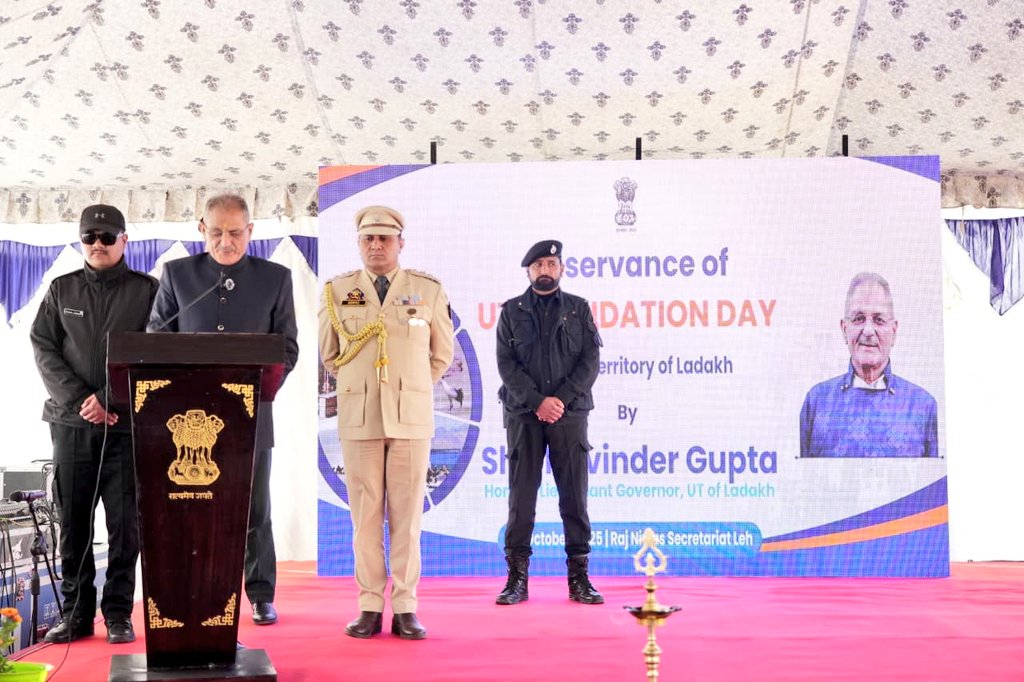
On 9 September 2026, the Ministry of Home Affairs proposed Article 371K. The proposal grants Ladakh constitutional safeguards and a directly elected governing body. This body would exercise legislative powers over land, culture, environment, and natural resources. This marks a significant development in India's asymmetric federalism framework. The proposal follows in-principle understandings reached in May and July 2026 with Ladakh's political groups.
What is the proposed Article 371K for Ladakh?
On 9 September 2026, the Home Ministry proposed inserting Article 371K into the Constitution to give Ladakh a directly elected body with legislative power over land, culture, language, forests, environment and natural resources. It follows talks with the Leh Apex Body and Kargil Democratic Alliance and would extend India's asymmetric federalism to a Union Territory.
Special constitutional provisions balance local autonomy with national security imperatives. Article 371K aims to protect Ladakh's unique cultural and environmental identity while maintaining India's territorial integrity.
Ministry of Home Affairs, Constitutional Framework Discussion (September 2026)
What Happened?
The Union Ministry of Home Affairs held discussions with the Leh Apex Body (LAB) and Kargil Democratic Alliance (KDA) on 9 September 2026 in New Delhi. The ministry proposed inserting Article 371K into the Constitution to create a directly elected governing body for Ladakh. This body would exercise legislative authority over specified subjects: land, culture, language, forests, environment, and natural resources.
The proposal represents an evolution from earlier discussions held in May and July 2026. Notably, several critical aspects remain unresolved: executive control mechanisms, financial devolution procedures, development project approval processes, and law and order jurisdiction. The next round of formal discussions is scheduled for the first week of October 2026 in Kargil.
This move signals the government's recognition of Ladakh's distinct geographical, cultural, and security context. Unlike other Union Territories, Ladakh borders multiple nations (China, Pakistan) and hosts sensitive military infrastructure. A localized governance structure can address region-specific needs while the Centre retains overarching security authority.
Why It Matters
Article 371K would establish asymmetric federalism for a Union Territory. Typically, asymmetric federalism applies to States (like Article 370 for Jammu and Kashmir, Article 371 for northeastern States). Extending this principle to a UT is constitutionally novel and reflects India's pragmatic approach to governance: one-size-fits-all federalism fails in diverse contexts. For UPSC, this tests understanding of constitutional flexibility, regional autonomy, and the balance between centre and periphery in a federal republic.
Concept Behind the News
Asymmetric Federalism
Asymmetric federalism grants different constitutional status, powers, and rights to different constituent units. India already uses this model: Article 371 provides special provisions for northeast States (Nagaland, Mizoram, Meghalaya) and Goa. Article 370 granted Jammu and Kashmir a separate constitutional status (now repealed). Asymmetric federalism recognizes that one constitutional framework cannot address the needs of all regions. It allows culturally distinct, geographically isolated, or strategically sensitive regions greater local control while maintaining national unity.
Syllabus Connection
- GS-II | Polity | Constitutional provisions: Articles 240, 371, special safeguards for States and UTs
- GS-II | Polity | Federalism in India: asymmetric frameworks, centre-state relations, regional autonomy
- GS-II | Polity | Union Territories: governance structure, elected bodies, administrative powers
PYQ Connection
UPSC Prelims 2022 directly tested special constitutional safeguards through Fifth Schedule provisions for tribal areas. Today's Article 371K proposal operates on similar logic: regional safeguards within the federal framework. The 2022 question asks candidates to recognize how special provisions protect distinct populations. Article 371K exemplifies this principle applied to a UT: protecting Ladakh's land ownership, cultural identity, and environmental resources through constitutional safeguards.
Question: Which one of the following best describes the purpose of Article 371 and similar special provisions in India's Constitution?
- To create autonomous regions that are independent from Indian sovereignty.
- To provide constitutionally protected safeguards for culturally distinct or geographically sensitive regions within the Indian federal framework.
- To grant complete legislative independence to all States over all matters.
- To establish permanent territorial boundaries that cannot be modified.
Answer: To provide constitutionally protected safeguards for culturally distinct or geographically sensitive regions within the Indian federal framework.
Option B is correct. Article 371 and similar provisions protect regions with distinct cultures, geographies, or security concerns by granting them special constitutional status while maintaining national unity. Article 371K follows this principle for Ladakh. Option A is incorrect: special provisions preserve, not diminish, Indian sovereignty. Options C and D misrepresent constitutional mechanisms.
Ladakh's Constitutional Status and Governance
Ladakh is located in the northernmost region of India, bordering China and Pakistan. As a Union Territory since 2019, it comprises two districts: Leh and Kargil. The region is strategically sensitive due to its geopolitical location and hosts critical military installations protecting India's northern borders.
The proposed Article 371K grants an elected governing body control over five key domains: land ownership and transfer, culture and cultural institutions, language and education, forests and environment, and natural resources. Notably, the Centre retains authority over law and order, defence, and external relations.
Proposed Powers Under Article 371K
Article 371K: Five Domains of Local Governance Control
| Domain | Powers Granted to Ladakh Elected Body | What This Means |
|---|---|---|
| 1. Land Ownership & Transfer | Full legislative control | Ladakh can make laws on land sales, ownership, and transfer (protecting local land rights from outsiders) |
| 2. Culture & Cultural Institutions | Full legislative control | Ladakh can protect Tibetan Buddhist heritage, cultural practices, and local institutions through laws |
| 3. Language & Education | Full legislative control | Ladakh can set language policy in schools and decide educational curriculum reflecting local culture |
| 4. Forests & Environment | Full legislative control | Ladakh can make environmental laws, forest protection policies, and natural resource management decisions |
| 5. Natural Resources Management | Full legislative control | Ladakh can control extraction and use of natural resources (minerals, water, wildlife) |
Ladakh's Geographic and Political Location
Map reference: Ladakh occupies the northernmost and most strategically important position in India. Leh district (capital: Leh) lies in the central and western regions. Kargil district (capital: Kargil) is situated to the west. The region borders Jammu and Kashmir to the south, Tibet to the east, and Gilgit-Baltistan (administered by Pakistan) to the northwest.
Connect the Dots
- Ladakh becomes Union Territory in 2019 after J and K bifurcation
- Ladakh political groups demand greater local control and safeguards
- MHA explores constitutional mechanisms to balance autonomy and security
- Article 371K proposed: elected body controls land, culture, environment
- Asymmetric federalism model applied to Union Territory (first time)
- Government retains centre authority over law, order, defence
- Ladakh gets localized governance while India maintains territorial integrity
Read More
- Ministry of Home Affairs Official Website (Government resource on constitutional provisions and Union Territory governance)
Exam Takeaway
- Remember: Article 371 and related provisions are India's constitutional tools for asymmetric federalism. They protect culturally or strategically distinct regions.
- Remember: Sixth Schedule (for tribal areas in northeast) operates similarly to proposed Article 371K. Both grant local governance authority while Centre retains override power.
- Remember: Article 370 for J and K was a comparable special provision (now repealed). Article 371K represents a new model for Union Territories.
- Remember: Special provisions do not diminish national sovereignty. They enhance inclusive governance while protecting unity in diversity.
Exam Angle
PRELIMS: Recognize Article 371 and Article 371K as special provisions for regions. Distinguish asymmetric federalism from symmetric models. Understand Sixth Schedule parallel. MAINS: Analyze whether constitutional autonomy strengthens or weakens Indian federalism. Compare Article 370 (J and K) with proposed Article 371K (Ladakh). Assess role of special provisions in preserving cultural identity within national framework.
Possible Question
Question: With reference to Article 371K proposed for Ladakh, which of the following statements is/are correct? 1. Article 371K would grant Ladakh complete legislative independence over all subjects. 2. The proposal gives elected body control over land, culture, environment, forests, and natural resources. 3. Article 371K follows the asymmetric federalism principle used in Article 371 for northeastern States.
- Only 1 and 2 are correct
- Only 2 and 3 are correct
- Only 1 and 3 are correct
- All three are correct
Answer: Only 2 and 3 are correct
Statements 2 and 3 are correct. Article 371K grants specified powers (land, culture, environment) to elected body, not complete independence. It applies asymmetric federalism principle to a Union Territory, similar to how Article 371 protects northeastern States. Statement 1 is incorrect: Centre retains authority over law, order, and defence. Article 371K represents coordinated federalism, not independence.
Sources & Further Reading
- Primary source | Union Ministry of Home Affairs, Constitutional Discussion Framework, 9 September 2026
- Official reference | Constitution of India, Article 371, Article 240, Sixth Schedule provisions for special constitutional safeguards
- UPSC Prelims 2022 | Polity topic on special constitutional provisions and Fifth Schedule governance
- Legal reference | UPSC Mains: Federalism, centre-state relations, constitutional amendments
- Background | Previous UPSC questions on asymmetric federalism and Union Territory governance (2018-2024)