Drug Price Mark-ups: Supreme Court Calls It Carnage
The Supreme Court called steep mark-ups on cancer drugs "carnage" and questioned the Centre on the DPCO 2013, while Karnataka found mark-ups of up to 52 times. A day earlier, the Court pressed FSSAI on warning labels for junk food.
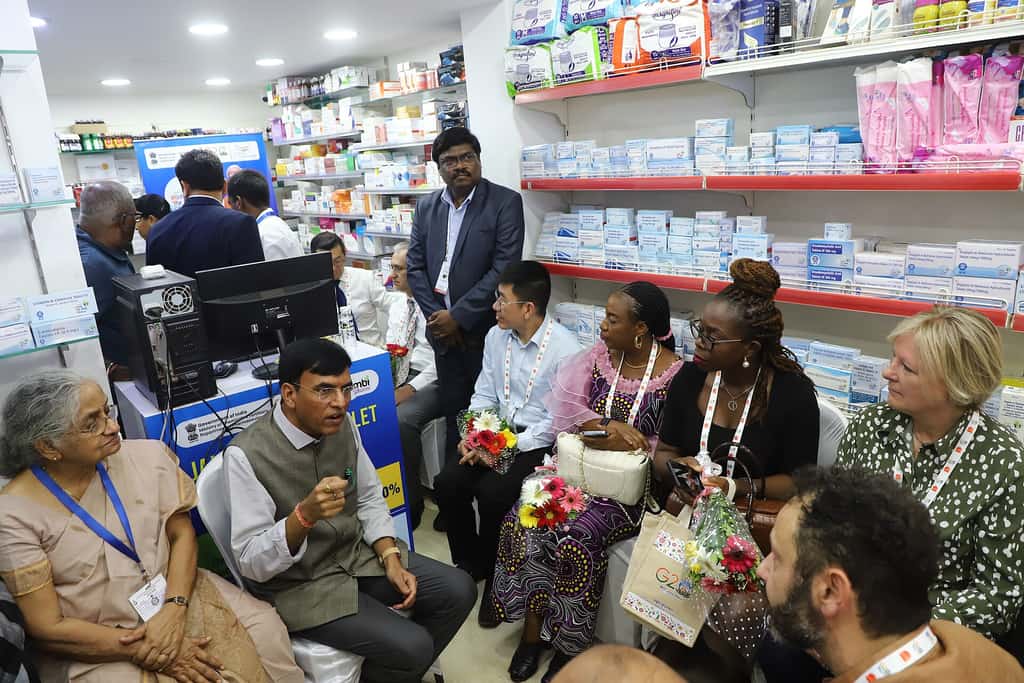
A Supreme Court Bench of Justices Vikram Nath and Sandeep Mehta on 29 September 2026 called steep mark-ups on cancer drugs "carnage". It asked the Centre why the 16% retailer margin under the Drugs (Prices Control) Order, 2013 cannot apply to all essential medicines. One cancer drug supplied at about ₹3,000 was sold for ₹27,000.
Why did the Supreme Court call drug pricing "carnage" in September 2026?
On 29 September 2026 the Supreme Court found that some essential cancer drugs were sold to patients at nearly ten times the price paid by retailers. It asked the Centre why the 16% retailer margin in the Drugs (Prices Control) Order, 2013 should not apply to all essential medicines. The Court noted that taxpayers bear the cost when schemes like Ayushman Bharat pay inflated bills.
Ultimately, the loser is the taxpayer. This is carnage, as simple as that.
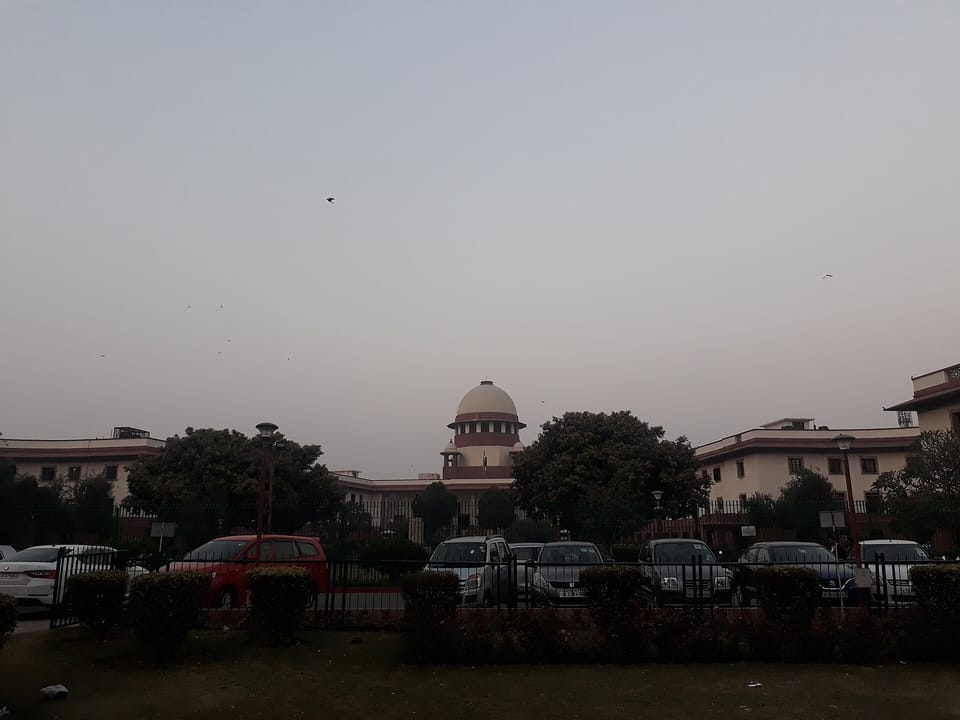
Supreme Court Bench of Justices Vikram Nath and Sandeep Mehta, hearing on drug pricing (29 September 2026)
What Happened?
The Court was hearing petitions by advocate Kishan Chand Jain and paediatric surgeon Sanjay Kulshrestha seeking affordable drug and device prices. Solicitor General Tushar Mehta said private hospitals, not drug makers, gained from the mark-ups. The Bench noted hospitals often force patients to buy from in-house pharmacies. The next hearing is on 12 October.
Karnataka's Food Safety and Drug Administration reported similar findings on 1 October. It found medicines bought by hospitals at deep institutional discounts but billed near MRP. Its examples included a cancer drug bought at about ₹1,000 with an MRP of ₹21,617. The state has asked the Centre to amend the DPCO and widen price controls.
On 28 September, a Bench of Justices J.B. Pardiwala and K. Vinod Chandran questioned FSSAI's plan to notify front-of-pack warning labels by July 2027, plus a 365-day voluntary period. "You started in 2022. What did you do in the last four years," the Bench asked.
Why It Matters
India's price control covers only scheduled drugs in the National List of Essential Medicines. Non-scheduled drugs, many devices and hospital consumables have no cap on trade margins. Hospitals are also not required to pass institutional discounts on to patients, so MRP becomes a ceiling that is rarely discounted.
Out-of-pocket health spending is a major cause of household debt in India. When public schemes pay inflated bills, the cost shifts to taxpayers. The labelling case is the preventive side of the same problem: warning consumers early about foods high in salt, sugar and saturated fat.
Concept Behind the News: How Drug Prices Are Controlled
The Drugs (Prices Control) Order, 2013 is issued under the Essential Commodities Act, 1955. It caps prices of scheduled formulations listed in the National List of Essential Medicines. The National Pharmaceutical Pricing Authority (NPPA), set up in 1997 under the Department of Pharmaceuticals, fixes ceiling prices and enforces them. The ceiling includes a 16% margin for retailers.
Scheduled vs non-scheduled medicines
| Feature | Scheduled (NLEM) drugs | Non-scheduled drugs |
|---|---|---|
| Price control | Ceiling price fixed by NPPA | No ceiling price |
| Annual price rise | Linked to wholesale price index | Up to 10% a year allowed |
| Retailer margin | 16% built into the ceiling | No cap on trade margins |
| Hospital discounts | Not required to be passed on | Not required to be passed on |
Syllabus Connection
- GS-II (Governance): Issues relating to health, regulation of private healthcare
- GS-II (Polity): Right to health under Article 21; role of the judiciary in public interest litigation
- GS-III (Economy): Pharmaceutical sector, price controls and consumer protection
PYQ Connection
UPSC Prelims 2018
Question: Consider the following statements: 1. The Food Safety and Standards Act, 2006 replaced the Prevention of Food Adulteration Act, 1954. 2. The Food Safety and Standards Authority of India (FSSAI) is under the charge of Director General of Health Services in the Union Ministry of Health and Family Welfare. Which of the statements given above is/are correct?
- 1 only
- 2 only
- Both 1 and 2
- Neither 1 nor 2
Answer: 1 only
Statement 1 is correct: the FSS Act, 2006 replaced the Prevention of Food Adulteration Act, 1954. Statement 2 is wrong: FSSAI is an autonomous statutory body under the Health Ministry with its own Chairperson and CEO, not under the DGHS.
UPSC Prelims 2016
Question: With reference to pre-packaged items in India, it is mandatory to the manufacturer to put which of the following information on the main label, as per the Food Safety and Standards (Packaging and Labelling) Regulations, 2011? 1. List of ingredients including additives 2. Nutrition information 3. Recommendations, if any, made by the medical profession about the possibility of any allergic reactions 4. Vegetarian/non-vegetarian Select the correct answer using the code given below.
- 1, 2 and 3
- 2, 3 and 4
- 1, 2 and 4
- 1 and 4 only
Answer: 1, 2 and 4
The 2011 labelling rules require ingredients, nutrition information and the veg or non-veg mark. Allergy advice was not mandatory then. The front-of-pack warning debated in court in 2026 would add a new layer to these rules.
UPSC Mains 2015 | GS-II, 12.5 marks: Public health system has limitations in providing universal health coverage. Do you think that the private sector could help in bridging the gap? What other viable alternatives would you suggest? How this news helps: Use the drug mark-up case to show the limits of private healthcare without price regulation, and suggest Jan Aushadhi Kendras, trade margin caps and billing transparency.
UPSC Mains 2024 | GS-II, 15 marks: In a crucial domain like the public healthcare system the Indian State should play a vital role to contain the adverse impact of marketisation of the system. Suggest some measures through which the State can enhance the reach of public healthcare at the grassroots level. How this news helps: Karnataka's finding of mark-ups up to 52 times and the Court's "carnage" remark are strong examples of marketisation harming patients.
Visual Explanation: How Big Are the Mark-ups?
MRP as a multiple of hospital landing cost (times)
| Gufipol | 52.6 |
|---|---|
| Guficycline-50 | 44.4 |
| Terlitis | 37.4 |
| Taxocare 120 mg | 21.6 |
| Cytax 100 mg | 11.2 |
| Bevatas 400 mg | 10.7 |
FSSAI's proposed front-of-pack warning label
| Feature | FSSAI proposal (affidavit, September 2026) |
|---|---|
| Trigger | Excess of even one nutrient of concern (salt, sugar or saturated fat) |
| Design | Red hexagon on a white square background, drawn from Canada's format |
| Placement | Top-left of the front of the pack, larger font than nutrition panel |
| Timeline | Four months to draft; notify by 1 July 2027; 365-day voluntary period |
| Court's view | Questioned the delay; order reserved on 28 September 2026 |
Connect the Dots
- DPCO 2013 caps prices of NLEM drugs with a 16% retailer margin built in.
- Non-scheduled drugs and hospital consumables stay outside trade margin caps.
- Hospitals buy at institutional discounts but bill patients near MRP.
- Karnataka finds mark-ups of 10 to over 52 times; the Supreme Court calls it "carnage".
- Court asks the Centre why the 16% margin cannot apply to all essential medicines.
- Next: hearing on 12 October 2026; the FSSAI labelling order is awaited.
Read More
Read More
- National Pharmaceutical Pricing Authority (Ceiling prices, DPCO 2013 and overcharging data)
- Shigellosis AMR: Kerala Outbreak (Another public health challenge tied to medicine use)
Exam Takeaway
- DPCO 2013 is issued under the Essential Commodities Act, 1955; NPPA enforces it.
- Retailer margin under DPCO: 16%; non-scheduled drugs can rise up to 10% a year.
- FSSAI was created under the Food Safety and Standards Act, 2006.
- Proposed FoPL: warning even if one nutrient of concern exceeds the limit.
Exam Angle
Prelims can ask about NPPA, NLEM, DPCO and the FSS Act. For Mains, frame this as regulating a market where patients cannot compare prices. Argue for trade margin rationalisation, billing transparency and stronger generic supply, while noting the industry's concerns about viability.
Possible Question
Practice Question
Question: With reference to drug price regulation in India, consider the following statements: 1. The Drugs (Prices Control) Order, 2013 is issued under the Essential Commodities Act, 1955. 2. The National Pharmaceutical Pricing Authority fixes ceiling prices of scheduled formulations. 3. All medicines sold in India are covered by ceiling prices. Which of the statements given above are correct?
- 1 and 2 only
- 2 and 3 only
- 1 and 3 only
- 1, 2 and 3
Answer: 1 and 2 only
Statements 1 and 2 are correct. Statement 3 is wrong: only scheduled formulations listed in the NLEM have ceiling prices. Non-scheduled drugs are allowed annual price increases of up to 10%.
Sources & Further Reading
- The Hindu: Supreme Court questions steep mark-ups on cancer drugs, calls pricing disparity 'carnage' (29 September 2026)
- The Economic Times: Karnataka flags 52x mark-up on cancer drugs, seeks Centre's intervention (1 October 2026)
- The Hindu: Supreme Court questions FSSAI for delay in roll-out of warning labels on packaged foods (29 September 2026)
- National Pharmaceutical Pricing Authority: Drugs (Prices Control) Order, 2013