Bharat Innovates: ₹1 Lakh Cr RDI Fund for Tech
Bharat Innovates 2026 launches ₹1 lakh crore Research, Development & Innovation (RDI) fund targeting AI, semiconductors, and biotech. We examine what this means for India's tech capability, what risks it poses, and whether funding alone can close the innovation gap.
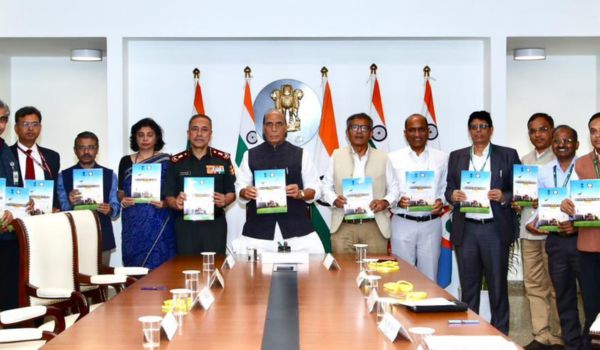
In September 2026 the Centre launched the Rs 1 lakh crore Bharat Innovates RDI Fund for AI, semiconductors and biotech. The DST will disburse grants and concessional loans with milestone-linked accountability. The fund aims to lift R&D from 0.7% of GDP toward the 2% global average. Whether it can bridge India's innovation gap depends on governance and private co-investment.
What is the ₹1 lakh crore Bharat Innovates RDI Fund?
Launched in September 2026, Bharat Innovates is a ₹1 lakh crore Research, Development and Innovation fund over ten years run by the Department of Science and Technology. It allocates ₹35,000 crore to semiconductors, ₹30,000 crore to AI and ₹20,000 crore to biotech, aiming to lift India's R&D spending from 0.7% of GDP toward the 2% global average.
The Story in 60 Seconds
What Happened?
In September 2026, India's Department of Science & Technology announced Bharat Innovates 2026, a ₹1 lakh crore (₹100,000 crore) Research, Development & Innovation fund over 10 years (2026-2036).
Fund allocation: Artificial Intelligence & machine learning (₹30,000 cr), semiconductor manufacturing & design (₹35,000 cr), biotechnology (₹20,000 cr), others including quantum computing, advanced materials (₹15,000 cr). Beneficiaries: IITs (₹15,000 cr), CSIR labs (₹12,000 cr), startups (₹35,000 cr), private R&D partnerships (₹38,000 cr).
Implementation: Grants (60%), loans with subsidized interest (25%), and equity stakes in startups (15%). Emphasis on commercialization: research must lead to products or processes within 5-7 years, not just publishable papers.
The fund is ambitious in scale (₹1L crore is 0.3% of projected 2026-2036 GDP growth). But scale alone doesn't guarantee success. The key difference from past R&D spending: emphasis on commercialization (linking research to products) and accountability (outcomes-based disbursement). This represents a strategic shift from basic research (publish, don't commercialize) to applied R&D (build products).
Come, make in India. Sell anywhere, but manufacture here. We have skill, we have talent, we have discipline, we have the desire to do something.
Narendra Modi, Prime Minister of India, at the launch of Make in India (25 September 2014)
What Is It?
The RDI fund is a government program combining: (1) Direct grants to public institutions (IITs, CSIR), (2) Startup funding (equity + grants), (3) Private sector R&D partnerships (matching govt funds with corporate investment), and (4) Talent incentives (high salaries for researchers, Ph.D. scholarships). The architecture mirrors successful models (US DARPA, Israel's Chief Scientist program, South Korea's R&D spending).
Core sectors:
- AI: Train AI models on Indian languages & data. Goal: India's own AI, not dependent on ChatGPT or Google.
- Semiconductors: Design chips (architecture) AND manufacture them (fabs = chip factories). India has designers but zero factories. This fund targets both.
- Biotech: Make vaccines, therapies, drugs. India already makes generic drugs; fund pushes into innovation-heavy areas like gene therapy.
How Does It Work?
Mechanism: Researchers propose projects aligned with Bharat Innovates priorities. Govt evaluates based on: (1) Technical feasibility, (2) Market potential, (3) Timeline to commercialization, (4) Team quality. Approved projects get grants. Startups also get equity (5-10% of startup) + scaling grants if they hit milestones (product release, customer validation, revenue targets). Private sector R&D gets matched funding (govt gives ₹1, company contributes ₹1).
Accountability mechanism: Disbursements tied to outcomes (not just proposals). Quarterly milestones, annual reviews. Failed projects lose future funding. This contrasts with past Indian R&D culture (publish or perish; govt labs getting funding regardless of outcomes).
How Did We Get Here?
- 1960s-1980s India built CSIR labs, IITs for indigenous R&D. Success: Green Revolution, space program (ISRO). But: labs remained isolated from industry.
- 1990s-2010 Liberalization allowed foreign tech imports, reduced pressure for indigenous innovation. India became IT services exporter (Infosys, TCS) but not tech innovator (no Google, no Tesla equivalent).
- 2010-2020 China surges in AI, semiconductors. US-China tech war begins. India realizes it needs indigenous tech capabilities to avoid strategic dependence.
- 2020-2023 Atmanirbhar Bharat (Self-reliant India) policy launched. Focus on indigenizing critical tech. Semiconductor subsidies announced (~₹76,000 cr). Startup ecosystem grows.
- 2024-2026 Bharat Innovates 2026 consolidates all R&D initiatives under one ₹1L crore fund. Emphasis on commercialization, private sector participation.
Connect the Dots
- Global tech concentration (US, China dominate AI & semiconductors)
- India's dependence on imports (semicond fabs, AI models)
- China's military-tech advances threaten India strategically
- India's policy response: Bharat Innovates (₹1L crore fund)
- Goal: Indigenous AI, semiconductor, biotech capabilities
India R&D Spend vs Top Nations (% of GDP, 2024)
| Israel | 5.4 |
|---|---|
| S Korea | 4.9 |
| USA | 3.5 |
| China | 2.4 |
| India | 0.7 |
Read More
- Department of Science & Technology (Bharat Innovates RDI fund and policy)
- NITI Aayog: Innovation Index (India innovation rankings and R&D data)
- Hyundai Tech Manufacturing (Private sector R&D and Make in India)
Why Does This Matter?
Three reasons. (1) Strategic: If India can't make semiconductors or develop AI, it's dependent on geopolitical rivals (China makes 40% of global chips; Taiwan makes 50%+ of advanced chips). Autonomy requires indigenous capability. (2) Economic: AI and semiconductors are foundational to future growth. India lags; catching up requires sustained R&D investment. (3) Employment: Tech innovation creates high-skill jobs. Past R&D investing (Green Revolution, space program) generated economic multipliers.
What Are the Concerns?
- ROI track record: Tejas fighter took 30 years. Will this fund deliver faster?
- Brain drain: Many Indian PhDs work abroad. Will higher salaries bring them back?
- Manufacturing bottleneck: India can design chips but can't manufacture them (one fab costs ₹50,000+ crore). Fund covers design; manufacturing needs separate investment.
- Global speed: By the time India develops AI/chips, the world may have moved on. India is late to the race.
- Bureaucracy risk: Indian government R&D often gets stuck in red tape. Will outcomes-based funding actually work, or will politics delay decisions?
Regulation & Governance
India will establish a Bharat Innovates Authority (BIA) to oversee fund disbursement, monitor outcomes, and manage intellectual property. IP ownership: 50-50 split between government and innovators (researcher/startup). This incentivizes innovation (researchers keep IP value) while ensuring government gets returns.
Data governance: AI projects training on Indian data will face Data Protection Act compliance. Government prioritizes 'data sovereignty' (Indian data stays in India) but this may slow data sharing needed for scaling AI models.
What Is Clear?
- ₹1L crore is significant investment (0.3% of 10-year GDP). It's real commitment, not a token gesture.
- India lags in AI/semiconductors/biotech compared to global leaders. Fund addresses real gaps.
- Past Indian R&D (space program, Green Revolution) demonstrated capacity for major tech projects.
- Outcomes-based funding (vs past 'publish or perish' model) is a structural improvement.
What Is Uncertain?
- Can outcomes-based disbursement actually work given Indian bureaucracy?
- Will India's weak manufacturing ecosystem support scaling of innovations?
- Can India attract and retain top talent against US/China offers?
- What will actual ROI be? Government hopes 5-8x economic multiplier; history suggests 2-3x more realistic.
What's Realistic?
- Partial wins (most likely) — Biotech startups thrive (India already has strength). AI models advance but don't compete globally. Chip design improves but manufacturing stays stuck. By 2035, India is a mid-tier player, not a leader. Multiplier ~2-3x.
- Best case — Outcomes-based funding actually works. Bureaucracy is bypassed. India develops homegrown AI and designs competitive chips. Still no fabs (that's a 20-year project). Startups scale. Multiplier ~5x. Requires political will India hasn't shown yet.
- Worst case — Fund gets trapped in bureaucracy, political patronage. Projects drag (Tejas-style). Money allocated, but real innovation stalls. Multiplier <1x.
- China shock — China develops AI + chip dominance by 2030. Global markets normalize. India's urgency fades. Fund loses momentum.
Why Does It Matter for India?
India's digital economy (IT services: $250B+ annually) is built on importing tech platforms (AWS, Google, Microsoft). AI, semiconductors, and biotech are India's chance to shift from service provider to innovator. Success means 10-20 years of tech independence and global competitiveness. Failure means continued dependence on Western and Chinese tech ecosystems.
CONCEPT BEHIND THE NEWS
Bottom Line
Bharat Innovates 2026 commits ₹1L crore to indigenous innovation in AI, semiconductors, and biotech over 10 years. The fund is significant in scale and represents strategic shift from government-controlled R&D to outcomes-based funding with private sector participation. India genuinely lags in these sectors; investment is overdue. But success is uncertain. India's track record on tech R&D ROI is mixed (space program succeeded; Tejas fighter stalled). The key test: whether outcomes-based disbursement can overcome Indian bureaucracy and whether India's ecosystem can scale innovations into global-competitive products. If it works, this is transformative. If it doesn't, it's ₹1L crore of well-intentioned but wasted investment.
Sources & Further Reading
- Primary | Department of Science & Technology (DST): 'Bharat Innovates 2026 - Program Guidelines' | https://dst.gov.in/
- Primary | Press Information Bureau (PIB): 'Bharat Innovates 2026 Launch Announcement' | https://pib.gov.in/
- Analysis | eHealth Magazine: 'India's ₹1L Crore Innovation Fund - Will It Bridge the Tech Gap?' | https://ehealthmagazine.com/
- Context | McKinsey & Co: 'India's Tech Innovation Gap vs China' (2025 analysis) | https://mckinsey.com/
- Further Reading | Drishti IAS: 'India's R&D Spending' and 'Semiconductor Industry in India' | https://drishtiias.com/
- Data | UNESCO: 'R&D Spending by Country' (India's comparative spending) | https://data.uis.unesco.org/