DRDO's GaN Chip Breakthrough: India's Leap in Defence Semiconductors
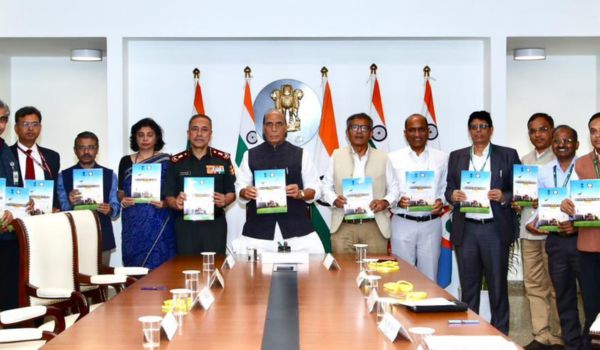
The Defence Research and Development Organisation (DRDO) has successfully demonstrated indigenous Gallium Nitride (GaN) semiconductor technology for critical defence applications including radars, electronic warfare systems, and unmanned systems. The breakthrough, announced in September 2026, shows that DRDO's Solid State Physics Laboratory (SSPL) has achieved indigenous fabrication of X-band Monolithic Microwave Integrated Circuits (MMICs) and S-band GaN High Electron-Mobility Transistors (HEMTs) with power levels up to 150 watts and operational frequencies extending to X-band. A single GaN chip measuring just 3.5 x 3 millimetres delivers 30 watts of power while operating at speeds 300 times faster than silicon-based equivalents. This achievement closes a critical technology gap that made India dependent on foreign suppliers for modern defence electronics.
What is DRDO's indigenous GaN chip breakthrough and why does it matter?
In September 2026, DRDO's Solid State Physics Laboratory demonstrated indigenous Gallium Nitride (GaN) chips, including S-band transistors of up to 150 watts and X-band MMICs, for radars, electronic warfare and unmanned systems. GaN chips are tightly export-controlled by Western suppliers, so making them at home closes a critical gap in India's defence electronics and strengthens strategic autonomy.
The development of indigenous semiconductor technology for defence applications represents a strategic milestone. It reduces import dependency, ensures supply chain security, and demonstrates India's capacity to innovate in cutting-edge materials science.
Ministry of Defence, Government of India, September 2026
What Happened?
DRDO's Solid State Physics Laboratory (SSPL), a specialised facility for materials research, has successfully developed indigenous processes for growing and manufacturing 4-inch Silicon Carbide (SiC) wafers—the foundation material for GaN device fabrication. Building on this SiC wafer base, SSPL scientists then fabricated Gallium Nitride High Electron-Mobility Transistors (HEMTs) and Monolithic Microwave Integrated Circuits (MMICs) suitable for high-frequency applications. The laboratory demonstrated two key device types: S-band GaN HEMT power amplifiers delivering up to 150 watts and X-band GaN MMICs reaching 40 watts. These are the building blocks for modern radar transmitters, electronic warfare jammers, and high-frequency communication systems used in modern defence platforms.
The significance of this breakthrough lies in breaking India's dependence on foreign suppliers. Western nations, particularly the United States, restrict the export of high-frequency semiconductor chips to India under national security regulations. India previously relied on imports for GaN chips used in radar systems, electronic warfare systems, and integrated defence platforms. By achieving indigenous fabrication, DRDO has eliminated this chokepoint. However, the current capability represents early-stage production; scaling to commercial volumes and integrating these chips into operational defence systems will take time. The development also signals India's broader ambition in semiconductor manufacturing—evident in Semicon India 2026 and the Rs13.5 billion semiconductor mission.
Why It Matters
This development addresses three strategic challenges simultaneously. First, supply chain security: India can no longer depend on foreign suppliers for critical defence electronics in a contested geopolitical environment. Second, technological capability: GaN-based radars and electronic warfare systems are essential for modern air defence (supersonic aircraft interception) and naval combat (anti-ship missiles, radar evasion). Countries without indigenous GaN technology cannot build next-generation defence systems. Third, international leverage: semiconductor self-reliance reduces vulnerability to sanctions and export controls—a lesson sharpened by geopolitical tensions and trade restrictions. For UPSC, this exemplifies how technical innovation translates into strategic autonomy: India cannot build modern defence systems without controlling the semiconductor supply chain that powers them.
Concept Behind the News: Gallium Nitride Semiconductors
- Silicon vs. GaN: Silicon transistors operate at frequencies up to ~1 GHz; GaN devices exceed 10 GHz. For radar and EW systems, GaN's high-frequency capability is essential.
- High-frequency electronics: Military radars scan the sky using radio waves; transmitting and receiving these waves requires high-frequency circuits. GaN enables compact, powerful transmitters.
- Power density: GaN chips can deliver more power in smaller space with less heat. A 30W GaN chip fits in 3.5x3mm—silicon would need multiple times more space.
- Monolithic Microwave Integrated Circuits (MMICs): Entire radar transmitter/receiver circuits fabricated on a single GaN chip. No need for component-level assembly—improves reliability and reduces size.
- High Electron Mobility Transistors (HEMTs): The underlying device structure that allows electrons to move extremely fast through the semiconductor, enabling high-frequency operation.
- Strategic implications: GaN is not merely a component upgrade; it enables an entirely new class of compact, efficient defence systems. Countries without GaN tech are generations behind in military capability.
Syllabus Connection
- GS-III (Science & Technology): Semiconductor manufacturing, materials science, indigenous technology development
- GS-III (Defence): Defence manufacturing, indigenous platforms, strategic self-reliance
- GS-III (Industry): Make in India, manufacturing sector, supply chain resilience
PYQ Connection
UPSC Prelims 2025 — Computer & Information Technology | Semiconductors
Question: Consider the following statements: I. It is expected that Majorana 1 chip will enable quantum computing. II. Majorana 1 chip has been introduced by America. Which is correct?
- Only I is correct
- Only II is correct
- Both I and II are correct
- Neither I nor II is correct
Answer: Only I is correct
Majorana qubit technology represents next-generation computing; quantum computing requires specialized semiconductors like those DRDO is developing with GaN. Understanding semiconductor advancement is key to defence technology self-reliance.
Question: Consider the following statements: Statement I: Some rare earth elements are used in the manufacture of flat television screens and computer monitors. Statement II: Some rare earth elements are used in producing efficient compact fluorescent lamps. Which is correct?
- Only I is correct
- Only II is correct
- Both are correct
- Neither is correct
Answer: Both are correct
Both statements are correct. Rare earth elements are critical for semiconductor displays and efficient lighting. Understanding rare earth supply chains is essential for India's semiconductor self-reliance strategy.
Question: With reference to physical capital in Indian economy, consider the following pairs: Items - Category. 1. Farmer's plough - Working capital. 2. Computer software - Fixed capital. 3. Diesel generator - Working capital. Which is correct?
- Only 1 and 2
- Only 2 and 3
- Only 1 and 3
- All three
Answer: Only 1 and 2
Semiconductor manufacturing equipment and software are fixed capital assets critical to India's manufacturing strategy. GaN chip fabrication facilities represent significant capital investment in production infrastructure.
CAPF 2021-2025 — Computer & Information Technology
Question: Packets of potato chips are usually flushed with which gas to prevent rancidity?
- Nitrogen
- Argon
- Helium
- Oxygen
Answer: Nitrogen
Nitrogen gas is used in packaging; similarly, semiconductor fabrication requires inert gas environments (nitrogen, argon) for clean manufacturing. Understanding inert gas applications connects consumer technology to defence semiconductor production.
Question: Consider the following statements with reference to latest CERT-In guidelines: 1. Data centres must maintain backup systems. 2. Cloud service providers must comply with data localization. Which is correct?
- Only 1 is correct
- Only 2 is correct
- Both are correct
- Neither is correct
Answer: Both are correct
Both correct. Cybersecurity regulations mandate data localization and redundancy. Defence semiconductors like GaN chips require secure manufacturing ecosystems with strict technology governance—parallel to cyber security protocols.
Question: Which one of the following is the oldest computer language?
- FORTRAN
- COBOL
- ALGOL
- C
Answer: FORTRAN
FORTRAN (1957) is oldest. Understanding computing history helps contextualise semiconductor design tool evolution—DRDO's semiconductor design uses modern CAD tools built on decades of computing advancement.
UPSC Mains 2013-2017 — Technology, Governance & Strategic Systems
2013 | IT, Space, Biotech & IPR: (a) What is a digital signature? What does its authentication mean? Give various salient built-in features of a digital signature. (b) How does blockchain technology enable decentralized systems? Exam relevance: Cryptography and semiconductor security applications in defence systems; understanding how semiconductors enable secure communications.
2015 | IT, Space, Biotech & IPR: What are the areas of prohibitive labour that can be sustainably managed by robots? Discuss the initiatives that can propel research in premier research institutions. Exam relevance: Automation and semiconductor-based robotics in manufacturing; DRDO's fabrication facilities use automated semiconductor processing equipment.
2015 | IT, Space, Biotech & IPR: Discuss the advantages and security implications of cloud hosting of servers vis-à-vis in-house machine-based hosting for government businesses. Exam relevance: Data security and semiconductor infrastructure for national security; government defence systems require secure, domestically-controlled semiconductor supply chains.
2017 | IT, Space, Biotech & IPR: India has achieved remarkable successes in unmanned space missions (Chandrayaan, Mars Orbiter), but has not ventured into manned missions. Examine why indigenous space technology development remains critical despite budget constraints. Exam relevance: Strategic autonomy through indigenous technology—directly parallel to GaN development. Both demonstrate India's commitment to technological self-reliance in critical sectors.
Visual Explanation: From Silicon to GaN Defense Systems
- 1. SILICON ERA (1970s-2010s): Transistors operate at ~1 GHz maximum. Limited for radar (needs >10 GHz). India depends entirely on foreign imports for defence semiconductors.
- 2. GALLIUM NITRIDE DISCOVERY (2010s): Wide-bandgap material enables >10 GHz operation. 300x faster than silicon. Higher power density in smaller form factor.
- 3. GaN HEMT DEVICE STRUCTURE (2015+): High Electron Mobility Transistor design enables extreme speed + efficiency. 150W power capability at defense frequencies. Only advanced nations master this tech.
- 4. DRDO-SSPL FABRICATION BREAKTHROUGH (2026): Silicon Carbide (SiC) wafer foundation achieved. GaN device fabrication mastered. Indigenous X-band MMICs + S-band HEMTs demonstrated. 30W in 3.5x3mm chip.
- 5. DEFENSE APPLICATIONS (2026+): Radars now compact, powerful, efficient. Electronic warfare systems independently designed. Unmanned system sensors no longer foreign-dependent. Supply chain secured.
- 6. STRATEGIC AUTONOMY (2027-2030): Integration into Akash (air defence), Brahmos (missile), naval radar systems. India no longer vulnerable to semiconductor export controls. Technology generations ahead of previous dependency model.
Connect the Dots
- 2014: India's Defence acquisition strategy emphasises Make in India and indigenous development
- 2017: DRDO begins research into GaN semiconductor fabrication at SSPL
- 2022: Government announces Rs20,000 crore semiconductor mission for domestic manufacturing
- 2023-2025: DRDO achieves intermediate milestones in SiC wafer growth and GaN HEMT development
- September 2026: DRDO demonstrates full GaN chip capability for defence applications
- 2026-2030: Scale-up to commercial volumes; integration into Akash, Brahmos, and naval radar systems
Read More
Read More
- Ministry of Defence Annual Report 2025-26 (Official documentation of DRDO's GaN technology demonstration)
- SEMICON India 2026 (India's semiconductor manufacturing strategy and roadmap)
Exam Takeaway
- GaN is not a minor component upgrade; it enables a generational leap in defence system capability
- Supply chain resilience is as important as raw military power; semiconductors are the new 'choke point' in defence manufacturing
- Indigenous semiconductor development requires sustained investment in materials science, fabrication facilities, and human capital—not achievable through imports
- India's semiconductor mission is not merely economic; it's strategic necessity for military autonomy
- Export controls on semiconductors (US restrictions on China) show why countries must develop domestic capability
Exam Angle
For mains: explain why semiconductor self-reliance is essential for strategic autonomy in defence. For prelims: understand the difference between silicon and GaN—silicon reaches ~1 GHz; GaN exceeds 10 GHz. Modern radars use GaN because they need high-frequency, high-power operation in compact form. Countries without GaN capability cannot build competitive radar systems.
Possible Question
Question: Gallium Nitride (GaN) semiconductors are preferred for defence radar systems compared to silicon because:
- GaN is cheaper than silicon
- GaN operates at higher frequencies and higher power density, enabling compact radar transmitters
- GaN is more abundant in nature than silicon
- GaN reduces the cost of fabricating integrated circuits
Answer: GaN operates at higher frequencies and higher power density, enabling compact radar transmitters
GaN operates at frequencies exceeding 10 GHz compared to silicon's ~1 GHz limit. This high-frequency capability is essential for modern radar systems that must scan at high speeds. GaN's high power density allows compact, efficient transmitters in small form factors—critical for airborne and naval radar systems.
Sources & Further Reading
- Free Press Journal: India's DRDO Achieves Major Breakthrough In Homegrown Chip Tech (Sept 2026)
- ANI News: DRDO implements indigenous advanced technology for next-generation radars (Sept 2026)
- Asianet Newsable: DRDO develops indigenous tech for next-gen radars, electronic warfare (Sept 2026)
- Indian Defence News: India Cracks Indigenous GaN Chip Technology (Sept 2026)
- Ministry of Defence Annual Report 2025-26