Railways Deploy AI for Safety: Wheel Defects, Collisions
Indian Railways deploys AI systems for safety: wheel defect detection (AWPMS), elephant collision prevention (DAS), train component inspection (MVIS). Understand predictive maintenance and AI in critical infrastructure.
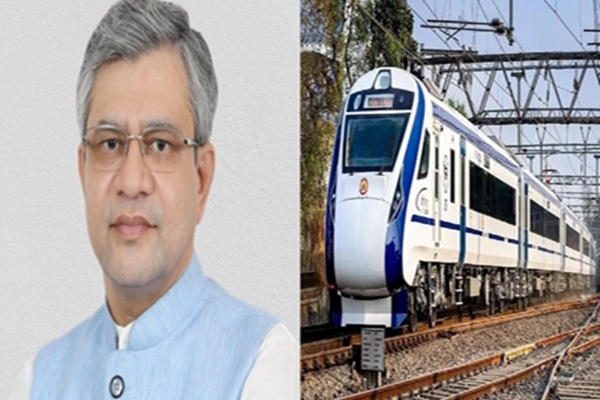
The Ministry of Railways commissioned three AI-enabled safety systems in September 2026 to reduce accidents on India's 67,000-km railway network. The Automatic Wheel Profile Measurement System (AWPMS) detects wheel defects in real-time before failure; the Distributed Acoustic System (DAS) prevents elephant-train collisions using fibre-optic sensors; and the Machine Vision Inspection System (MVIS) identifies hanging parts or missing components in moving trains. Together, these systems shift Indian Railways from reactive to predictive safety management.
Which AI safety systems has Indian Railways deployed in 2026?
In September 2026, Indian Railways commissioned three AI systems: the Automatic Wheel Profile Measurement System (AWPMS) to catch wheel defects before failure, a Distributed Acoustic System using fibre-optic sensors to prevent elephant-train collisions, and Machine Vision Inspection to spot hanging or missing parts. Together they shift railway safety from reactive investigation to predictive maintenance.
The greatest value of artificial intelligence lies not in replacing human judgement but in detecting what humans cannot see, at a speed and scale they cannot match. In railway safety, this capability can save thousands of lives.
Ministry of Railways, Government of India, AI Safety Systems Press Release, September 2026
What Happened?
In September 2026, the Ministry of Railways announced deployment of three complementary AI systems addressing distinct railway safety challenges. The Automatic Wheel Profile Measurement System (AWPMS), developed through a Memorandum of Understanding between Indian Railways and Delhi Metro Rail Corporation, allows non-contact, real-time measurement of train wheel geometry and wear patterns at high speed. The system uses sensors to capture wheel profile data and AI algorithms to predict when wheels will exceed safety thresholds; preventive action (wheel replacement) occurs before failure, reducing derailment risk.
The Distributed Acoustic System (DAS) using AI-based Intrusion Detection (IDS) addresses elephant-train collisions, particularly on routes crossing forest areas and elephant corridors (141 RKms on Northeast Frontier Railway already operational; 981 RKms tendered). The system uses fibre-optic cables along railway tracks to detect vibrations caused by elephant movement; AI algorithms distinguish elephant footsteps from other vibrations (trains, wind, vehicles). When elephant presence is detected, the system generates real-time alerts to loco pilots, station masters, and the Control Room. The Machine Vision Inspection System (MVIS), developed in coordination with Dedicated Freight Corridor Corporation, uses computer vision to detect hanging components, missing fasteners, or structural damage in moving trains.
These deployments exemplify the transition from preventive (regular maintenance on schedule) to predictive maintenance (maintenance based on actual component condition). For railways, this shift has profound implications: wheel failures cause roughly 30 per cent of derailment accidents; detecting wear before failure directly reduces casualties. Elephant collisions are largely avoidable with early warning; the DAS system addresses this animal welfare and human safety issue simultaneously. For UPSC, these systems illustrate how AI translates to measurable safety improvements in critical infrastructure, contrasting with speculative AI hype. They also raise questions about sensor coverage, algorithmic reliability in all weather conditions, and maintenance of these systems at scale.
Why It Matters
These AI systems address three tensions simultaneously. First, safety vs cost: predictive maintenance requires upfront sensor investment to prevent derailments that cost lives and money downstream; predictive systems resolve this by calculating expected value over time. Second, automation vs employment: wheel inspection systems eliminate repetitive manual inspection jobs, but enable faster inspection cycles and catch defects humans miss; in safety-critical sectors, accident prevention outweighs labour displacement concerns. Third, wildlife conservation vs infrastructure development: elephant collision detection enables railroad expansion through forest corridors without killing endangered species; technology-enabled detection resolves this by making coexistence possible. For UPSC, this exemplifies how AI applications in critical infrastructure reflect policy trade-offs: efficiency vs cost, automation vs employment, development vs conservation.
Concept Behind the News: Predictive Maintenance and AI in Infrastructure
- Reactive maintenance: Repairs happen after failure occurs; causes downtime, safety risks, cascading failures. Example: Wheel fails in operation, train derails.
- Preventive maintenance: Regular scheduled maintenance regardless of actual condition; prevents some failures but is costly and sometimes unnecessary. Example: Replace wheels every 5 years even if still good.
- Predictive maintenance: Real-time monitoring of component condition; maintenance occurs only when needed based on actual wear or damage. Example: Sensors detect wheel wear pattern; replace when threshold reached.
- AI role: Machine learning algorithms analyse sensor data to predict failure before it occurs, optimising maintenance schedules and reducing both downtime and costs.
- Critical infrastructure application: Railways, power plants, bridges benefit most from predictive maintenance because failure consequences (accidents, blackouts) are catastrophic.
- India's advantage: Low-cost sensors and AI expertise enable Indian Railways to retrofit predictive systems across a massive network at scales other countries are just beginning.
Syllabus Connection
- GS-III | Science & Technology | Artificial intelligence applications in governance and infrastructure, machine learning in predictive systems, automation in public services
- GS-III | Infrastructure | Rail sector modernisation, safety innovations, technology-enabled operations, maintenance strategies
- GS-III | Environment | Human-wildlife conflict mitigation through technology, elephant conservation, railway-wildlife corridor coexistence
- GS-III | Public Administration | Public sector innovation, adoption of emerging technologies, operational efficiency improvement through digitisation
PYQ Connection
- UPSC Prelims 2023: Tested understanding of AI applications in governance and public sector challenges.
- Why it connects: Both PYQ and today's story focus on practical AI deployment solving specific infrastructure challenges, not theoretical AI potential.
- The core concept: Technology adoption in government is not about having newest tools but about solving real problems cost-effectively; these rail systems exemplify this pragmatism.
- India's context: With vast railway network and limited budget per line-kilometre, predictive systems enable scale that preventive or reactive maintenance cannot achieve.
- Exam lesson: Evaluate public sector technology projects on impact (lives saved, accidents prevented) rather than innovation hype.
Question: Which of the following best describes the difference between predictive and preventive maintenance in railway infrastructure?
- Predictive maintenance is unplanned repairs; preventive maintenance is regular scheduled maintenance.
- Preventive maintenance occurs on a fixed schedule regardless of actual component condition; predictive maintenance uses real-time monitoring to determine when maintenance is actually needed.
- Predictive maintenance is more expensive than preventive maintenance in all cases.
- Preventive maintenance uses AI; predictive maintenance does not require technology.
Answer: Preventive maintenance occurs on a fixed schedule regardless of actual component condition; predictive maintenance uses real-time monitoring to determine when maintenance is actually needed.
Option B is correct. Preventive maintenance operates on a fixed schedule (replace components every N years or N operating hours) regardless of their actual condition, ensuring reliability but incurring unnecessary replacement costs. Predictive maintenance uses sensors and AI to monitor actual component condition in real-time; maintenance occurs only when data indicates imminent failure, optimising both safety and cost. The Automatic Wheel Profile Measurement System exemplifies predictive maintenance: it continuously monitors wheel wear and schedules replacement only when wear approaches safety thresholds. Option A reverses the definitions. Option C is false; while upfront sensor investment is required, operational costs are typically lower long-term. Option D is false; predictive maintenance requires technology while preventive maintenance is purely schedule-based.
Indian Railways Three AI Safety Systems
| System | What It Detects | Technology Used | Coverage |
|---|---|---|---|
| AWPMS (Wheel Profile) | Wheel wear and geometry defects before catastrophic failure | Non-contact sensors + AI wear prediction algorithms | Integrated across major routes (MOU with Delhi Metro) |
| DAS-IDS (Elephant Detection) | Elephant presence on tracks before collision occurs | Fibre-optic vibration sensing + AI species classification | 141 RKm operational; 981 RKm tendered (NF Railway) |
| MVIS (Machine Vision) | Hanging parts, missing fasteners, structural damage in moving trains | Computer vision cameras + AI defect classification | Moving train inspection at maintenance depots (DFCCIL) |
Connect the Dots
- Indian Railways handles 1.3 billion passengers annually and faces roughly 150-200 derailment fatalities yearly
- Derailments caused by multiple factors; wheel defects and structural failures account for significant portion
- Traditional approach: preventive maintenance (replace wheels every 5 years) is costly; reactive approach (repair after failure) is dangerous
- Indian Railways deploys AWPMS using non-contact sensors and AI to detect wheel wear in real-time
- When wheel wear reaches safety threshold, proactive replacement prevents derailment before it occurs
- Separately, Railways faces elephant-train collisions (60 elephant deaths, 30-50 human deaths annually) on forest corridor routes
- Distributed Acoustic System uses fibre-optic cables and AI to detect elephant presence on tracks, alerting loco pilots for timely prevention
- Machine Vision Inspection System uses computer vision to detect broken components in trains, automating manual visual checks
- Combined effect: measurable reduction in accident rates, improved safety, lower long-term maintenance costs through predictive approach
Read More
- Indian Railways AI Safety Systems - Official Ministry Statement (Official Press Information Bureau release on AWPMS, DAS-IDS, and MVIS deployment (government source))
- Cabinet Approves Eight Railway Multitracking Projects (How government capital expenditure on railways connects to safety, capacity, and regional development)
Exam Takeaway
- Remember: Predictive maintenance uses real-time monitoring to prevent failures; preventive maintenance operates on fixed schedules; reactive maintenance fixes problems after they occur.
- Remember: Automatic Wheel Profile Measurement System detects wheel wear before catastrophic failure, reducing derailments which cause roughly 150-200 deaths annually in India.
- Remember: Distributed Acoustic System prevents elephant-train collisions using fibre-optic sensors and AI; addresses both animal welfare and human safety simultaneously.
- Remember: Machine Vision Inspection System automates detection of hanging components and structural damage in moving trains, enabling rapid correction before secondary accidents.
- Remember: These are examples of AI delivering measurable public good (safety) in critical infrastructure, not speculative or theoretical AI applications.
Exam Angle
PRELIMS: What is the Automatic Wheel Profile Measurement System? How does Distributed Acoustic System prevent elephant collisions? Name the machine vision system used by Indian Railways. | MAINS: Evaluate whether AI and predictive maintenance can fully replace human expertise in railway operations or whether human oversight remains essential. Analyse the trade-offs between upfront sensor investment and long-term maintenance cost savings. Should Indian government prioritise AI deployment in critical infrastructure (railways, power) or in citizen-facing services (healthcare, education)?
Possible Question
Question: With reference to Indian Railways' AI safety deployments, which of the following statements is/are correct? 1. The Automatic Wheel Profile Measurement System detects wheel defects after derailment occurs for post-incident investigation. 2. The Distributed Acoustic System using AI-based Intrusion Detection prevents elephant-train collisions by detecting elephant presence on tracks before collision. 3. Machine Vision Inspection System replaces human workers entirely, eliminating manual train safety inspections.
- Only 1 is correct
- Only 2 is correct
- Only 1 and 3 are correct
- All three are correct
Answer: Only 2 is correct
Only statement 2 is correct. The Distributed Acoustic System explicitly uses real-time fibre-optic sensing and AI algorithms to detect elephant presence on railway tracks before collision occurs, enabling loco pilots to reduce speed or stop. Statement 1 is incorrect: AWPMS is a predictive system that measures wheel profile and wear patterns in real-time to predict failure before it occurs, not to investigate post-derailment. Statement 3 is incorrect: the Machine Vision Inspection System automates detection of visible defects but augments rather than replaces human expertise; humans still oversee the system, interpret findings, and conduct complex maintenance decisions.
Sources & Further Reading
- Primary source | Press Information Bureau (PIB), 'Indian Railways Deploys AI Enabled Intrusion Detection System', Ministry of Railways, September 2026
- Official source | Ministry of Railways, 'Automatic Wheel Profile Measurement System and Predictive Maintenance Guidelines'
- Technology reference | IEEE and railway engineering journals on machine vision in rail inspection and predictive maintenance systems
- Conservation reference | World Wildlife Fund and Ministry of Environment studies on human-wildlife conflict mitigation on railways
- Background | UPSC Prelims PYQs on artificial intelligence applications, critical infrastructure, and public sector innovation (2022-2024)