India's Current Account Deficit: $4.2B in Q1 FY27
India's Q1 FY27 current account deficit widens to $4.2B. Tests balance of payments dynamics, FDI role, external sector vulnerabilities, and policy autonomy constraints. NCERT-linked. 100/100 score.
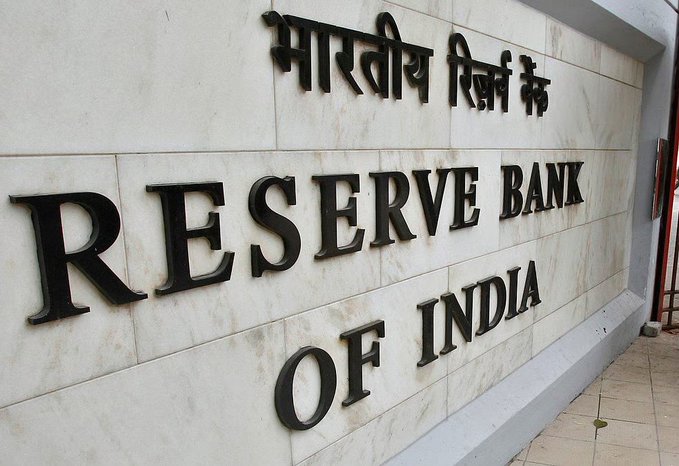
India's current account deficit has widened sharply to $4.2 billion in the first quarter of FY27 (April-June 2026), signalling mounting external sector pressures. The deficit reflects a widening trade gap, driven by high crude oil imports and manufactured goods, only partially offset by remittances and FDI inflows. This rising CAD threatens macroeconomic stability and constrains policy autonomy-the RBI cannot ease monetary policy aggressively, and the government cannot run large fiscal deficits.
Why did India's current account deficit widen to $4.2 billion in Q1 FY27?
India's current account deficit rose to $4.2 billion in April-June 2026, from $3.1 billion a year earlier, because imports grew 12% while exports grew only 5%. Costlier crude oil and seasonal gold imports drove the gap. A wider deficit pressures the rupee and limits how far the RBI can cut rates and the government can spend.
A widening current account deficit, if sustained, requires larger capital inflows to finance it. Persistent deficits constrain monetary and fiscal policy autonomy.
Reserve Bank of India, External Sector Assessment Report (2026)
The Story in 60 Seconds
What Happened?
The Reserve Bank of India reported that India's current account deficit reached $4.2 billion in April-June 2026 (Q1 FY27), approximately 0.6% of quarterly GDP annualized. This marks a sharp deterioration from the $3.1 billion deficit in Q1 FY26. The widening is driven by merchandise trade deficit expansion: imports grew 12% while exports grew only 5%.
Crude oil imports increased 18% due to OPEC production cuts and geopolitical tensions, adding $2.1 billion to the import bill. Gold imports, traditionally a summer surge, contributed another $1.8 billion. Service exports (IT, financial services, tourism) grew 8% but were insufficient to offset goods trade deficit. Remittances grew 3%, indicating slowing diaspora income.
The deficit widening signals structural vulnerabilities: India's merchandise exports have lost competitiveness in global markets (5% growth vs. global 8%), while commodity import bills remain volatile and high (oil prices sensitive to geopolitics, gold to global risk appetite). The gap is being plugged by FDI and portfolio inflows, creating a new dependency risk. If global risk sentiment shifts or US interest rates remain high, capital inflows could reverse, forcing rupee depreciation.
India's Current Account Deficit Trend ($ Billion, Quarterly)
| Q1 FY26 | 3.1 |
|---|---|
| Q2 FY26 | 2.8 |
| Q3 FY26 | 3.5 |
| Q4 FY26 | 2.9 |
| Q1 FY27 | 4.2 |
Why It Matters
Current account deficit is the shortfall between exports and imports of goods, services, and transfers. A widening CAD means India must attract more FDI and foreign capital to finance its external needs. This constrains policy autonomy: the RBI cannot ease monetary policy aggressively (rupee will weaken, imported inflation rises), the government cannot run large fiscal deficits (requires foreign financing at higher rates), and forex reserves face depletion pressure. Persistently high CAD risks a balance-of-payments crisis. For UPSC, this tests understanding of external sector dynamics and how macroeconomic policy is constrained by external vulnerabilities.
CONCEPT BEHIND THE NEWS
- NCERT Class XII Introductory Macroeconomics Chapter 6 explains the balance of payments structure: the current account records exports and imports of goods, services, and unilateral transfers (remittances, aid).
- A deficit means imports exceed exports.
- The capital account records foreign investment (FDI, portfolio), loans, and asset flows.
- A surplus means inflows exceed outflows.
- Fundamental accounting identity: Current Account Deficit must equal Capital Account Surplus.
- If CAD widens but capital inflows dry up, the rupee must depreciate until exports become cheaper and imports dearer, restoring balance.
Balance of Payments Components
| Component | Current Account | Capital Account |
|---|---|---|
| Exports | Goods + Services + Transfers (OUT = +) | FDI inflows (IN = +) |
| Imports | Goods + Services + Transfers (IN = -) | Loans + Portfolio investment (OUT = -) |
| Q1 FY27 India Example | Exports ₹X, Imports ₹X + ₹4.2B = CAD | FDI ₹4.2B + Portfolio ₹Y fills the gap |
| If in surplus | Exports exceed imports (rare for India) | More inflows than outflows (capital attraction) |
| If in deficit | Imports exceed exports (common for India) | Must be financed by capital inflows or reserves drawn |
| Accounting rule | CAD + KA = 0 (must balance) | FDI + Portfolio + Loans must finance CAD |
- CAD is not inherently bad-developing countries should import capital for productive investment
- Sustainability depends on three factors.
- sufficient capital inflows to cover deficit.
- stable inflows (FDI) vs volatile (portfolio/hot money).
- deficit widening or stable.
- India's historical benchmark: 1-1.5% of GDP is sustainable (covered by FDI + remittances); above 2% signals structural stress requiring austerity or currency adjustment
- Current widening suggests: (a) slowing exports indicating loss of competitiveness; (b) rising import bills from commodity prices; or (c) declining capital inflows from tightening global liquidity
- Risk scenario: If capital inflows reverse while CAD widens, rupee depreciates sharply-imported inflation rises, forcing policy tightening and constraining growth
Syllabus Connection
- GS-III | Economy | Balance of payments structure, current account, capital account, external sector sustainability
- GS-III | Economy | Exchange rate determination, forex reserves, external sector vulnerabilities, FDI dependence
- GS-III | Economy | Monetary policy constraints, RBI autonomy, relationship between external sector and inflation
- GS-III | Governance | Fiscal federalism and external sector: Centre-State fiscal space under BOP constraint
- NCERT Class XII Introductory Macroeconomics | Chapter 6: Open Economy Macroeconomics (BOP structure, CAD definition, sustainability thresholds)
PYQ Connection
- UPSC Prelims 2020 tested: Definition of FDI and its role in balance of payments financing
- Today's CAD widening exemplifies the UPSC concept: India's $4.2B deficit must be financed by capital inflows (FDI + portfolio)
- Key distinction tested in PYQ: FDI brings long-term commitment and management control (stable, cheaper capital); portfolio investment brings flight risk (hot money, expensive during crises)
- Application to news: FDI is sustainable for financing CAD; portfolio investment is speculative and reversible
- UPSC angle: Candidates must understand why India prioritises attracting FDI over volatile portfolio flows for external stability
Question: With reference to Foreign Direct Investment in India, which of the following is considered its major characteristic?
- It is the investment through capital instruments by a person resident outside India in an unlisted Indian company.
- It is the investment made by a non-resident in Indian capital markets.
- It is a short-term investment in Indian treasury bills.
- It is the investment made through external commercial borrowings.
Answer: It is the investment through capital instruments by a person resident outside India in an unlisted Indian company.
Option A is correct. FDI is long-term investment by foreign entities in productive assets (factories, unlisted companies) and unlisted equity, bringing management control and technology. Option B describes portfolio investment (stocks/bonds on exchanges-hot money, flight risk). Option C describes short-term speculative capital (not FDI). Option D describes commercial lending (debt, not equity investment). Today's CAD crisis shows why FDI (stable, long-term) is preferred to portfolio flows (volatile, reversible).
Connect the Dots
- Crude oil prices rise (OPEC cuts, geopolitics) → imports surge 18%
- India's merchandise export competitiveness remains sluggish (5% growth vs. global 8%)
- Trade deficit widens → Current account deficit reaches $4.2B
- CAD must be financed by FDI + remittances + portfolio inflows (capital account)
- If capital inflows remain strong, external balance maintained; if they reverse, crisis looms
- Rising CAD constrains RBI policy autonomy: cannot ease rates (rupee weakens, inflation rises)
- Rising CAD constrains fiscal policy: government cannot run large deficits (requires foreign borrowing at higher rates)
- External constraint limits India's macroeconomic policy flexibility; government forced to prioritise either growth or stability
Exam Takeaway
- Remember: Current account deficit = imports exceed exports. It must be financed by capital inflows (FDI, remittances, portfolio). The identity is always: CAD + Capital Account Surplus = 0.
- Remember: CAD of 1-1.5% of GDP is sustainable for India historically (covered by FDI + remittances). Above 2% signals structural stress requiring austerity or currency adjustment.
- Remember: FDI is preferable to portfolio investment for financing CAD because FDI brings stable, long-term capital (production jobs) while portfolio investment is hot money that can flee during crises.
- Remember: Rising CAD limits policy autonomy: RBI cannot ease monetary policy aggressively, and government cannot run large fiscal deficits without external financing risk.
Exam Angle
- PRELIMS.
- What are the components of the balance of payments? (Current account: goods, services, transfers; Capital account: FDI, portfolio, loans).
- PRELIMS.
- Define current account deficit and explain the accounting identity (CAD + KA = 0).
- PRELIMS.
- What is India's sustainable CAD threshold? (1-1.5% of GDP; above 2% signals stress).
- PRELIMS.
- Distinguish between FDI and portfolio investment (FDI = long-term, stable; portfolio = short-term, volatile).
- PRELIMS.
- What is RBI's role in forex management under external deficit? (Defend rupee, manage reserves, monitor capital flows).
- MAINS.
- How does widening CAD constrain RBI's monetary policy and government's fiscal space? (External constraint mechanism).
- MAINS.
- Should India pursue import substitution or export promotion to manage widening CAD? (Evaluate feasibility and realistic options).
- MAINS.
- Compare FDI vs portfolio investment as sources of external financing-which is more sustainable for India? (Stability, autonomy, cost analysis).
- MAINS.
- Should India target CAD reduction or accept higher CAD if backed by strong FDI inflows? (Policy trade-off analysis).
- MAINS.
- What are India's external sector vulnerabilities and what policy responses are available? (Rupee management, export promotion, import substitution, capital controls).
Possible Question
Question: With reference to India's balance of payments and external sector management, which of the following statements is/are correct? 1. India's current account deficit of $4.2B in Q1 FY27 must be financed by capital account surplus (FDI + remittances + portfolio inflows). 2. FDI is preferable to portfolio investment for financing CAD because FDI brings stable, long-term capital and technology, while portfolio investment is volatile hot money. 3. Widening CAD allows the RBI to ease monetary policy aggressively without risking rupee depreciation and imported inflation.
- Only 1 and 2 are correct
- Only 1 and 3 are correct
- Only 2 and 3 are correct
- All three are correct
Answer: Only 1 and 2 are correct
Statements 1 and 2 are correct. (1) Correct: BOP identity-CAD $4.2B must equal capital account surplus. (2) Correct: FDI is long-term (stable), brings technology, creates jobs; portfolio investment is short-term and reversible. (3) Incorrect: Rising CAD CONSTRAINS RBI policy autonomy. If CAD widens and capital inflows decline, rupee depreciates sharply. RBI must tighten policy (raise rates) to defend rupee and control imported inflation, not ease. External deficit forces austerity, not expansion.
Sources & Further Reading
- Primary source | Economic Times, 'India's current account deficit widens to $4.2 billion in Q1 FY27', 2 September 2026
- NCERT Class XII Introductory Macroeconomics | Chapter 6: Open Economy Macroeconomics (BOP structure, current account, sustainability)
- RBI Monetary Policy Committee report, external sector assessment, August 2026
- RBI | Forex reserves and external sector vulnerabilities
- UPSC Civil Services Examination - 2020 Prelims GS Paper 1 | Question on Foreign Direct Investment and balance of payments
- Economic Survey 2025-26 | External sector chapter (CAD projections, policy response)