Inflation Paradox: Why RBI Held Rates in July
July 2026: Inflation holds at 4.45%, RBI keeps repo rate at 5.25%. But behind the number, a deeper story about who inflation helps and who it hurts. We examine the mechanism, the trade-offs, and what this means for ordinary Indians.
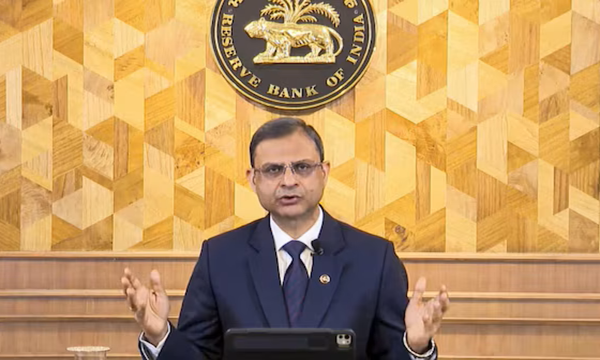
In September 2026 the RBI held the repo rate at 5.25% even though July CPI inflation stayed at 4.45% on persistent food prices. The MPC argued that cutting too early could reignite inflation expectations. For borrowers, industry and savers this holds the cost of money high. The tension captures India's core monetary dilemma: price stability versus growth.
Why did the RBI hold the repo rate at 5.25% despite July 2026 inflation of 4.45%?
The RBI held the repo rate at 5.25% in September 2026 despite July CPI inflation of 4.45%, because the MPC judged that cutting too early could reignite inflation expectations driven by persistent food prices. The decision keeps borrowing costs high and reflects India’s core monetary dilemma: price stability versus growth.
The Story in 60 Seconds
What Happened?
In early September 2026, the RBI's six-member Monetary Policy Committee (MPC) announced its decision: the repo rate—the rate at which RBI lends to banks—remains unchanged at 5.25%. This is the sixth consecutive hold since the RBI last raised rates in May 2024 to combat high inflation.
Consumer Price Index (CPI) inflation for July 2026 came in at 4.45% year-on-year. Core inflation (excluding food and energy) is 3.8%, well within the RBI's 2-4% target band. Food inflation (weight: 46% in CPI) stands at 6.2%, driven by onion, tomato, and pulse price spikes.
The RBI's hold signals confidence that inflation is manageable. But the committee's statement noted 'persistent volatility in food prices' and 'uncertainty regarding global energy prices.' In other words: the RBI is willing to tolerate higher food inflation to avoid the credit crunch that would come from further rate hikes. This is a policy choice.
Understand the Basics
What is inflation? The rate at which prices rise. A 4.45% inflation means items that cost ₹100 last July cost ₹104.45 now. Sounds minor. But applied across an economy, it erodes purchasing power—especially for the poor, who spend most of their money on necessities like food.
How does monetary policy fight inflation? The RBI adjusts the repo rate (short-term lending rate). Higher repo → banks find borrowing expensive → they increase lending rates → businesses and consumers borrow less → demand falls → prices stabilize. Conversely, lower repo → cheaper borrowing → credit expands → demand rises → inflation accelerates.
Why does the RBI target 4% inflation, not zero? Because some inflation incentivizes spending and investment (zero inflation can lead to hoarding and stagnation). But 4% means savers lose 4% of purchasing power annually if their deposit interest is less than 4%. The RBI essentially chooses to sacrifice savers' interests to encourage economic activity.
By a continuing process of inflation, governments can confiscate, secretly and unobserved, an important part of the wealth of their citizens.
John Maynard Keynes, The Economic Consequences of the Peace (1919)
Visual Explanation
India CPI Inflation vs RBI Repo Rate (2024-2026, %)
| Jan 24 | 5.1 |
|---|---|
| Jul 24 | 3.5 |
| Jan 25 | 4.3 |
| Jul 25 | 4.6 |
| Jul 26 | 4.45 |
How Did We Get Here?
- 2021-2022 Post-pandemic stimulus (RBI kept rates at 4%) + supply-chain disruptions + Russia-Ukraine war surge global commodity prices (oil, wheat). Inflation rises to 7-8%.
- May 2022 RBI begins rate hike cycle: repo raised from 4% to 4.4%. Over the next year, consecutive hikes push repo to 6.5% by June 2023.
- 2023-2024 High rates bite: loan growth slows; rural credit tightens; agricultural credit becomes expensive. Inflation gradually falls to 4-5%.
- February 2024 RBI starts reversing: first rate cut from 6.5% to 6.25%, signaling shift from tightening to easing.
- June 2024 RBI cuts repo to 5.5%. Inflation is at 4.5%. Credit growth accelerates; borrowing becomes cheaper.
- May 2025 Further cut to 5.25%. RBI signals 'neutral' stance: no more cuts unless inflation truly threatens. Holds at 5.25% through 2025 and into 2026.
The Economic Mechanism
- RBI repo rate = 5.25%
- Bank lending rates rise (10%+ for retail, 8-9% for SME)
- Credit becomes expensive → Demand for loans falls
- Lower credit → Lower consumption & investment
- Lower demand → Prices stabilize
- But also: Unemployment may rise | SME growth slows | Rural sectors hurt (high farm debt)
This is the trade-off: holding rates steady prevents inflation but at a cost. Businesses on borrowed money (industries, SMEs, agribusiness) face higher servicing costs. Growth slows. Investment defers. The RBI is explicitly choosing price stability over growth.
Read More
- Reserve Bank of India: Monetary Policy (MPC statements and repo rate decisions)
- Ministry of Finance: Inflation Data (CPI and WPI official series)
- Current Account Deficit FY27 (How RBI policy links to external sector)
Connect the Dots
Production → Processing → Export structure → Market concentration → Unit value → Farmer income → Policy choices. Applied to inflation:
- Agricultural production (monsoon-dependent) → Supply volatility
- Low storage capacity → Onion/tomato hoarding → Spot prices spike 15-30%
- Food inflation (46% of CPI) → Overall CPI rises
- Food inflation is structural (supply-side), not demand-driven
- But RBI's mandate is to target CPI, not components
- So RBI may raise rates to suppress demand, hurting non-food sectors
- Meanwhile, food prices stay high anyway (supply-driven, not demand-driven)
This is the core mechanism problem: India's inflation is driven by food (harvest failures, logistics costs, storage limits). The RBI's tool (repo rate, which works on demand) is structurally mismatched to the problem. Raising rates doesn't fix harvests; it just crunches credit elsewhere.
Who Is Affected?
Inflation Drivers Analysis
| Group | Impact of 5.25% Repo Rate | Real-World Effect |
|---|---|---|
| Salaried workers (non-poor) | Loan interest increases; home/car EMI goes up 1-2%. But wages often don't keep pace with inflation. | Real wage growth negative if CPI > salary increase. Purchasing power erodes. |
| Savers (deposits, fixed income) | FD rates 5-6%; inflation 4.45%. Real return = ~0.5%. Better than negative, but meager. | Incentive to save is low. Savers get squeezed by inflation-sensitive asset prices (property, gold). |
| Farmers & rural | Agri-loans at 8-9% vs prices that rise 2-3% annually. Debt burden rises faster than income. | Debt trap; many farmers resort to informal (20%+) lending or give up farming. |
| SMEs | Working capital loans at 9-10%; if credit growth is slow, banks impose stricter requirements. | Expansion defers; hiring slows; job creation plateaus. |
| Exporters | Higher repo → rupee appreciates (makes exports costlier). At 5.25% rates, rupee stable at ₹83-84/USD. | Export competitiveness unchanged, but potential for rupee strength if rates rise further. |
Key Economic Indicators
Monetary Policy Tools
| Indicator | July 2026 | Previous Year | Significance |
|---|---|---|---|
| CPI Inflation | 4.45% | 4.8% | Within target band (2-6%). Benign headline inflation masks food volatility. |
| Core Inflation | 3.8% | 3.5% | Rising core suggests demand pressures building. Wage growth may accelerate soon. |
| Food Inflation | 6.2% | 5.1% | Onion, tomato, pulses up 15-25%. Structural supply issue. Demand-side policy can't fix it. |
| Credit Growth | 14.2% | 12.8% | Accelerating. Lower rates (5.25% vs 5.5%) are loosening credit. Deposit growth slowing. |
| Rupee vs USD | ₹83.4 | ₹82.1 | Depreciation signals capital outflows or rate differential (US rates higher). Exporters hurt. |
The Policy Question
What is the RBI trying to achieve? Price stability (4% inflation target) balanced against growth (credit availability, employment). A 5.25% repo rate represents a middle path: high enough to dampen inflation, low enough to allow credit growth.
What tools is it using? Repo rate (repo reverse repo, standing facilities), Open Market Operations (OMOs—buying/selling bonds), and statutory liquidity ratios (forcing banks to hold government bonds). The repo rate is the primary lever.
Why these tools? Because the RBI's mandate (from the Monetary Policy Framework Act, 2015) is to target 4% inflation, with flexibility for 'average inflation over the medium term.' This framework prioritizes price stability. It does not explicitly mandate full employment or growth—that's implicitly secondary.
The trade-off: If the RBI cuts repo to 4%, credit surges, growth accelerates—but inflation may rise to 5-6% (risky). If the RBI raises repo to 6.5%, inflation drops sharply—but credit starves, growth crashes. At 5.25%, the RBI is choosing stability over growth. This is a conscious policy stance.
The Debate
Economy Analysis - Table 3
| Perspective | Core Argument | Evidence |
|---|---|---|
| RBI / Price Stabilizers | Inflation target of 4% is non-negotiable. Higher inflation erodes purchasing power (hurts poor). The repo rate at 5.25% is appropriate to maintain 4% average inflation. | CPI at 4.45%, core at 3.8%. Both anchored. If rates were lower, food prices would spike further given supply constraints. |
| Growth advocates (economists, business) | 5.25% is too high. Real rates (5.25% - 4.45% inflation = 0.8%) are tight. This strangles credit and SME growth. Inflation is primarily food-driven (supply-side); demand-side rate hikes won't fix it. | Credit growth slowing (14.2% vs 20%+ pre-pandemic). SME borrowing costs excessive. Farm income stagnant. |
| Political argument (Opposition) | RBI's inflation obsession is hurting growth and job creation. Rates should be lower to boost consumption and investment. | Growth at 5-6%; unemployment rising in some segments. But: this argument ignores inflation's regressive impact on poor. |
Winners & Losers
Who gains from 5.25% repo rates?
- Banks: Wider interest margins (lending at 9-10%, borrowing at 5-6%)
- Savers (especially senior citizens): FD rates around 5-6%, superior to near-zero rates of 2020-2021
- Lenders and creditors: Less erosion of capital due to inflation
- Import-focused sectors: Rupee depreciation makes imports cheaper; local competitors hurt
Who loses?
- Borrowers (home buyers, farmers, SMEs): Loans are expensive
- Wage earners: Salaries lag inflation (CPI up 4.45%, wage growth ~3-4%)
- Exporters: Rupee depreciation makes products less competitive
- Young / first-time homebuyers: Mortgage rates at 8.5-9% make ownership unaffordable
What Is Clear?
- RBI's monetary policy works primarily through credit channels: higher rates → lower credit growth → lower demand → inflation stabilizes.
- Food inflation (currently 6.2%) is structural (supply-side), not demand-driven. Rate policy has limited impact on food prices.
- At 5.25%, the RBI is prioritizing price stability over growth. This is a conscious trade-off, not an accident.
- India's real interest rates (repo - inflation) are positive (~0.8%), historically high. This constrains credit expansion.
- The fiscal-monetary coordination gap: Government spending (fiscal) may be expanding demand while RBI (monetary) is restraining it.
What Remains Uncertain?
- How long will food inflation persist? If monsoon fails next year, CPI could spike to 5-6%, forcing RBI to act.
- Will wage growth outpace inflation? If workers demand higher salaries (due to tight labor markets), inflation could become demand-driven.
- What is the 'neutral' repo rate for India? Some economists argue 4.5-5% is truly neutral; others say 5.5-6% is needed.
- Can RBI meet its 4% inflation target if food supply remains structurally tight? May need government intervention (buffer stocks, supply-chain fixes).
What Could Happen Next?
- Monsoon success + food inflation falls to 3% — RBI signals rate cuts | Credit expands; growth accelerates to 6-7%. Likely within 12 months.
- Monsoon fails + food inflation spikes to 7% — CPI breaches 5% | RBI forced to raise repo to 5.75-6% | Credit crunches; growth slows to 4-5%.
- Global shock (oil spike, geopolitical) — Rupee depreciates further | Imported inflation rises | RBI may hold or hike despite food concerns.
- Wage-price spiral emerges — Workers demand 7-8% raises due to inflation | Businesses pass on costs to consumers | Inflation becomes self-reinforcing | RBI forced into aggressive tightening.
Why Does It Matter?
Monetary policy is not abstract. A 5.25% repo rate means: a farmer's agri-loan costs more; a first-time homebuyer delays their purchase; an SME defers hiring; a salaried worker's buying power shrinks 4.45% annually. For exam aspirants, this illustrates the real-world trade-offs embedded in economic policy: price stability vs. growth, lenders vs. borrowers, structural (supply) vs. cyclical (demand) inflation.
India's challenge: food inflation is structural (poor harvest, storage losses, logistics costs). The RBI's tool (demand-side repo rate) is best suited for demand-driven inflation. So holding rates at 5.25% is the RBI acknowledging: 'We can't fix food prices with interest rates. We're holding steady to prevent demand-side inflation while hoping government fixes supply-side issues.' If government doesn't deliver (agricultural infrastructure, cold chains), inflation may stay elevated, forcing RBI into a bind: tighten and hurt growth, or tolerate higher inflation.
Jasvin Thinks
CONCEPT BEHIND THE NEWS
Bottom Line
July 2026: Inflation at 4.45%, RBI holds repo at 5.25%. The number looks benign, but the mechanism is consequential. The RBI's rate-hold reflects a conscious choice: maintain price stability at the cost of credit growth and faster expansion. Food inflation (6.2%) is structural and can't be fixed by raising rates. So the RBI is holding steady, hoping government supply-side reforms (better storage, logistics) will ease food prices naturally. That hope may be misplaced. If monsoons fail or oil prices spike, the RBI may be forced to choose between tolerance of higher inflation or aggressive tightening that stalls growth. For now, 5.25% is the middle ground—but it's an unstable one.
Sources & Data
- Primary | RBI Monetary Policy Committee: July 2026 Statement and Monetary Policy Decision | https://rbi.org.in/
- Primary | Ministry of Statistics: CPI Inflation Data (July 2026) | https://mospi.gov.in/
- Analysis | Business Standard: 'RBI Holds Repo Rate; Food Inflation Persists' | https://www.business-standard.com/
- Analysis | RBI Bulletin: 'Inflation Dynamics and Monetary Policy Transmission' (Sept 2026) | https://rbi.org.in/
- Further Reading | Drishti IAS: 'Monetary Policy Framework in India' | https://drishtiias.com/
- Further Reading | ET Markets: Real-time RBI rate decisions and impact analysis | https://economictimes.com/