Cabinet Approves Eight Railway Multitracking Projects
Cabinet approves eight railway multitracking projects worth ₹20,804 crore. Understand government capital expenditure, infrastructure policy, and regional development strategy.
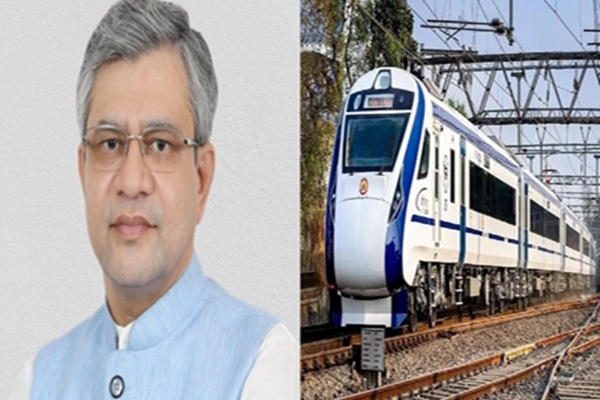
The Cabinet Committee on Economic Affairs (CCEA), chaired by Prime Minister Narendra Modi, approved eight railway multitracking projects on 9 September 2026 with a combined cost of ₹20,804 crore. The projects will add 1,196 kilometres to India's railway network across 14 districts in 9 states and are scheduled for completion by 2029-30. The investment targets capacity expansion on congested corridors while addressing regional development in underserved areas.
Which railway multitracking projects did the Union Cabinet approve in September 2026?
On 9 September 2026, the Cabinet Committee on Economic Affairs approved eight railway multitracking projects worth ₹20,804 crore. They add about 1,196 km of track across 14 districts in nine states, including third and fourth lines on Arakkonam-Renigunta and Whitefield-Bangarapet, with completion due by 2029-30 to relieve congested corridors.
These multitracking projects will significantly enhance railway capacity and connectivity in underserved regions, generating substantial employment opportunities and supporting aspirational districts and tribal areas.
Press Information Bureau, Government of India, Cabinet Approval Notification (9 September 2026)
What Happened?
The Cabinet Committee on Economic Affairs approved eight multitracking railway projects on 9 September 2026 with a total estimated cost of ₹20,804 crore. The projects will add approximately 1,196 kilometres to the existing railway network and are expected to be completed by March 2029-30. The investment targets capacity enhancement on congested railway corridors in both high-traffic and underserved regions, spanning 14 districts across nine states.
Southern region projects (₹10,021 crore) include: third and fourth lines between Arakkonam-Renigunta (77 km, Tamil Nadu); third and fourth lines between Whitefield-Bangarapet (47 km, Karnataka); Hosur-Omalur section doubling (147 km, Tamil Nadu-Karnataka); Salem-Karur-Dindigul section doubling (159 km, Tamil Nadu); and Secunderabad-Kazipet multitracking (110 km, Telangana). Eastern and Central region projects (₹10,783 crore) comprise: Kharagpur-Jharsuguda fourth line, Katni-Pendra Road fourth line, and Bilaspur-Pendra Road third line across West Bengal, Jharkhand, Odisha, and Madhya Pradesh.
This capital expenditure represents a strategic response to a deep tension in development policy: how to expand capacity without waiting years for new projects or displacing communities through land acquisition. Multitracking existing corridors is a tactical resolution: it increases capacity by 30-40 per cent faster than new construction, avoids major environmental impact (no new land clearing), and generates immediate employment. However, it reflects a constraint: India's fiscal capacity limits whether the government can fund BOTH new routes AND maintenance AND multitracking simultaneously. The ₹20,804 crore allocation represents a choice: these funds went to multitracking rather than doubling track coverage to new regions. For UPSC, this exemplifies how infrastructure policy involves trade-offs: equity (spreading investment to backward regions) vs efficiency (maximising output from existing assets).
Why It Matters
This announcement impacts three dimensions simultaneously. First, capacity: Indian Railways handles over 1 billion passengers annually; multitracking critical corridors reduces congestion and travel times. Second, development: projects cover aspirational districts and tribal-majority areas, addressing regional imbalances in infrastructure. Third, employment: approximately 1,23,000 person-years of employment will be generated during construction (2026-2029). For UPSC, this tests understanding of how government capital expenditure translates into three outcomes: immediate (employment generation), medium-term (productivity improvements), and long-term (capital stock accumulation). It also exemplifies the trade-off between equity (spreading investments across regions) and efficiency (concentrating investments where returns are highest).
Concept Behind the News: Government Capital Expenditure
- Definition: Government spending on productive assets (railways, roads, power infrastructure) that generate long-term returns and contribute to capital formation.
- Capital vs Revenue: Capital expenditure adds to national asset stock; revenue expenditure (salaries, interest) is consumed immediately.
- Multiplier effect: ₹1 spent on infrastructure generates ₹2-3 in output through construction employment, demand for materials, and downstream economic activity.
- Regional equity angle: Government prioritizes underserved regions to reduce development disparities; railway multitracking in tribal areas exemplifies this.
- Fiscal constraint: High debt-to-GDP ratio limits government expenditure; policy must choose between competing priorities (defense, education, infrastructure).
- UPSC connection: Tests whether candidates distinguish capital formation (productive assets) from transfer payments or consumption subsidies.
Syllabus Connection
- GS-III | Economy | Government expenditure, fiscal policy, capital formation, public sector investment, infrastructure financing, budget allocation
- GS-III | Economy | Transport sector policy, railways as critical infrastructure, public-private partnerships in infrastructure
- GS-I | Geography | Regional development disparities, infrastructure imbalances between developed and underdeveloped regions, tribal areas connectivity
- GS-III | Social Issues | Employment generation through infrastructure projects, impact of capital formation on poverty reduction and livelihood creation
PYQ Connection
- UPSC Prelims 2018: Tests understanding of capital formation and government expenditure multipliers in developing economies.
- Why it connects: Both PYQ and today's story center on how government allocates public resources to productive assets that generate long-term returns.
- The core concept: Capital expenditure is a strategic economic policy tool; its effectiveness depends on project selection, implementation capacity, and absorptive capacity.
- India's context: With limited fiscal space (high debt ratios), government must prioritize high-return infrastructure while ensuring equity across regions.
- Exam lesson: Government expenditure decisions reflect macroeconomic priorities (growth vs equity, short-term vs long-term) tested through infrastructure policy.
Question: Which one of the following best describes the difference between capital expenditure and revenue expenditure in government budgeting?
- Capital expenditure is on goods with short-term benefits; revenue expenditure is on long-term assets.
- Capital expenditure creates productive assets with long-term returns; revenue expenditure is consumed immediately and does not add to government asset stock.
- Capital expenditure is only for defence; revenue expenditure is for civilian purposes.
- Capital expenditure is funded by taxation; revenue expenditure is funded by borrowing.
Answer: Capital expenditure creates productive assets with long-term returns; revenue expenditure is consumed immediately and does not add to government asset stock.
Option B is correct. Capital expenditure (like the railway multitracking projects) creates productive assets (railway lines, roads, power plants) that generate returns over decades and contribute to the nation's capital stock. Revenue expenditure (salaries, interest on debt, subsidies) is consumed in the same fiscal year and does not create lasting assets. The distinction is crucial for understanding government budgeting priorities and fiscal sustainability. Option A reverses the definitions. Option C is too narrow. Option D conflates funding sources with expenditure classification.
Indian Railways Capital Expenditure Budget (lakh crore rupees)
| FY20 | 1.49 |
|---|---|
| FY22 | 2.15 |
| FY24 | 2.62 |
| FY25 | 2.52 |
| FY27 BE | 2.78 |
Connect the Dots
- Indian Railways face capacity saturation on key corridors (over 1 billion passengers/year)
- Multitracking existing routes increases capacity faster than building new lines
- Cabinet approves ₹20,804 crore for eight multitracking projects across 9 states
- Projects add 1,196 km to railway network, benefiting 4,790 villages (5.6 million people)
- Construction generates approximately 1,23,000 person-years of employment (2026-2029)
- Regional equity: projects prioritize underserved regions and tribal-majority districts
- Long-term impact: increased railway capacity reduces travel times and freight costs
- Macroeconomic effect: capital formation drives productivity gains and long-term GDP growth
- Government fiscal policy: demonstrates commitment to public sector infrastructure investment
Read More
- Cabinet Decision on Railway Multitracking Projects - PIB (Official Press Information Bureau notification on cabinet approval (government source))
- India's CAD Widens to $4.2 Billion in Q1 FY27 (How infrastructure capital expenditure affects India's external sector and balance of payments)
Exam Takeaway
- Remember: Capital expenditure creates productive assets with long-term returns; this is how government drives capital formation and sustainable growth.
- Remember: Multitracking existing corridors is more cost-effective than building entirely new railway lines while solving capacity bottlenecks faster.
- Remember: Government prioritizes infrastructure in underserved regions (tribal areas, aspirational districts) to address development disparities and regional equity.
- Remember: ₹20,804 crore investment will generate approximately 1,23,000 person-years of employment during construction, illustrating government's role in employment generation.
- Remember: Infrastructure investment multiplier effect means ₹1 spent on railways generates ₹2-3 in output through employment and material demand.
Exam Angle
PRELIMS: Define capital formation. What is the difference between capital and revenue expenditure? How does government expenditure multiplier work? | MAINS: Evaluate whether government investment in railway infrastructure is an efficient allocation of public resources given fiscal constraints. Analyse the role of public sector capital expenditure in addressing regional development disparities. Should India prioritize transport infrastructure or social sector spending (education, health) with limited fiscal space?
Possible Question
Question: With reference to India's railway multitracking projects approved in September 2026, which of the following statements is/are correct? 1. Multitracking existing railway corridors adds to national capital stock and enhances transport capacity. 2. The ₹20,804 crore investment is classified as capital expenditure and contributes to government capital formation. 3. All projects are exclusively in tribal-majority regions and do not benefit commercially important corridors.
- Only 1 is correct
- Only 1 and 2 are correct
- Only 2 and 3 are correct
- All three are correct
Answer: Only 1 and 2 are correct
Statements 1 and 2 are correct. Multitracking existing railway corridors increases transport capacity by adding parallel tracks, which is recorded as addition to national capital stock and contributes to government capital formation. The ₹20,804 crore expenditure is clearly capital expenditure as it creates productive assets with long-term returns. Statement 3 is incorrect: while some projects do target underserved and tribal-majority regions (addressing equity), others are on commercially important corridors like Secunderabad-Kazipet and Salem-Karur-Dindigul which carry significant freight and passenger traffic.
Sources & Further Reading
- Primary source | Business Standard, 'Cabinet clears 8 railway multitracking projects worth ₹20,804 crore', Bureau, 9 September 2026
- Government source | Press Information Bureau (PIB), 'Cabinet approves eight railway projects for enhanced connectivity', September 2026
- Official source | Ministry of Railways, 'Railway Multitracking Projects: Implementation Status and Timeline'
- Economic reference | Government of India Budget 2026-27, Capital expenditure allocation for transport sector
- Background | Previous PYQs on government expenditure, capital formation, and infrastructure financing from UPSC Prelims 2018-2024